


 Francais
 Deutsch
 Italiano
Refine Your Search
Alexandria Egypt 1941 stock footage and images
- Showing 103 to 108 of 1883 results more
more Hide
Hide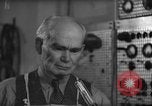
Lee De Forest Laboratories, Hollywood studio buildings, and traffic on streets in Hollywood, California.
American inventor and electrical engineer Lee De Forest seen examining a vacuum tube. Exterior view of Lee De Forest Building in Hollywood, California, with sign on the building that reads 'Lee De Forest Laboratories'. A view of the buildings in Hollywood, including Brown Derby Restaurant (faintly in foreground), NBC Radio City-Hollywood building, Bullock’s Wilshire, and other offices and buildings near intersection of Wilshire Boulevard and Alexandria Avenue. Vehicular traffic on the street. Elevated Hollywood view showing Warner Bros. Hollywood Theater & Studio facilities along Sunset Boulevard, Warner Bros. Hollywood studios and sound stages (sometimes called the Warner Bros. Sunset studios), and the Hollywood Storage Co. building near Sunset Boulevard and Vine Street.
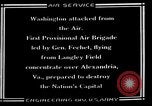
U.S. AAS 1st Provisional Air Brigade Airco DH4 prepare to attack during practice maneuver drills over Washington DC
Practice maneuvers of United States Army Air Service 1st Provisional Air Brigade commanded by Brigadier General James Fechet in the United States. The brigade from Langley Field, flying over Alexandria, prepares a mock attack targeted at the United States capital city of Washington DC. U.S. Army Air Service Airco DH4 aircraft in flight. The mock attackers reach the Lincoln Memorial in spite of the heavy rain. Rows of Navy buildings near the memorial. The DH4 aircraft above the area. The attack group in formations over Washington DC. Views of the Potomac River Bridges including the Aqueduct Bridge near newly built Key Bridge. The pursuit group attacks the enemy fleet from above and below at the same time.
Machines like torpedoes, submarines used by Axis in maritime sabotage operations against Allied Forces in World War II.
Filmed titled 'German and Italian Sneak Craft' describes and dramatizes the methods and machines used by Axis Powers in maritime sabotage operations against Allied Forces during World War II. Methods and machines used are swimmers, human torpedoes, midget submarines, explosive boats, torpedo boats aka S-boats or Schnellboots. A U.S. ship sinks after an Axis attack. Views of harbors at Alexandria, Souda Bay, and Algiers. Rock of Gibraltar. Task force heads for enemy beach. Allied ships in harbor.
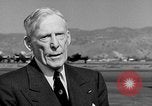
Former U.S. Army Lieutenants Lahm and Foulois recall their flights with Orville Wright in 1909
A film about the history of aviation in the United States. Retired Air Force Brigadier General, Frank Lahm talks about his first flight, as an Army Lieutenant, with Orville Wright on the Wright Flyer airplane, in July, 1909.Then, Retired Major GeneralBenjamin Foulois recalls how, as an Army Lieutenant, he flew the final cross-country and speed test flight from Fort Myer to Alexandria , Virginia, and back, again, with Orville Wright on 30th July, 1909. Film then shows that event, on July 30, 1909. Lt. Benjamin D. Foulois is seen climbing aboard the Wright Flyer airplane to accompany Orville Wright on the final cross-country and speed test required by the U.S. Army before it would purchase any aircraft. View of the Wright Flyer taking off with Wright and Foulois. Spectators watch in the background. View from another perspective of the aircraft taking off from Fort Myer, Virginia. View of the Wright Flyer being moved by several soldiers after landing back on the Fort Myer drill ground. (In his comments about this, Foulois notes that the flight set three world records: flying ten miles cross-country; attaining altitude of 600 feet, and speed of 42.5 miles per hour.)
Landmarks in the old city of Cartagena, Colombia.
Scenes of the old City in Cartagena, Columbia. An antique gun in the San Felipe de Barajas Castle, overlooking the harbor below. The Torre del Reloj (Boca del Puente, Centro, Cartagena de Indias, Provincia de Cartagena, Bolívar, Colombia) or clock tower and Puerta del Reloj, main entrance gate to the old walled city which was founded in 1533. The Cathedral of Cartegena (the Metropolitan Cathedral Basilica of Saint Catherine of Alexandria, Calle de los Santos de Piedra, Cra. 4, Provincia de Cartagena, Bolívar, Colombia). Local people in a horse-drawn wagon pass by the gateway to a public park, flanked by Doric columns and topped with a statue of Vulcan at a forge. A man walks toward the entrance of the House of the Inquisition (Inquisition Palace 46, Plaza de Bolivar Carrera 3 33, Bolívar, Colombia). The camera pans upward to the decorative seal and stonework above doorway. A local woman doing laundry at stone sinks. views of pedestrians walking along narrow streets, balconies of houses project overhead.
U.S. Army Lieutenant Benjamin Delahauf Foulois and Orville Wright sitting in the Wright aircraft in Virginia, United States.
The history of aviation. U.S. Army Lieutenant Benjamin Delahauf Foulois and Orville Wright make the first cross country flight from Fort Myer to Alexandria in Virginia, United States. Wright, Lt Foulois and another worker stand near the control section of the aircraft. Foulois gets into the cockpit. Wright makes adjustment on the aircraft motor. The engine starts. Wright and Lt. Foulois sitting in the airplane.