


 Francais
 Deutsch
 Italiano
Refine Your Search
Australia 1942 stock footage and images
- Showing 1549 to 1554 of 2479 results more
more Hide
Hide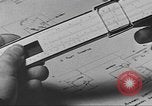
Candidates learn principles of diesel engine, slide rule and mathematical formulas at the USMMA in Kings Point, New York.
Merchant Marine Officer candidates learn seamanship at the United States Merchant Marine Academy at Kings Point in New York, United States. The candidates learn the slide rule and mathematical formulas in a class. They learn principles of a diesel engine. In a laboratory they dismantle and reassemble equipment. They learn to test oil used in a viscometer. Engineer cadets familiarized with the operation, care and control of various types of diesel engines. The candidates learn electric engineering. They operate switchboards in an engine room. They examine a section of a marine boiler and perform tasks like turbining boiler tubes for safety and efficiency. They analyze flue gas to check the efficiency of fuel combustion. The candidates remove the cover of a burner and turn to an engine to utilize steam. They learn telegraphy.
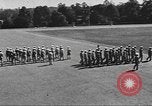
Candidates practice drill and learn naval science and operate anti-aircraft guns at the USMMA in Kings Point, New York.
Merchant Marine Officer candidates learn seamanship at the United States Merchant Marine Academy ( USMMA ) at Kings Point in New York, United States, during World War 2. The candidates practice drills during training. The book of United States Navy Regulations. The cadets learn naval science in their advance training. They learn tactics and maneuvers by operating artillery and antiaircraft guns. They learn to recognize ships and aircraft. The candidates learn to operate anti aircraft guns and machine guns.
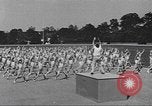
Merchant Marine Officer candidates practice calisthenics and undergo obstacle courses at the USMMA at Kings Point in New York.
Merchant Marine Officer candidates learn seamanship at the United States Merchant Marine Academy ( USMMA ) at Kings Point in New York, United States. The candidates practice calisthenics during their advance training. They go through various obstacle courses to develop coordination and stamina. They climb ropes. The candidates play baseball and participate in boxing. They dance. They pray in churches. A candidate talks to an officer.
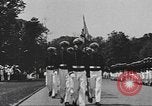
Merchant Marine Officer candidates march and receive graduation certificates at the USMMA at Kings Point in New York.
Merchant Marine Officer candidates complete their graduation at the United States Merchant Marine Academy ( USMMA ) at Kings Point in New York, United States. The candidates march during a weekly review. An officer delivers a speech during the graduation ceremony. Graduation certificates are given to the candidates. Two officer candidates show their badges to their wives. The candidates passing in a review. 'The Last Full Measure' inscribed on a stone. A candidate pays tribute at the grave of a dead Marine officer. The candidates march.
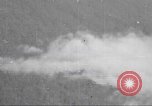
Office of Strategic Services officers in parachute harnesses in airborne Douglas DC-3 aircraft in Burma.
Office of Strategic Services officers on a military mission in Burma during World War II. Clouds in the sky. Douglas DC-3 transport aircraft in flight. Aerial views of mountains. Interior of the aircraft shows OSS officers in parachute harnesses. The DC-3 aircraft in flight. Aerial views of the ground and the mountains.
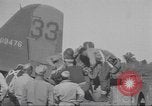
Office of Strategic Services officers in parachute harnesses board a Douglas DC-3 transport aircraft in Burma.
Office of Strategic Services officers on a military mission in Burma during World War II. OSS officers in parachute harnesses board a Douglas DC-3 transport aircraft. A personnel boards with a crate. An officer adjusts the position of a gun at a window of the aircraft.
CRITICALPAST.COM: About Us | Contact Us | FAQs - How to Order | License Agreement | My Account | My Lightboxes | Shopping Cart | Advanced Search | Featured Collections | Website Terms & Conditions | Privacy Policy ©2026 CriticalPast LLC.
License Agreement |
Terms & Conditions |
Privacy Policy
©2026 CriticalPast LLC.