


 Francais
 Deutsch
 Italiano
Refine Your Search
Baghdad Iraq 1956 stock footage and images
- Showing 193 to 198 of 876 results more
more Hide
Hide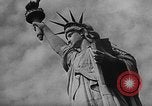
Scenes contrast between life in United States and that in totalitarian states
Statue of Liberty. Picnic for union workers. Sign reads, "Amalgamated Shirts and Pajama Workers of America, Local 343 Picnic" College graduation ceremony. Americans voting. Signs read, "Polling Place. Stalls open 6 A.M. - Close P.M." and "No Loitering or Electioneering Between This Point and The Poll." A woman enters a curtained voting stall to vote. Aerial view of early U.S. interstate highway exchange. Suburban neighborhood development in California, with elevated view of houses in suburbs. A pastor performs a wedding ceremony in a church. An American family picnics on bank of a stream. Students at a U.S. college campus. Parishioners coming out of a church. U.S. Congress in session. U.S. Capitol building exterior with tree branches. In contrast: Military parade in Communist East Germany, with tanks. A sign reads: "Peace, Prosperity, good fortune" (in German). Civil unrest in various countries, possibly Hungarian Uprising or Hungarian revolution in Hungary in 1956: People during a riot or demonstration and a city bus is seen crashing through trees and into a building on a busy downtown city street; Street riots; protest gatherings. Contrasting scenes: Peaceful U.S. metropolitan street scene; Farmer plowing field with tractor; Cowboys herding steers; driver in tanker truck with "Cyclone Rocket" logo on the door, welders at a shipyard.
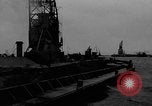
Flood Control in the Netherlands.Dredging operations that create new lands: Oostelijk Flevoland in Ijsselmeer
Flood Control activities in the Netherlands. Dredges on barges seen at work. The spoils are deposited to create new land masses in the Southeastern portion of the IJsselmeer (Lake) which was created in the past by the damming off of the Zuiderzee, a shallow body of water, from the North Sea. Aerial views of the dredges at work. Views of new lands, dams and locks, part of the Delta Works projects. A building at a dam, with relief tablet inscribed "1956." Mural on a building showing farmer and fisherman shaking hands across the barriers. Views of dams and locks. Aerial views of dredges and spoils being deposited in barges.Map of the operations showing the Ijsselmeer lake and the constructions in and around the new land of Oostelijk, Flevoland.
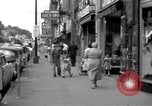
Views of a typical small town in the midwestern United States in the 1950s, Ottumwa, Iowa.
In a U.S. Army documentary, an Army Sergeant walks on sidewalks of a typical 1950 small town in the rural United States -- Ottumwa, Iowa. Civilians on streets of the city. Various shops and 1940s and 1950s era automobiles. People from various walks of life talk to the Sergeant. The Sergeant recalls the town's ancestors entering America. The Des Moines river is shown with a small boat anchored at the end of a dock and men and boys fishing. Statue of Native American Indian Chief atop the Courthouse Building, Chief Wapello, whose tribe camped in the spot of the town years prior. The entrance of the library. Still images and drawings from the library depicting the town. Pictures of houses, shops and other buildings. People on the streets of Ottumwa. The Ottumwa Daily Courier newspaper headline announcing U.S. participation in World War I, "War Becomes Actuality." Images of members from Ottumwa's own Company G, 42nd Rainbow Division in WWI, including soldiers Arthur Menge, Charles Orman, Marlow Work. Views of WWI battle scenes. Oscar Nelson is remembered for heroism. WWI soldiers returning to American towns. Private Charles Orman 40 years later in Ottumwa. He enters a barber shop. Art Menge is also seen in the Barber shop. Aerial view of the city with many bridges, plants, factories, and homes visible. Cars and pedestrians on streets, The Ottumwa Bank, the Airport with a plane parked in front of the terminal, the Railroad train station with people waiting as a large sleek silver passenger train pulls up and arrives. The Hoffmann Drug store, the Ottumwa Hotel, The Ottumwa Daily Courier newspaper building, the Glover Motor Company, the Union Bank, and the Sunnyslope Sanitorium. Various homes and neighborhoods and 1950s automobiles. Governor Herschel Loveless, an Ottumwa native, at home with his wife. The home on Davis Street of the Miss Universe contest winner Carol Morris, and views of Ms. Morris in the pageant and receiving the winners crown in 1956.
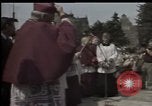
Priests, solidarity leader Lech Walesa and other people gathered to pay homage to those died in protests, during Poland Crisis.
Crisis in Poland after the imposition of Martial Law by its Military Government. Roman Catholic priests assembled at Monument to the Victims of June 1956 (Święty Marcin, 61-001 Poznań, Poland) in Poznan, Poland to pay homage to those died during the strikes and protest. A priest performs ceremonies at the venue. Polish trade union Solidarity leader Lech Walesa and others at the venue. The priest reads prayers standing near the memorial at the venue.
Czechoslovakia and Soviet relations after World War 2; Dubcek liberalization during Prague Spring; Soviet occupation in 1968
History of Czechoslovakia from 1919 to 1968 depicts lives of its people and various crisis. Clip shows combination of still images and moving images, with background of Czech musical soundtrack. A burning Nazi plane shot by Soviet military during World War II. Soviet Red Army marches in Prague, Poland in May 1945 to rescue from German occupation and atrocities. People destroy Nazi emblems and symbols from buildings. People assemble in large numbers on roads and cheer for the incoming Soviet troops and tanks. Civilians of Czechoslovakia during normal life after World War 2. Workers in mines, farmers in field and women work in houses. Spread of communism and communists make a star formation during a rally in Prague (sometimes called the Prague Spring). President Edvard Benes in 1948 signs pact with Soviet government. Photos of Soviet General Joseph Stalin and other Soviet leaders in his office. Various Presidents and leaders of Czechoslovakia during the 1950s. Military and civilian communist groups march on streets in 1956. Czech Skoda automobile production factory scenes in mid 1960s. Workers work in factories and shops till night hours. A Czech textile factory scene. Czech men and women in 1960s fashions enjoying mugs of beer. Several scenes with Alexander Dubček, (Alexander Dubcek), then Soviet leaders Nikita Khrushchev and Nikolai Brezhnev arrive for meeting with Dubček. Smiling Czech people walk in cities and at a cafe during liberalization measures. Soviet and Warsaw Pact tanks, armored vehicles, infantry and aircraft start their occupation ending the Prague Spring in Prague, Bratislave and other cities in August 1968. Civilians protest, demonstrate, and argue with Soviet troops and demonstrate in streets. Some approach tanks and attempt to damage the tanks. Large crowd of civilians watch the retreating Soviet forces from Czechoslovakia in 1968. Red Army met with agitation and resistance on streets by civilians. Soviet troops fire at some demonstrating civilians.
Images pertaining to advance of communism during 20th century, especially in East Germany
Statue of Karl Marx on his grave stone in Highgate Cemetery, London. A picture of Karl Marx. Scenes in Russia around the time of the Russian Revolution circa 1917 and creation of the Soviet Union. Soviet soldiers walking slowly in loose formation. Bolsheviks standing with a large banner. Images spanning many years thereafter: Damaged shops on a street. "One way" street signs in several languages. Large gathering of people carrying signs reading: "Frieden" (Peace, in German). A sign reading: "HALT, Landesgrenze" marking a German provincial boundary. A sign in German, designating the customs border at Furth im Wald, Bavaria ("Zollgrenz-Bezirk, Furth i.Wald"). East German border guards setting obstacles and sentry paths at barbed wire barriers (constituting the Berlin Wall, early on). Picture of Günter Litfin, a twenty-four-year-old tailor, who swam across the Spree Canal to West Germany on 24 August 1961. View of him being fatally shot from across the border, by East German guards, as he is being pulled into West Germany (the first such fatality at the East West German border). Animated map of the world with label references to Berlin,1961; Havana, 1959; Budapest, 1956; Coyoacan, 1940; and Kronstadt, 1921.