


 Francais
 Deutsch
 Italiano
Refine Your Search
Baltimore Maryland USA 1958 stock footage and images
- Showing 6319 to 6324 of 25435 results more
more Hide
Hide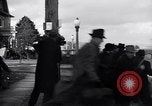
Policemen investigating for any clues in the kidnapping of 10 year old boy Charles Mattson from his house in Tacoma, Washington
Kidnapping of 10 year old Charles Mattson from his house in Tacoma, Washington at 4605 N Verde Street, a tudor-style brick mansion. Men and women gather outside the house. Policemen check cars and people passing nearby. The house where kidnapping of the boy took place. Christmas tree in the house. Investigating officer inside the house. The view down the steep incline to Commencement Bay behind the house. Boats patrol along Commencement Bay to find any clue. One boat named the Vagabond. Police and press cars lined outside the house. Press representatives rush to temporary telephones erected on a utility pole near the house to hear updates on the case.
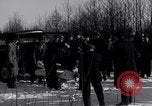
The body of 10 year old boy Charles Mattson, kidnapped from his house in Tacoma, is found near Everett, Washington.
Coverage of kidnapping of 10 year old boy Charles Mattson, kidnapped from his house in Tacoma, Washington. Policemen and social security guards place the body of Charles Mattson in an ambulance. Snow covered field of bushes and stumps where the body was found, in Snohomish County, approximately four-and-a-half miles south of Everett. A house nearby the site. Gordon Morrow, the 19 year old who discovered the body of Mattson. The place where the body was found in the snow, about 150 feet west of the Edmonds-Beverly Park Road. Camera men taking pictures. Anxious crowd and investigators surround the area. Cars along the snowy road. Foot prints of the murderer.
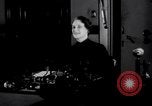
Nellie Tayloe Ross and officials oversee first gold shipment to Fort Knox from United States Mint in Philadelphia
Nellie Tayloe Ross, the 28th Director of the Mint, and Employees at the United States Mint, Department of Treasury oversee the first shipment of government gold from the U.S. Mint in Philadelphia to the U.S. Bullion Depository at Fort Knox, Kentucky. Clip shows casting and weighing of government gold, at the U.S. Mint facility in Philadelphia Pennsylvania. Nellie Tayloe Ross seen speaking and seated at a desk with other officials nearby. Mint officials check the quality and dimensions of a cast gold bar to be transported to Fort Knox in Kentucky. Gold molded into bars by ram machines. Nellie Tayloe Ross signs papers. Molding machines and employees at work. Molten gold in a kiln. Man casts it into gold bars. Officials and armed guards keep an eye on the process. Gold bars are placed on one side of a large scale and weighed. Exterior view of the U.S. Mint department building in Philadelphia. View is of the third U.S. Mint building in Philadelphia, North facade, facing Spring Garden Street (building later owned by the Community College of Philadelphia, as of 1973). Late 1930's automobiles seen passing by the U.S. Mint on Spring Garden Street.

J. Edgar Hoover, FBI Director, arriving at Washington-Hoover Airport in Arlington, Virginia
J. Edgar Hoover, Director of the Federal Bureau of Investigation (FBI) returns by airplane to Washington DC area after visiting Tacoma, Washington during the investigation into the kidnapping of 10 year old boy Charles Mattson from his house in Tacoma, Washington. Hoover's plane landing at the Washington Airport, also known as the Washington-Hoover airport, (and before that as Hoover Field) in Arlington, Virginia. The airport was located southwest of the intersection of the George Washington Parkway and the 14th Street Bridge in an area now under the water of the Boundary Channel, which was later dredged and enlarged to provide fill for Pentagon construction and to allow supply barge access during construction of the adjacent Pentagon. View of the airport terminal with sign "Washington Airport" visible on it. Hoover's plane flying over Military Road and arriving on the landing field. As it nears the airfield for landing, smoke is seen in the distance, likely burning at the garbage dump located near the river. Also seen are high tension electrical wires, industrial smokestacks, 600 foot radio towers, and other industrial buildings visible just past the narrow airfield. The plane taxis past the Eastern Air Transport hangar and other airport structures. Various billboard advertisements visible in the background on some of the buildings. Very brief 3-frame segment where J. Edgar Hoover is seen exiting the airplane operated by American Airlines. He steps into his car. He's seen shadowed in the car, talking to someone. The car drives away onto Military Road or Route 1.
Soldiers, equipment, airplanes, training centers, commanders and others forming the organization of the United States Army.
Organization of the United States Army in World War 2. Massive group of soldiers doing exercise calisthenics on a parade field. Large groups of soldiers march and salute the U.S. National Flag. A tank production factory with war production workers. Soldiers boarding a troop transport ship. View of the USAT Edmund B. Alexander troop ship (formerly USS America, ID-3006) at a harbor filled with U.S. Army troops in transport. Graduation ceremony underway at a military service academy (possibly Westpoint) and awards given. Selection of soldiers for the U.S. Army. Infantrymen and artillerymen fighting in a battle. Generals and Chiefs of Army staff at a discussion and facing the globe in U.S. Capitol. Animated flowchart showing various levels of service and departments in the U.S. Army. Secretary of War is the Supreme Commander, followed by Chief of Staff and a Deputy Chief; general staff succeeds the hierarchy. Operations division has three major constituents: - Strategy and Policy group, Theater Group and the Logistic group. Nine theaters of operations are shown on globe. Military officials at work. Soldiers working in clerical duties and message centers. Personnel typing and filing papers. A soldier emptying a bin of shredded papers. Soldiers in intelligence operations listening to message transmissions and wearing headphones. Letters of soldiers transported in a bomber aircraft seen taking off. Commanders discuss, training to ground, air and navy soldiers. Westpoint cadets in a training exercise with transit sighting devices in a field. Officers including a U.S. Army 4 star general (possibly General Malin Craig) review a map. Trucks ready to supply equipment at war front. Construction site of the Pentagon, with dirt, trucks, and buses in the foreground. Pentagon in the background and Washington Monument in the distant background. Four groups of general staff, G-1, G-2, G-3 and G-4 are there to look after various departments such as induction, promotion, information, policy, mobilization, size, conflicts, transport and supply.
Organization of the United States Army and its divisions responsible for coordination during combat missions.
Organization of the United States Army in World War 2. Men stitch uniforms of soldiers at a factory. Animated flowchart showing various levels of service and departments in the U.S. Army. Secretary of War is the Supreme Commander followed by Chief of Staff and a Deputy Chief. Ground, Air forces and Supply services. Procurement of ammunitions and equipment is directly looked after by Secretary of War. Trucks for supply for army. Soldiers during combat missions. Task Force, Defense Command and Theater command aligns the forces during such missions. Sailors on a navy ship.
CRITICALPAST.COM: About Us | Contact Us | FAQs - How to Order | License Agreement | My Account | My Lightboxes | Shopping Cart | Advanced Search | Featured Collections | Website Terms & Conditions | Privacy Policy ©2026 CriticalPast LLC.
License Agreement |
Terms & Conditions |
Privacy Policy
©2026 CriticalPast LLC.