


 Francais
 Deutsch
 Italiano
Refine Your Search
Baltimore Maryland USA 1958 stock footage and images
- Showing 11617 to 11622 of 25435 results more
more Hide
Hide
Construction of U.S. B-25 Mitchell bomber aircraft in the United States to carry out combat operations during World War II.
Film titled 'Combat Report' depicts the construction of U.S. B-25 Mitchell bomber aircraft to attack German submarine during World War II. Exteriors of U.S. War Department building in Washington D.C., United States. U.S. Assistant Secretary of War for air Robert Lovett and Under Secretary of War Robert Patterson seated at desk. U.S. officer looks at combat report at his desk. View of a oil tanker hit by torpedo as it sinks in the Gulf of Mexico. View of crewman at controls and a tower. Combat report being typed. U.S. sailors type report at typewriters. Man speaks into radio. Navy officer instructs an officer. U.S. B-25 Mitchell bomber aircraft in flight over sea. Pilot and copilot at controls in B-25. The position of attack being radioed to a U.S. B-25 Mitchell bomber aircraft in flight over sea. Interior views of cockpit of B-25 bomber, and of Instrument panel of B-25. Engine of planes. Men in war production aircraft factory at work building and assembling aircraft during World War 2. Blast furnace in factory. The airplane engines being assembled, tested and installed in B-25.
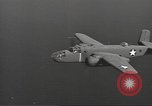
Construction of U.S. B-25 Mitchell bomber aircraft in factories of the United States during World War II.
Dramatization in which U.S. Army Air Forces B-25 Mitchell bomber aircraft is constructed in the United States for combat operations during World War II. B-25 in flight over the Gulf of Mexico. Shows different sections of B-25 in flight. Factories in the United States where B-25 is shaped and skins are developed. Women workers inspect altimeters and other aircraft instruments.
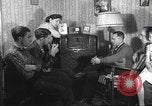
American citizens gather around living room console radios and portable radios in other locations, listening to news.
Multiple scenes of groups of people in the United States gathered around radios, listening. Timing is conclusion of labor strike by Coal Miners in the United States. On December 7, 1946, United Mine Workers President John L. Lewis called an end to a walkout of 400,000 coal miners that he had called on November 20, 1946. First scene shows a family seated in a living room listening to the news on a large console radio. The men, young and old, share cigarettes and pipes and smoke while listening intently. Next scene is a bar or tavern and shows a group of men, presumably coal miners, gathered around a portable radio on the bar to listen to the news. Two large American flags hang in the bar. Several men are drinking beer. Next scene shows four men playing cards at a table while they listen to a portable radio on the table. Wall calendar page for December 1946 is on the wall behind them. Next scene shows three men gathered around a wood burning pot belly stove that is heating a room, as they listen to a portable radio. Final scene shows a man and a woman huddled close to a living room console radio as they listen.
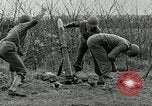
U.S. Chief of Chemical Warfare General William N. Porter directs the establishment of tropical chemical warfare tests.
An introduction of chemical warfare tests to be carried out by the U.S. Army on San Jose Island, Panama during World War II . U.S. troops test chemical warfare in a jungle. Rocket artillery is fired. Rockets explode. U.S. Chief of Chemical Warfare General William N. Porter during an initial conference with two other U.S. officers in the United States. General Porter directs the establishment of tropical chemical warfare tests on San Jose Island. British, Canadian, U.S. Marine and U.S. Navy officers attend various conferences. U.S. NDRC (National Defense Research Committee) scientists and technicians in front of charts and various instruments. The technicians carry out chemical tests. A scientist during a laboratory testing. The technicians at various instruments in a jungle during a testing phase.

A U.S. Navy F8U-1 Crusader fighter plane takes off to show flight operations at different knots in the United States.
A training film based on flight operations of U.S. Navy F8U-1 Crusader fighter aircraft in the United States. An F8U-1 taxis and takes off from a runway. A pilot at the instrument panel of the F8U-1 in the cockpit. The F8U-1 taxis and takes off to show working of rudder, retracting of landing gear, lowering of wings at various levels of speed. The pilot moves the wing incidence handle to down position and brings lock handle to lock handle. Switches are turned on the instrument panel. The F8U-1 at high altitude. The exhaust temperature meter and the oil pressure meter of the F8U-1.
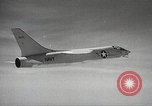
The flight stall of a U.S. Navy F8U-1 Crusader fighter aircraft in the United States.
A film based on flight operations of U.S. Navy F8U-1 Crusader fighter aircraft in the United States. An F8U-1 in flight. Speed break is applied on the airborne F8U-1. The aircraft stalls in the sky. It extends landing gear. One wing drop marks the stall.
CRITICALPAST.COM: About Us | Contact Us | FAQs - How to Order | License Agreement | My Account | My Lightboxes | Shopping Cart | Advanced Search | Featured Collections | Website Terms & Conditions | Privacy Policy ©2026 CriticalPast LLC.
License Agreement |
Terms & Conditions |
Privacy Policy
©2026 CriticalPast LLC.