


 Francais
 Deutsch
 Italiano
Refine Your Search
Baltimore Maryland USA 1958 stock footage and images
- Showing 11911 to 11916 of 25435 results more
more Hide
Hide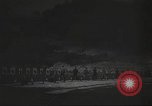
FBI agents hit target boards during their field training in the United States.
Federal Bureau of Investigation (FBI) agents undergo their training in the United States. A field training for the agents. They fire rifles at target boards. The training continues in night. The agents fire rifles and hit the target boards at night. FBI Director John Edgar Hoover addresses the nation and talks about the goal of eradication of crime from the country.
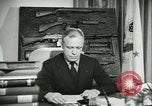
United States Undersecretary of War Robert P. Patterson speaks on the value of war materiel production in the United States (WW2)
United States Undersecretary of War Robert P. Patterson seated at a desk in his office. He addresses the nation and speaks on the value of war material. Patterson talks about production of ammunitions and supplies in the industries of the war department. “The demands of war is insatiable. We will never be satisfied as long as the war lasts,” Patterson said. Railroad train in snow. POV train engineer looking out snowy landscape. Production of war materiel in the United States during World War II. Steel mill operations with ingots being formed from hot metal. A sheet of hot metal emerges from a machine. Women war production workers sort and inspect aluminum sheet metal. Ships carrying supplies sailing an ocean. Crowds of factory workers walking outside war production factory in the United States. Trucks driving on mountain road.
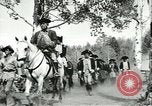
American forces prepare for war; ASF Lieutenant General Brehon B. Somervell addresses officials (WW2)
Continental Army cavalry riding horses and soldiers marching in an American Revolutionary War reenactment. Continental Army soldiers carrying the wounded on their backs under heavy rain. United States Army soldiers marching in New York City during World War II. Views of enormous numbers of U.S. Army soldiers marching in formation. Large columns of U.S. Army soldiers seen approaching camera position and from above. A soldier with an Army Service Forces (ASF) patch marching. Close up of the Army Service Forces (ASF) patch. Commanding General of the ASF Lieutenant General Brehon B. Somervell smiling. A notice detailing the War Department Reorganization effective March 9, 1942. Army Ground Forces commander Lieutenant General Lesley J. McNair. Army Air Forces Commander General Henry H. Arnold. General Somervell and Army Chief of Staff George C. Marshall. Soldiers advance towards a battlefront. Wounded are evacuated from the area. The soldiers stand in formation. Officials seated at a desk. General Somervell addresses them and speaks on the value of war material. A dead German soldier in tank. Dead bodies of Japanese soldiers scattered on the beach in the Pacific. Tires and scraps for use by the army. A newspaper advertisement reads “Your scrap will save some brave boy’s life!”. Ceiling prices listed in grocery store during wartime. Japanese planes bombing Malaya and Singapore. Burned houses after Japanese bombardment in Asia. A burning house in China. An oil tanker explodes and burns after being bombed at sea. Tanks advance towards the front. Generalissimo Chiang Kai-Shek and wife Soong Mei-Ling (Madame Chiang). An airplane in flight, bombarding a target area. Prisoners of war standing. Dead bodies lying on the ground. Destroyed area after an enemy attack. The soldiers and the tanks advance towards the battlefront. Barrage balloons in flight overhead. Allied flags on display such as the Soviet Union and England.
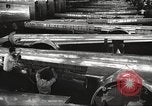
Men work for the production of parts of B-26 Marauder bomber aircraft in the United States.
Manufacture of United States Army Air Force Martin B-26 Marauder medium bombers in the United States during World War II. Men working in a factory. They work on the production of B-26 aircraft. Different parts of the aircraft lined up to be completed inside the factory. Men work on the parts of the aircraft. They work on the wing section, the tail section and the landing gear parts of the aircraft.
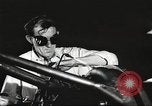
Men weld parts of B-26 Marauder aircraft in a factory in the United States.
Manufacture of United States Army Air Force B-26 Marauder medium bombers in the United States during World War II. Men working in the factory. They weld parts of airplanes. They wear eye glasses to protect their eyes from any damage while welding. They weld important parts of the aircraft carefully for the safety of the airplane in flight.
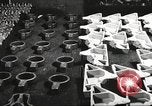
A man works on control parts of an aircraft and detects any flaw in the parts with the help of a machine in the United States.
Manufacture of United States Army Air Force B-26 Marauder medium bombers in the United States during World War II. Tiny equipment, rivets and other control parts of aircraft lying on a table. A man works on the parts. He photographs the parts with the help of a machine to find out any defect in them. He inspects the parts.
CRITICALPAST.COM: About Us | Contact Us | FAQs - How to Order | License Agreement | My Account | My Lightboxes | Shopping Cart | Advanced Search | Featured Collections | Website Terms & Conditions | Privacy Policy ©2026 CriticalPast LLC.
License Agreement |
Terms & Conditions |
Privacy Policy
©2026 CriticalPast LLC.