


 Francais
 Deutsch
 Italiano
Refine Your Search
Baltimore Maryland USA 1958 stock footage and images
- Showing 16705 to 16710 of 25435 results more
more Hide
Hide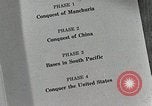
Japanese aggression in China and various events leading to Japanese attack on U.S. at Pearl Harbor (WW2)
A hand writes check marks beside “Bases in the South Pacific” and “Conquer the United States” on the summary report purporting to reflect phases of Japanese so-called "Tanaka Plan". Animated map shows pressure by German forces in offensive against Soviet Union and illustrates German air war against Britain. Scenes of bombing destruction in Britain, including overturned double-decker bus in ruins of buildings. A Nelson Class British battleship viewed from dead ahead. She is followed by the aircraft carrier HMS Illustrious. The U.S. Capitol building in Washington, DC. American newspaper headline reads: "Navy Bill Passes House." and "Huge Sum Voted for Two Ocean Navy." A line of U.S. Navy battleships underway, led by the USS Mississippi (BB-41). A field full of U.S. M3 Lee tanks moving in formation, as they are overflown by several Douglas B-18 bombers. Assembled Japanese leaders in a forum. Japanese Naval officers in a planning conference. Closeup shows Admirals Shigeyoshi Inoue and Raizō Tanaka pointing at a chart and conversing as other officers look on. Next, bomb bursts and black smoke rises as the attack on Pearl Harbor is underway. The USS West Virginia, USS Tennessee, and the USS Arizona, burning on Battleship row, during the attack. Generalissimo Chiang Kai-Shek with staff officers walks to a waiting car. Forces allied with China, including American troops marching; British troops marching; and Dutch Colonial troops marching (in Batavia, the Capital of the Dutch East Indies). Japanese troops continuing their conquest of China, firing a field piece, and infantry charging. Newspapers announce Japanese advances into Malay Peninsula and Hong Kong. Others cite the Fall of Singapore and the Fall of Corregidor in the Philippines (6 May, 1942). Animated map shows Japanese occupation encompassing Indochina, Thailand, and Burma (with loss of the Burma Road) all of which compounded China's war efforts.

A typical American house in suburban Washington, DC - Northern Virginia
A typical suburban American house with garden in front yard. Two chairs placed in front of house. A American man works in garden. American man's wife and daughter come out of house to join him. A house with a car parked in front. American houses with designs. American woman comes our of a house. A typical modern American residential neighborhood with row of houses.1964-65.
American Indian tribal council meeting to exemplify use of sign language
Representation of essentials of tribal sign language of Native American Indians of the great plains. Plan to recognize this dying language was suggested by Honourable Scott Leavitt, Chairman of Indian committee of the house of representatives. The plan was embodied in H R 4604 an Act of Congress authorizing Secretary of Interior Ray Lyman, through the instrumentality of Major General Hugh L Scott to make a motion picture on the sign language. The Act was executed under the supervision of Joseph M Dixon assistant Secretary of the Interior. The Council-A meeting of representatives of many tribes called to exemplify inter tribal use of the sign language.American Indian chiefs pose for a photograph.Joseph M Dixon and congressman Scott Leavitt to meet the Indians assembled for the council. All the people go inside a tent also known as a Piegan council General Scott commences the council with a brief statement of its object by using the sign language.Each American Indian delegate gives his tribal sign.Dick Washakie from tribe Shoshone.Indian tribal chief uses sign language.4 September 1930

Chief Short Face introduces himself to the tribe council
Chief Short Face introduces himself to the Native American Indian tribal council using sign language. He is from tribe Peigan or Northern Peigan from Alberta,Canada. Chief Short Face wears a Indian chief breastplate. A decorative feather is seen in his hair.

Chief Bitterroot Jim introduces himself to Indian tribal council
Chief Bitterroot JIm introduces himself to Native American Indian tribal council. He belongs to tribe Flathead from west of the Rocky Mountains. Chief Jim uses sign language to spell his name and his tribe. He has a pouch with picture of a horse on it and bead necklace.

Chief Night Shoots introduces himself to Indian tribal council
Chief Night Shoots introduces himself to Native American Indian tribal council. He belongs to tribe Piegan or Northern Peigan from Alberta, Canada. He spells his name and tribes name using Indian sign language. He is wearing a feather headdress and a Indian chief breastplate among his regalia.
CRITICALPAST.COM: About Us | Contact Us | FAQs - How to Order | License Agreement | My Account | My Lightboxes | Shopping Cart | Advanced Search | Featured Collections | Website Terms & Conditions | Privacy Policy ©2026 CriticalPast LLC.
License Agreement |
Terms & Conditions |
Privacy Policy
©2026 CriticalPast LLC.