


 Francais
 Deutsch
 Italiano
Refine Your Search
Baltimore Maryland USA 1958 stock footage and images
- Showing 1693 to 1698 of 25435 results more
more Hide
Hide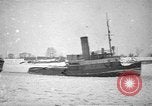
Scenes of Petrograd (St Petersburg) after World War I and the Russian Revolution. U.S ship carrying relief supplies is docked.
Soon after World War 1, a tugboat leads two ships through narrow open water channel in frozen Russian bay. Buildings and trees in the far background. View of area covered with snow. Children wearing warm clothes stand in front of ship on which is written: 'Margus Newark USA'. An American flag flutters on the flag pole of the ship. The children pose for photograph. A cinematographer hand cranks his movie camera on a city street. Other men stand with him. Buildings along the sides of snow covered street.
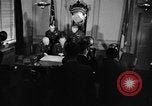
American officers discuss map in Washington DC and Franklin Roosevelt and Churchill at the Casablanca Conference in Morocco
U.S. officers General George C Marshall, HH Arnold, Brehon Somervell and Lesley J McNair seated around table and discussing map in Washington DC, USA, during World War 2. U.S. President Franklin Roosevelt and British Prime Minister, Winston Churchill at a meeting in Casablanca, French Morocco.
United States aircraft carrier USS Independence (CVL-22) damaged in Operation Crossroad "Test Able," risk in daily lives and discussion of radioactivity.
'Radioactive contamination' about the hazards posed by the sinking of a United States aircraft carrier and the methods to control radioactivity. United States Navy F6F-3 Hellcat aircraft taking off from United States aircraft carrier USS Independence (CVL-22) in the Pacific Ocean during World War II. F6F-3 Hellcat firing rockets in air. Landing signal operator LSO using flags while guiding plane for landing on USS Independence. Kamikaze attacks at Tarawa. Anti aircraft guns on carrier cut down kamikaze planes as they attack. USS Independence flying USA flag at Tokyo Bay. Scene of surrender of Japanese at Tokyo Bay aboard the USS Missouri. Aerial view of atomic bomb blast at Bikini in 1946. The wrecked carrier Independence being towed away after it was used as a target for an atomic bomb test in 1946 as part of Operation Crossroads. Men at a construction site talk about contamination caused in sea water due to sinking of Independence containing radioactive waste. They comment, "she's all full of that radioactive poison" and with respect to eating fish in water near the ship, "would you eat fish again?" Two women dressed in furs, in a car, also discuss radioactivity. One woman says, "from what I've heard it's very dangerous. " View of 1940s car backing into oncoming traffic and almost causing an accident. An aerial view of atomic explosion at Bikini. Damaged USS Independence ship after TEST ABLE. Signs on board warn of radioactivity with words, "Keep Clear, Danger! Very Radio-Active" and "Radioactivity. Do not remain more than 2 hours." Men in small boat near USS Independence examine damage to the ship. Parts of the USS Independence being tested for radioactive contamination at the Naval Radiological Defense Laboratory NRDL, Hunter's Point Naval Shipyard in San Francisco, California. The USS Independence being sunk in 1951. View of Bikini atomic bomb blast within a bay surrounded by ships. Simulation shows the effect a similar blast would have on a coastal city as a radioactive cloud covers the city. Officers holding handkerchiefs to their mouths as they enter an office building from outside. Firemen climb ladders while putting out a large fire. A house wife working in a kitchen and responding to a pot boiling over on the stove burns her hand. A man slips on a bar of soap in the shower while singing. An officer honking at an oncoming car as he is run off the road. Woman driver dressed in furs exclaims to her friend about the bad driving of men. Officer just run off the road by woman driver exclaims, "Women !" with frustration. Aerial view of test nuclear explosion at Bikini Atoll.
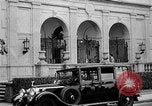
Creation of Good Neighbor Fleet of ships operated by Moore-McCormack Line with service from the U.s. to South America and Latin America
Exterior view of Pan American Union Building in Washington DC, with a 1930s Packard four door sedan-limousine parked in front. A man entering the building. Jefferson Caffery, U.S. Ambassador to Brazil, seated in an office and reviewing paperwork. Narrator describes the creation of the Good Neighbor Fleet (where Moore-McCormack Lines, also called Mooremack, was contracted to run three ocean liners of the U.S. Maritime Commission between the USA and South America, called the Good Neighbor Fleet.) Close up picture of brochure advertising the new fleet, and picturing the three ships (The California, Virginia and Pennsylvania from the former Panama Pacific Line, with new names Uruguay, Brazil and Argentina.) Next scene shows 3 men meeting (this is possibly Moore-McCormack Lines founder Albert V. Moore, on right, seated at a table and in discussion, possibly with U.S. Maritime officials. Man on left is possibly Emmet McCormack.) Passengers aboard liner SS Brazil as it departs port. Crowd on docks wave at the ship leaving New York harbor. View from on board SS Brazil in New York Harbor as a nearby tug boat sprays water. Skyline and skyscrapers of New York City's Manhattan Island seen in background. Map of South America showing route of a Good Neighbor ship. Good Neighbor Fleet ships at a harbor in South America. U.S. State Department diplomats in South America beside one of the ships as fleet service is inaugurated. Exterior view of Pan American Union building and its sign in Washington DC (later called the building of the Organization of American States). President Ortiz of Argentina, President Alfredo Baldomir of Uruguay, and President Getulio Vargas of Brazil are shown in discussion with various officials.
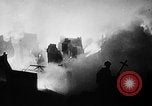
Germany bombs London during Blitz, and United States sends Lend-Lease war materiel to England (WW2)
The London Blitz. Sections of London ablaze from German bombing during Battle of Britain. US President Franklin Roosevelt signing H.R. 1946, Lend-Lease legislation in World War II. View of last page of H.R.1946, signed by Sam Rayburn, Speaker of the U.S. House of Representatives, and by President Roosevelt. United States sends war material to England. 'USA' written on Lend-Lease boxes being loaded on lorry after arrival in Britain. Huge crates of Lend-Lease war materiel on railroad flat cars pulled by locomotive. Smoke rises up from the engine. 'Machine tools, BULLARD, Bridgeport Conn.' written on crate in transit.
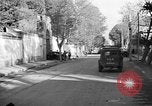
American staff car enters through a gate of a Russian Embassy building in Tehran, Iran.
American staff car on the streets of Tehran, Iran. 'USA' written on the car. Buildings in the background. The car enters a gate. A guard on the gate. The car arrives in front of a Soviet Embassy building during the Tehran Conference (project "Eureka"). A guard stands on stairs. British soldier Honor Guard stands in front of Embassy. Squad of British and Russian soldiers marches past Embassy. Cameramen take pictures. (World War II period).
CRITICALPAST.COM: About Us | Contact Us | FAQs - How to Order | License Agreement | My Account | My Lightboxes | Shopping Cart | Advanced Search | Featured Collections | Website Terms & Conditions | Privacy Policy ©2026 CriticalPast LLC.
License Agreement |
Terms & Conditions |
Privacy Policy
©2026 CriticalPast LLC.