


 Francais
 Deutsch
 Italiano
Refine Your Search
Baltimore Maryland USA 1958 stock footage and images
- Showing 4093 to 4098 of 25435 results more
more Hide
Hide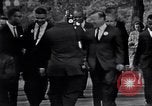
Rev. Martin Luther King Jr, Labor leaders A. Philip Randolph, and Walter Reuther, speak to reporters during "March on Washington"
Rev. Dr. Martin Luther King Jr. walking with organized Labor leader Walter Reuther, and African American leaders including John Lewis, arriving outside the White House in Washington DC. Press and photographers surround them. A. Philip Randolph speaks to the reporters. Mr. Roy Wilkins and Martin Luther King Jr., Walter Reuther, and John Lewis standing nearby. Representative of the Roman Catholic group commission speaks. Labor leader Walter Reuther speaks. Dr. Martin Luther King Jr makes a statement. Black American singers lead the crowd in singing "We shall overcome" in Civil Rights rally at the Lincoln Memorial in Washington DC. Thousands link arms and sing and sway together to the melody (during the March On Washington for Jobs and Freedom).

Four British working men and four American counterparts visit officials concerned with war production, in New York City and Washington DC (WW2)
A British film entitled, "People to People." Four British working men, visiting America, are seen in overcoats on the deck of a ship passing the Statue of Liberty in New York Harbor during World War II. They are accompanied by four American workers who were returning on the same ship, from a similar visit to England. Closeup of the eight men, named by the narrator, who calls them trade unionists on an exchange visit. Brief view of Chiang Kai-Shek, Franklin D. Roosevelt, and Winston Churchill at the Cairo Conference in 1943.Camera pans closeup over Roosevelt and Chiang Kai-Shek. Brief views of Roosevelt, Churchill, and Joseph Stalin at the Tehran Conference in 1943. Closeup of Roosevelt and Churchill, with Anthony Eden standing immediately behind them. Closeup of Stalin and Roosevelt, with U.S. Army Air Force Chief, General Henry H.(Hap) Arnold and British General Alan Brooke, Chief of the Imperial General Staff, conversing behind them. Scene shifts back to the men aboard the ship in New York harbor, with the New York City Manhattan skyline of buildings in the background. Next, the eight men are seen climbing steps to New York City Hall. Inside they are welcomed by New York City Mayor Fiorello LaGuardia. The group is then seen entering a building in Washington, DC, where they sit down at a table with Donald Nelson, Head of the U.S. War Production Board. In the Department of Labor building they meet William Hammatt Davis, Head of the War Labor Board, and also the Secretary of Labor, Frances Perkins. After that they are seen heading into the White House, where they are met by Mrs. Eleanor Roosevelt, who comes out of the White House to greet them on the porch. (Narrator says she later invited them inside for tea.) The men are next seen climbing the Capitol steps. Vice President Henry A. Wallace comes out to greet them and comments about industrial production not only during the war, but in the time of peace to follow.
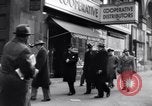
British and American working men on exchange visit meet with labor representatives in the United States (WW2)
Four British working men and their four American counterparts on an exchange visit to the United States enter a building in World War II. They are seen inside, seated at a table opposite representatives of American labor organizations including the American federation of Labor (AFL), the Congress of industrial Organizations (CIO) and the Railroad Brotherhood. During the meeting, one of the American workers states that they had just returned from England. One of the American labor representatives asks the English workers what they think about these exchange visits. They respond in support of them, and note they had an similar exchange with Russians as well. They also discuss international labor unity and its importance in winning the war. The British contingent note that they need more time to meet rank and file American workers to make any assessments. The subject of women filling jobs in war industry was viewed as affecting the lives of all women during the war and afterwards.

Pairs of American and British workers on exchange visits meet workers at American cities across the country
Logo of United Electrical, Radio, and Machine Workers Union Local 407 in New Jersey is shown. Narrator says it it one of the places a group of 4 English and 4 American Working men were to see on their exchange visit to America. View of their luggage The group is seen examining a map of the United States as they plan to make their visits in pairs to save time. They decide that each British worker would visit the hometown of an American counterpart. One pair leaves to visit Bethlehem, Pennsylvania. The pick up their luggage. Another pair are going to Detroit, Michigan. They pick up their luggage. The third pair is going to St. Louis, Illinois. They pick up their luggage. The final pair are going to Los Angeles, California. They pick up the last remaining pieces of luggage. One pair of workers is seen entering the Chrysler plant in Detroit. The American was welcomed home to America from his trip to England. View inside the plant of an African American woman working beside an older man, where they were making tank and marine engines. The visitors examine the gang drill presses containing multiple drills operated by a single operator. They stop to say hello to the American's daughter who also works at the plant, checking to assure parts met tolerances. It was noted that she was paid the same as any man doing the job. The pair of visitors are met at the American's home by some company union workers. They sit together on the step outside the house and get acquainted. An infant inside the house looks out the window at them. Scene shifts to Los Angeles where another English-American visiting pair is seated outdoors and the wife of the American brings out some bottles of beer for them to all share. Change of scene shows the pair visiting the offices of the Screen Actors Guild in Hollywood, where they meet celebrities Edward Arnold, George Murphy, Dick Powell, Alan Hale, Jane Wyman, Helen Hayes and Lena Horne. Edward Arnold, President of the Guild's Board, speaks with the pair, alone explaining how every actor in Hollywood belongs to the Guild which is affiliated with the America Federation of Labor (AFL). Arnold shows the pair his union card. Closeup of the card.
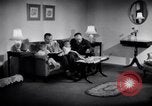
Four British labor exchange visitors return home after several weeks visiting war plants and labor organizations in America (WW2)
A British guest on labor exchange program visit spends his last day as a house guest of his counterpart American's family, in Los Angeles, California. He is seen with the father in their living room with two children, while the mother prepares dinner in the kitchen. The children are sent to bed and the men and the wife, named Ellen sits down to dinner with the two men. The British guest waves goodbye to the family at their doorstep. Scene shifts to another of the British labor exchange visitors leaving the family where he had been hosted in a different city. Next, the four British labor exchange visitors are seen seated opposite representatives of American labor organizations including the American federation of Labor (AFL), the Congress of industrial Organizations (CIO) and the Railroad Brotherhood. They had met them a few weeks ago when they first arrived in the U.S. One of the labor representatives asks them about their impressions of America. They uniformly praise the effectiveness of the U.S war effort, extolling the efficiency and productivity of her war plants. One of the commenters calls for more international unity in the labor union movement. A spokesman for the American labor representatives expresses need to support the United Nations movement. Film closes showing the four British exchange visitors boarding a U.S. Army Air Corps C-54 transport plane to fly them home to England. They are checked in by an airman who wears a leather jacket with the Air Transport Command logo on it. The aircraft is seen taking off and climbing out over hangars at the airfield. (World War II period)

Recruitment of American women during World War II labor shortage in Dayton,Ohio.
A road to Dayton Ohio, crowded with cars of the 1930s. Men hitch-hiking near a sign reading: "Dayton 47." A steam locomotive pulling a passenger train,speeds past the camera. Arrows on map of Ohio, show areas around Dayton, from which defense workers are being drawn. Closeup of car wheel and tire. Another hitch-hiker at 48 miles from Dayton. Cars converging on the city of Dayton. A line of patrons extending out onto the sidewalk outside the Virginia Cafeteria at 28 East 3rd Street. Another queue of patrons with bags of clothes outside a laundry and dry cleaners establishment. A long line of patrons on the sidewalk outside of a motion picture theater, showing a Western movie starring Johnny Mack Brown and Tex Ritter. A woman places a "No Vacancies" notice over Plaza Apartments sign. Other "No Vacancies" signs posted elsewhere. Men and women war plant workers queue up to board buses to factories. Some men step over a rope line to get ahead of others. Closeup of workers crowding into the entrance of a commuter train. View from inside as workers (mostly women) try to board. A long line of men and women on the sidewalk outside a corner cafeteria in a large building. Woman removing "rooms to let" sign from her apartment wiindow. A man posting a "No Vacancy" sign. The office of the War Manpower Commission Area Director. Seated around a table are are seen members of The Dayton Local Labor Management Committee (Dayton War Manpower Committee). Inquiries being received by manufacturers hiring 8 persons or more, as well as personnel officers of the local Army Air Forces Air Fields, seen in uniform. Other employers answering the inquiries. Employers signing letters to the War Manpower Commission, pledging to stop hiring full-time workers, except those approved as war essential, with the understanding that part-time workers would be referred to them as substitutes. A woman in the War Manpower Commission office types a report to the Washington office. Draftsmen at work in an office. Two women going from house-to-house soliciting women war workers to work in the war effort. Views of various women being interviewed. One watching her young son climb on her porch railing, has to rescue him during the interview, and declined to participate. Next, a woman is seen taking small children to a building labeled "Day Nursery." View inside as women leave their small children in the care of other women providing care for them. Many children seated at tables having a meal. Closeups of some of the children. Street scene in busy downtown Dayton, Ohio with with many women pedestrians walking on sidewalks. A publication called "The War Worker," showing an illustration of a man and a woman side-by-side going to war jobs. It lists war jobs open to women (and men). A team of motion picture workers filming a woman operating a machine, in a publicity shot encouraging such war work. View of a finished film called "Dayton Women are Marching to War !." Men and women in a movie theater watching the film. Views of the faces and expressions of the audience watching the movie, and views of the movie screen. Reporters for radio stations WHIO and WING, interviewing women in defense plants. View inside a local home where women playing bridge are listening to the interviews on a large console radio during card game. Views of the City of Dayton with large outdoor advertising billboards encouraging people to get jobs to help the war effort. Newspaper headlines related to the status of the ongoing World War 2. Closeup view of newspaper headlines and of advertisements inside the newspaper encouraging women to get wartime jobs. Glimpse of the city. Brief view of many women inside a war plant seating at a table filled with cylinder shaped instruments. A man moves a finished cylinder to a table. (These are possibly parts of aircraft bomb sights). Aerial view of the city of Dayton Ohio.
CRITICALPAST.COM: About Us | Contact Us | FAQs - How to Order | License Agreement | My Account | My Lightboxes | Shopping Cart | Advanced Search | Featured Collections | Website Terms & Conditions | Privacy Policy ©2026 CriticalPast LLC.
License Agreement |
Terms & Conditions |
Privacy Policy
©2026 CriticalPast LLC.