


 Francais
 Deutsch
 Italiano
Refine Your Search
Berlin Germany 1935 stock footage and images
- Showing 25 to 30 of 6795 results more
more Hide
Hide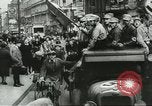
Mistreatment and brutality against Jews as part of Nazi German antisemitism campaigns before and during World War 2
Nazi brownshirts riding on a truck yelling anti-Jewish propaganda in streets of Germany during anti-Semitic campaign of 1933. Signs on Jewish-owned businesses encouraging boycott of those businesses. Brownshirt drawing sign on storefront glass of a shop. Sign with skull and slogan "Achtung Juden" posted on front door of Cafe Unter den Linden. Crowd of German citizens interacting with brownshirts, mostly in support, but one brief scene shows a citizen arguing with a brownshirt posted in front of a Jewish-owned shop. Nazis with swastika armbands leading anti-Jewish chants, while some citizens raise their hands in Nazi salutes. Next scene deals with the Nuremberg Laws including the Reich Citizenship Law and the Law for the Protection of German Blood and German Honor. It shows Herman Goering addressing government officials at the seventh Nazi party congress in September 1935, and reading parts of the so-called blood purity laws and standards. Rudolf Hess and Adolf Hitler are seated in the foreground. Goering reads the proclamation that German citizens are only those of German or related blood, willing to serve the Reich and German people. Goering then reads that marriages between Jews and citizens of German or related blood are prohibited. Scene from courtroom during 1946 Nuremberg trials. Next scene shows Jewish citizens being forcefully and brutally dragged, beaten, and evicted from their homes by Nazis. Some have been stripped of their clothing. A woman is dragged by her hair. A man is beaten. Scenes of German citizens and possibly Gestapo beating and harassing Jewish people in the streets. Clearing of the Warsaw Ghetto in April 1943. Close-up of hand turning device to generate explosive charge. Large explosion in Warsaw Ghetto. Views of buildings burning in the Warsaw Ghetto. People carrying bodies on stretchers. A person being dragged by Nazi soldiers out of a sewer holes where they had been hiding. Nazi German tanks and armor rolling through the ghetto, and artillery being fired at a building. Waffen SS, gestapo police, and Wehrmacht participating in brutality. Jewish man being hit and dragged across street.
Berlin Germany in the first hundred days of Soviet Blockade during the Cold War
Film opens showing Russian Bear covered by iron gate and slate reading 100 days Blockade. Camera pans over war-damaged areas of the city of Berlin, Germany. Narrator refers to the Berlin Airlift by the Allies and the Berlin residents not giving up. Views of several buildings undamaged by World War 2, including Kammergericht, the Headquarters of the Allied Control Council. Streets crowded by pedestrians going about ordinary business in Berlin. Among them is seen a German soldier, missing a leg and using a crutch. Some Berlin industry activity is seen in a factory where welders are at work. Blockade fences are seen separating the Soviet zone of east Berlin from the allied sectors of West Berlin. Trams are seen that cannot travel between the zones. A person trying to use a gas stove to cook, but has no gas pressure. The city grows dark at night due to electricity shortages, resulting in blackout conditions. Berliners trying to manage simple things at home such as exercising on a fixed bicycle. A man planting a garden in sight of the Brandenburg Gate, at the boundary of the Soviet zone. A police officer using a radio in an automobile in the free part of the city. View of the City Council meeting in West Berlin. This is contrasted with view of East Berlin where members of the Socialist Unity Party of Germany (SED) backed by the Soviet authorities are seen meeting in a separate city council of East Berlin, not long before the formal founding of East Germany in 1949. Next, Dr Ferdinand Friedensburg, Mayor of West Berlin, addresses the West Berlin City Council.
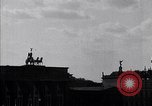
Scenes of Berlin, and its statuary during the Weimar Republic period in Germany, following World War I.
Silhouette of the Quadriga statue atop the Brandenburg Gate (Brandenburger Tor, Pariser Platz, 10117 Berlin, Germany) and the Victory Column (Siegessäule, Großer Stern, 10557 Berlin, Germany) in Berlin, Germany. Then pedestrians and vehicles are seen around the Statue of Frederick the Great along Unter den Linden boulevard. Also seen is statue in Siegesallee created by sculptor Reinhold Begas (and likely August Krauss) in 1900, commemorating German Emperor William I. Bust on the left of the William I statue commemorates Helmuth von Moltke the Elder, and the bust on the right is of Otto von Bismarck. Next, is shown the National Kaiser Wilhelm Monument (Kaiser-Wilhelm-Nationaldenkmal) an equestrian statue of the first German Emperor Wilhelm I, on the west side of the Berlin City Palace (Schloßpl., 10178 Berlin, Germany). View from a camera moving away from the Victory Column on the Königsplatz across from the Reichstag. Final image is an iron Statue of Paul von Hindenburg in front of the Victory Column.
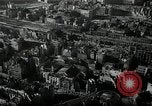
Aerial views of war damage in Berlin, Germany.
War damage in Berlin, Germany as seen from the air. Various buildings destroyed in the Berlin Mitte district. Aerial view of the Potsdamer Platz, the Reich Chancellery (Reichskanzlei Wilhelmstraße 77 Berlin, Germany), and the Reichstag building (Platz der Republik 1, 11011 Berlin, Germany), showing further damage caused by bombing. Aerial view of Mitte district, with heavy damage from bombing. View of the Ministry of Aviation building (now known as the Detlev-Rohwedder-Haus Wilhelmstraße 97, 10117 Berlin, Germany).
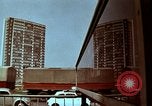
U.S. President John F Kennedy visits Berlin and the Berlin Wall in Germany.
Crowded streets of West Berlin during U.S. President John F Kennedy's visit. Music played by the band as song lyrics contain name of President Kennedy (his Presidential campaign song). Presidential motorcade on the outskirts of West Berlin. Enthusiasm shown by West Berlin people is more than that shown by the people of Frankfurt, Cologne and Berne. Robert Kennedy and Vice President Johnson were prior visitors to West Berlin after the Wall was built in 1961. Views of large crowds along streets cheering for Kennedy. Boys and girls ride scooters and bicycles trying to keep pace with the entourage. A day before President's arrival, scene of East Berlin Police placing red flags on the Brandenburg Gate blocking views through it, and communists display a large board with east German propaganda messages before his arrival . Scenes of the Berlin Wall viewing both the Communist East German side and the West German side, as seen from the West German side. A woman walks her dog along the Berlin Wall. Two women stop to reflect at a memorial for a victim killed by East German police while trying to cross over "no man's land" between the two sides. Views of the Berlin Wall and barbed wire ad razor wire in "no man's land" between East Germany and West Germany. Presidential motorcade turns to onto 17th June Street. President Kennedy takes a look at East Berlin side. President Kennedy stands before the Wall accompanied by Chancellor of Germany Konrad Adenauer. Motorcade leaves Brandenburg Gate and crosses 17th June Street. President's car is preceded by a truck with American and German photographers. The entourage stops at the Allied Checkpoint Charlie.
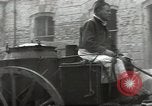
Soviet soldiers and sailors stand before Brandenburg Gate after capture of Berlin, Germany (WW2)
Soviet troops occupy Berlin, Germany during World War II Battle of Berlin. Soviet horse-drawn portable kitchen wagon on street. Soviet flag on top of Borsig Palace (Voßstraße 1, 10117 Berlin, Germany). Gaping hole in the foundation of Borsig Palace. Soviet troops and sailors stand before Brandenburg Gate. Various bombed out buildings of Berlin. Soviet WAC (Women's Army Corps) directs traffic at Brandenburg Gate. View of Adlon Hotel (Hotel Adlon Kempinski Berlin, Unter den Linden 77, 10117 Berlin, Germany). Fire inside a building.
CRITICALPAST.COM: About Us | Contact Us | FAQs - How to Order | License Agreement | My Account | My Lightboxes | Shopping Cart | Advanced Search | Featured Collections | Website Terms & Conditions | Privacy Policy ©2026 CriticalPast LLC.
License Agreement |
Terms & Conditions |
Privacy Policy
©2026 CriticalPast LLC.