


 Francais
 Deutsch
 Italiano
Refine Your Search
Berlin Germany 1935 stock footage and images
- Showing 4075 to 4080 of 6795 results more
more Hide
Hide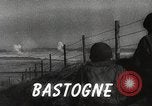
Scenes of the siege of Bastogne and subsequent advance of Allies into Haguenau and Germany, in WWII
Scenes from the Battle of the Bulge, and siege of Bastogne during World War Two. Large numbers of United States Army Air Force C-47B Skytrain transport planes drop parachute supplies for troops at Bastogne, Belgium. Ruins of the town of Bastogne. A street littered with dead bodies and rubble. U.S. troops advancing into the town of Haguenau on the border with Germany, and further into Germany, itself. American MPs (Military Police) search civilians and check identity cards and check U.S. soldiers in military vehicles to guard against Germans in American uniforms. U.S. M4 Sherman tanks move ahead on the front. Artillery being fired. Troops engage in street fighting. Group of Alsatian women rejoice as they are being released from a prison, where they had been held by Germans. U.S. troops advance through a wooded area. U.S. Secretary of State, James F. Byrnes speaks about the sacrifices of U.S. troops who are fighting and dying for their country and appeals to Americans, safe at home, to work for the war effort.
U.S. severs diplomatic ties with Germany; President Woodrow Wilson signs documents in the White House; April 2 declares war.
U.S. severs diplomatic ties with Germany on February 3, 1917. View of American President Thomas Woodrow Wilson at the White House in Washington DC. President Wilson seated at a desk reads documents. He signs a document and hands it to an official. President Wilson addresses the Congress and declares war on Germany on April 2, 1917.
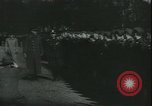
Norwegian, French, Latvian and Lithuanian volunteers boarding trains to Germany in the European Theater during World War II.
Volunteers entrain to Germany in the European Theater during World War II. Minister-President of Norway Vidkun Quisling and an officer inspect police volunteers in Norway. The volunteers standing in formation. Several trees in the background. Insignia on the volunteers' uniforms. The Minister-President salutes and the officer hands over a flag to one of the volunteers. French volunteers inspected in Versailles, France. A few officers in front of the volunteers. The volunteers moving in columns on a path. The volunteers at a rail station with their baggage. They board a train to Germany. Latvian and Lithuanian volunteers for German Army service and a large crowd at a rail station. The volunteers boarding a train with their baggage. The train leaves the rail station. The volunteers waving to the crowd gathered at the station.
U.S. General Lucius Clay in Washington DC warns that continued food shortage in Germany will harm the European Recovery Program
U.S. providing Marshall Plan aid to Europeans U.S. Commander of occupation zone in Germany Lucius D. Clay climbs down a ladder. General Lucius Clay interviewed by men at the airport. The General speaks into a microphone. General Clay gives a report about communist inspired strike and food demonstration. General Clay says that if food shortage continues in Germany, communists may stir up greater trouble and harm the European Recovery Program. Congressmen Smith and Mundt seated on a chair. The men talk about the European Recovery Program also known as Marshall Plan. The men talk about various ways through which they can give information about the plan to the whole world.
Industrial and cultural advances in USA contrasted with Nazi Germany; children sing a song in a church and play
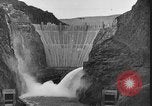
A motion picture film explores the background of World War II. In the United States a view of a large hyrdoelectric dam with water gushing through its gates. Electrical towers of a power plant and a man throwing large switches to activate power. Newspaper headlines: 'Senator oppose the league of nation' and 'Senate passes tariff bill by 44 to 42 vote'. A crowd holds posters of Dewey, German Chancellor Adolf Hitler and other leaders. Books of competing ideologies for sales in the United States, including those of democracy, socialism, fascism including Mein Kampf and books about Stalin. Voting time in Germany with Hitler as the only candidate and signs promoting Hitler. Germans casting voting ballots for Hitler. People burning books in Nazi Germany. A church in America or Britiain with close up views of a boys choir singing hymn "Onward Christian Soldiers." Children in America playing at a playground on a jungle gym and slide. A girl makes a drawing of natural scenes. American children smiling, playing, and running.

Ralph Heinzen gives an intelligent analysis of internal conditions in Germany as SS Gripsholm arrives in New York (WW2)
SS Gripsholm (Ship) arrives in New York, United States in World War II. Cameramen take photos as SS Gripsholm as it arrives at New York harbor. The rails are crowded with Americans. She docks at Pier F in Jersey City and ambulances roll away with wounded soldiers. Six hundred and sixty-two repatriates from German internment camps come ashore. S. Pinckney Tuck, excharge d'affairs in Vichy seen. Douglas MacArthur (General Douglas MacArthur's nephew), approaches with his dog. Passengers are happy to come in home. Ralph Heinzen of the United Press gives an intelligent analysis of internal conditions in Germany today. Stalingrad was the turning point, he states. Germany began losing the war with that defeat and Hitler started losing prestige.
CRITICALPAST.COM: About Us | Contact Us | FAQs - How to Order | License Agreement | My Account | My Lightboxes | Shopping Cart | Advanced Search | Featured Collections | Website Terms & Conditions | Privacy Policy ©2026 CriticalPast LLC.
License Agreement |
Terms & Conditions |
Privacy Policy
©2026 CriticalPast LLC.