


 Francais
 Deutsch
 Italiano
Refine Your Search
Berlin Germany 1935 stock footage and images
- Showing 4543 to 4548 of 6795 results more
more Hide
Hide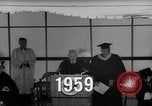
Buildup of South Vietnamese military with American advice and assistance
American aid to South Vietnam during the Vietnam War. President Dwight D. Eisenhower, speaking at a Gettysburg College commencement, on April 4, 1959, notes, among other things, that the cost of defending freedom must be paid in many places. And he mentions Berlin,Vietnam,and the Middle East. Scene shifts to South Vietnam where recruits are being signed up for its armed forces. Glimpse of a U.S. Army Lieutenant advisor, in sunglasses, smoking a pipe, on a crowded street. Local people in the area. Scene shifts to 1960. Two U.S. Army Ranger advisors, in full brim hats (3214D-M41), stand near as a contingent of Montagnard troops boards a train. View from armed guard standing on front of train as it travels along a single rail in deserted area. A sudden explosion occurs on the train track about 100 yards ahead. Next machine gun fire is seen coming from an armored gun turret on the train. View from inside the armored compartment, as the gun fires, spraying the surrounding area with bullets, creating two explosions nearby. South Vietnamese soldiers (ARVN) pursuing enemy in wooded areas. One, down deep in underbrush, is firing a machine gun. Several others are engaging enemy with small arms. Huts being blown up. ARVN troops returning from an engagement, carrying wounded on stretchers. Year, 1961, and an official American Government airplane is seen. It carries General Maxwell Taylor (in mufti) who was sent by President John F. Kennedy. Taylor is seen being interviewed on the airport ramp. A U.S. Air Force officer training young Vietnamese pilot trainees. A Vietnamese student pilot in a T-28 training airplane.
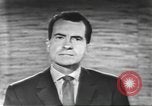
Kennedy and Nixon present their views about a summit conference during a presidential election debate in Washington DC.
The second Kennedy-Nixon Presidential Debate in Washington DC, United States. Alvin Spivak of United Press International asks Republican candidate U.S. Vice President Richard M Nixon about the possibility of occurrence of a summit conference after the presidential elections. Nixon states his willingness as the President to meet Soviet Premier Nikita Khrushchev or any other world leader if it would serve the cause of peace. He states that another summit conference will lead to negotiations at the diplomatic level and hamper peace. He concludes that he would hold another summit conference only after some preparation and assurance from Khrushchev that he wanted something meaningful from the conference. Democratic candidate Senator John F Kennedy states that before any summit conference the United States should build its military as well as economic strength. He talks about U.S. commitment to Berlin. He concludes and says that he agrees with Nixon statement in not meeting Mr. Khrushchev unless there were some agreements at the secondary level- foreign ministers and ambassadors - which would indicate that the meeting would have some hope of success, or a useful exchange of ideas.
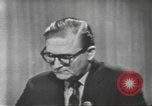
Vice President Nixon and Senator Kennedy debate in the U.S. over a summit conference between the U.S. and the Soviet Union.
The fourth presidential election debate held between Democratic nominee Senator John F. Kennedy and Republican nominee U.S. Vice President Richard Nixon in New York, United States on 21st October 1960. News correspondent John Edwards ask Vice President Nixon about the conditions to be met before meeting Soviet Premier Nikita Khrushchev at Vienna Summit of 1961. Nixon replies that an agenda should be prepared which should delineate those issues on which there is a possibility of some agreement or negotiation. He says that U.S. President should not go to the conference unless they have such an agenda, unless they have some reasonable assurance from Khrushchev that he intends seriously to negotiate on those points. News correspondent Quincy Howe asks Senator Kennedy to comment on the topic. Senator Kennedy says that the U.S. should not go to the summit until there is some reason to believe that a meeting of minds can be obtained on either Berlin, outer space or general disarmament including nuclear testing. He mentions the failure of the conference on May 15th 1960 in Paris, France. He further says it is important that they maintain their determination, that they indicate that they're building their strength, that they are determined to protect their position and that they are determined to protect their commitment.
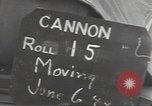
U.S. tanks leave the assembly area in Tidworth, England during World War II.
U.S. tanks in Tidworth, England on D-Day during World War II. U.S. tank crew member chalks 'Berlin or Bust - Goodbye Old England' on side of tank. Jeep loaded with soldiers pulls away. Tanks leave the assembly area.
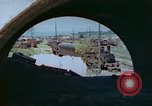
A damaged bridge and a railroad track in Italy after Allied bombings during World War II.
Aftermath of Allied bombings on Italy during World War II. Bomb damage caused in a marshaling yard. A wrecked bridge and bomb craters. A damaged railroad car with a sign on it that reads 'Berlin'. A wrecked railroad bridge.
German train station, cannons firing during WWI, Preparedness Parades in United States WW1
Intertitle saying “1914”. Soldiers marching to battle in Europe during World War I. Newly mobilized German soldiers marching. Soldier blows trumpet. Soldiers march in a German city during WWI. In a German train station, likely Berlin Lehrter Bahnhof, a sign says “Bahnsteig 1” (“Platform 1” in German) and a train with new German soldier recruits departs station. Railway gun in battlefield. Soldier climbs to hide in trench. Bomb explosions in battlefield. A Preparedness Parade in America, advocating for American entry into World War I. Men holding American flags march in parade. Crowds cheer on the Preparedness Parade by the Preparedness Movement. A huge Preparedness Parade in Manhattan, New York City.
CRITICALPAST.COM: About Us | Contact Us | FAQs - How to Order | License Agreement | My Account | My Lightboxes | Shopping Cart | Advanced Search | Featured Collections | Website Terms & Conditions | Privacy Policy ©2026 CriticalPast LLC.
License Agreement |
Terms & Conditions |
Privacy Policy
©2026 CriticalPast LLC.