


 Francais
 Deutsch
 Italiano
Refine Your Search
Berlin Germany 1935 stock footage and images
- Showing 5041 to 5046 of 6795 results more
more Hide
Hide
German coastal guns at English Channel. Bomb damage in German town. Germany Navy in Norway. World War II
German Kriegsmarine Grand Admiral Erich Raeder inspects coastal artillery units along the English Channel during World War 2. He arrives and is greeted by German Naval officers. They study maps on a table. He inspects the guns. A coastal gun raises its barrel, while under a camouglage net. Scene shifts to residents of a German town that had been struck by British RAF bombers. Local residents work to clear up the rubble. Views of bomb-damaged homes, with entire front walls missing. View of damaged kitchen in an apartment. Teams of men working to clear rubble. German children fill a town square to watch the demolition of an unsafe structure. Sign with skull and crossbones next to an unexploded bomb, warning that it is a dud and life threatening. German workers pouring concrete for an airfield. Scene shifts to Kriegsmarine activity in Norway. View of a fjord, and then to many German float planes in a bay near a city. German warships come under attack by British warplanes. German ships antiaircraft guns are brought to bear. German Focke Wulf FW-190 aircraft scrambled to engage the British. Views from German aircraft in flight over the area. Snow covered mountains. View from German ships in the North Atlantic. The German battleship, Gneisenau, underway. Formation of German warships underway. Two German U-boats moving on the surface. A motor torpedo boat. German Stuka, Junkers JU-87 dive bombers, in formation flight. Motor torpedo boat dropping depth charge.
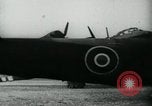
1st Allied Airborne Army troops land in Germany during Operation Varsity in World War II.
The successful airborne crossing of the Rhine river by the 1st Allied Airborne troops during World War II. Aircraft lined up at an airfield. British 6th Airborne Division gliders, British Halifax, Sterling bombers and U.S. Army Air Forces C-47 and C-46 aircraft take off from an airfield in the European Theater. British 6th Airborne Division troops in the field. Airborne troops are briefed. Soldiers synchronize their watches. Soldiers put on equipment as they prepare to take off. Airborne troops board an aircraft. Personnel at the control tower order aircraft to take off. Aircraft and gliders take off. An aircraft taxis for take off and crashes. Aircraft in flight. Troops aboard an airborne aircraft. Allied paratrooper soldiers jump and descend. Aircraft in flight as they drop bombs. Explosions occur. Soldiers fire rifles. Soldiers enter a village and take German prisoners.
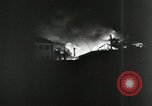
Buildings and infrastructure burned during the invasion of the Soviet Union by Nazi Germany (WW2)
Houses, factories and buildings on fire before the arrival of advancing Nazi German troops in Ukraine during Operation Barbarossa of World War II. People set flames to their fields, houses, so that it does not fall into hands of enemy. Soviet troops dynamite dams and hydro power plants to halt German advance in December 1941.
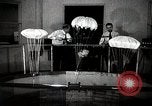
German scientists experimenting with parachutes in a vertical wind tunnel at Wright Field in Germany.
German scientists experimenting with parachutes during OSS Operation Paperclip at Wright Field in Ohio, United States. Two scientists stand upon rim of a vertical wind tunnel. 3 parachutes are tied on a pipe in the tunnel. A scientist bends a parachute with a stick and lets it expand. The other scientist near him helps him record readings.
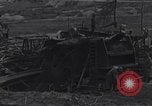
British troops inspect damaged Germany heavy artillery captured on the Western Front in World War I
British soldiers inspect a German 38 cm SK L/45 Langer Max heavy siege gun, in fixed installation, captured in World War 1, on the Western Front. The barrel is partly buried, and there is considerable damage elsewhere. An officer uses a tape to measure the barrel diameter, and holds it up to his chest.
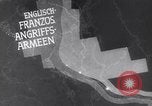
The Maginot Line and its inner workings. Allied forces marshaling to confront Nazi Germany early in World War II
Film opens with animated map showing the Maginot Line and attacks along it by Britiish and French and French Armies. Then it shows German Armies breaking through the line. Camera focuses along lines of steel post antitank barriers extending out of sight. Map illustrates fortifications in area labeled Maginot Line and shows vertical cross-section cutaway view of the Maginot Line fortifications. A French soldier is seen tending to an engine running deep inside the fortifications. French officers are seen near a large electric generator and large ducts for ventilation to the soldiers underground. French soldiers at a switch board in a communications center. French troops are seen double-time marching out from their quarters at the Maginot Line. Next they enter forts in the line. Closeup of soldiers' feet as they board narrow-gauge train to take them to their respective battle stations in the Maginot complex. View of the train carrying passengers through its tunnels. A French soldier moving large steel containers suspended on overhead trolleys. They appear to contain ammunition. A cook at work in a kitchen within the fort. French soldiers entertaining themselves, singing and clapping as one of them dances. A slate in the film reads:"Nous Vaincrons parce que nous sommes les plus forts" (We win because we are the strongest.) French troops marching to war. Animated map shows Areas under French control, including Colonial Africa, together with German-occupied areas. It shows other forces building up including those from British colonies and Canada and Australia. Closeup of French Colonial soldiers. French allied troops from various regions in the world marching. Massive parade of troops along the The Avenue des Champs-Élysées, in Paris, with the Arc de Triomphe behind them.
CRITICALPAST.COM: About Us | Contact Us | FAQs - How to Order | License Agreement | My Account | My Lightboxes | Shopping Cart | Advanced Search | Featured Collections | Website Terms & Conditions | Privacy Policy ©2026 CriticalPast LLC.
License Agreement |
Terms & Conditions |
Privacy Policy
©2026 CriticalPast LLC.