


 Francais
 Deutsch
 Italiano
Refine Your Search
Berlin Germany 1937 stock footage and images
- Showing 793 to 798 of 6871 results more
more Hide
Hide
President John F Kennedy answers the Soviet Union on the Berlin crisis in Washington DC.
United States President John F. Kennedy addresses a press conference in Washington DC. President Kennedy outlines the West's reply to Nikita Khrushchev's threats to sign a peace treaty with East Germany. He calls on the Soviet government to reconsider its course. “A city does not become free merely by calling it a "free city." For a city or a people to be free requires that they be given the opportunity, without economic, political or police pressure, to make their own choice to live their own lives. The people of West Berlin today have that freedom. It is the objective of our policy that they will continue to enjoy it.” President Kennedy said in his speech.
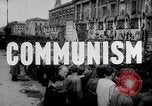
Communist violence and demonstrations in Berlin, France and New York.
A mass Communist demonstration by indoctrinated Germans in Berlin, Germany. Communists resort to violence in France against Marshall Plan aid. In Tokyo, Japan Communists demonstrations crushed by the police. Communists resort to violence at Union Square in New York, United states. Valentin Gubitchev,a Soviet employee in United Nations, being deported, after being sentenced for obtaining secret documents from Judith Coplon.
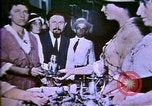
U.S. President Wilson gets reelected as Americans prepare for war during World War I
Events during World War 1. Sketches : In November 1916 newspaper shows Wilson reelected as a president. Cartoon depict the people of America supporting the Wilson's policy of peace. Several sketches of Thomas Woodrow Wilson after winning the election. Second inaugural of President Wilson at the United States capitol in Washington D.C. The German High Command in Berlin. Posters show the hardships of German citizens due to Allied blockade. Germany announces unrestrained submarine warfare against all vessels. Posters of the Germans destroying the American ships. The New York times reports German demarche to Japan and Mexico for support to Germany. Sketch depicts Germany Secretary of foreign affairs, Arthur Zimmermann seeks these alliances. Theodore Roosevelt addresses people. Several sketches of Woodrow Wilson. On April 2nd 1917 President Woodrow Wilson obtains declaration of war against Germany, from congress. American enters the conflict. U.S. Soldiers carry weapons in the battle field. sketches of several American officials. People work in factories to produce war materiel. A person with posters promoting Liberty bonds. A blindfolded person draws numbers from a bowl for civilian conscription. Citizens entering military service. People in a railroad train and others stand outside. People holding baggage walk in a group. A doctor checks the mouth of a recruit. Army recruit getting a haircut. Soldier stands holding guns. Soldiers practice firing artillery. Soldiers march. American recruits practice on wooden guns. Several sketches of the allied armies.
U.S. shuttle-bombing of German positions and military installations under Operation Frantic during World War II.
Film title slate indicates "Operation Titanic" but it, in fact, depicts "Operation Frantic" with U.S. shuttle bombing operations over Germany from bases in Great Britain, Italy and Russia during World War II. United States Army Air Force B-17 Flying Fortresses in flight. Aerial view of bombers in flight with several aircraft flying in formation leaving behind contrails. View inside bomber aircraft with bombardier preparing to drop bombs. View of bomb bay door opening and closeup of hand near bomb drop switch. Bombs awawy view as bombs are dropped from American aircraft. German defenses are bombed along the invasion coast of France (just prior to D-Day) on June 2, 1944. Aerial views of B-24 and B-17 bombers also in flight bombing German military installations in German-occupied northwestern Europe. Aerial view of a target area. Smoke rising up from bombardment. Two different U.S. Army Air Force B-17 Liberator aircraft are seen falling from the sky toward crashes after being hit by German enemy fire. One of them has smoke trailing from it, and the other is in a free fall. Railroad and marshaling yards are also bombed over Debrecen, Hungary on June 2, 1944, with aircraft continuing on (shuttle bombing) rather than returning to base. United States Army Air Forces B-24 Liberator flying in formation on June 21, 1944. Aerial view as they bomb the Focke-Wulf Fw 190 engine aircraft factory near Basdorf, Germany. German factories are bombed. B-17 aircraft on the same date are seeing in formation and bomb railway stations, freight yards, and factory targets, along with the Nazi German Ministry of War, Ministry of Propaganda, and Gestapo headquarters in Berlin, Germany. Heavy flak bursts seen in the air near the aircraft. Dogfight scenes as several German airplanes are shot down. Machine gunners aboard U.S. bomber aircraft firing at German fighter aircraft and shooting down 43 of them, according to narrator. Aerial view of ball turret rotating below bomber and firing guns at German fighter aircraft. The B-17s and B-24s bombing the targets. Synthetic oil plants and refineries are bombed at Ruhland Germany, east of Leipzig. Planning for the operation was done on December 7, 1943. A document about the operation is typed. Animated map shows Nazi positions and method of shuttle-bombing, allowing American aircraft to bomb from Soviet bases, and allies broadly to bomb German targets from bases in the United Kingdom, Italy, and Soviet Ukraine.
Hitler views captured areas in Paris, Dunkirk, and Calais; in Germany Hitler make plans with officers for invading England
'Battle of Britain' from the "Why we Fight" series of propaganda films during World War 2. Adolf Hitler stands with other officers in Paris following Battle of France and views the Eiffel Tower. Elevated view from Eiffel Tower of German troops marching in streets of Paris and under Arc de Triomphe. Damaged buildings in Dunkirk after German invasion. Hitler and staff ride in car through street barely passable with rubble and destroyed buildings on either side. In Calais, view of bombed port area and German soldiers keeping watch from a bunker. Hitler looks through V-shaped rangefinder or sighting binoculars across the English Channel toward Britain. Scenes in Berlin Germany of Reich Chancellery exteriors and interiors where Hitler meets with German officers and plans with other officers for invading England. German soldiers guarding the building exterior; Hitler's staff shown examining maps. Pictorial, animated representation of the first phase of the plan showing attack of England from air by Luftwaffe. Phase two shows attack on coastal areas. Phase three shows the actual attack and the course the German army would take to invade Britain.

Poland before invasion; Germany invading Poland; Hitler addressing Reichstag; view of Siegfried Line.
Scenes before and during German invasion of Poland in 1939 at start of World War 2. Adolf Hitler addresses the Reichstag in Kroll Opera House, Berlin, Germany. Italian soldiers marching. View of dragons teeth and soldiers marching into fortifications including a large bunker or fort with sign text "Scharnhorst werk 1238" partially visible. Large columns of German soldiers marching in goosestep. Airplanes flying in formation over a city. Scenery and landmarks of Polish city of Gdansk Poland (Danzig) before the invasion. People walking on the streets. Various church and other buildings. German sailors on destroyers underway at sea. German sailors manning 20mm antiaircraft deck gun mounted on submarine. Polish infantry and cavalry rally to the defense of their homeland. Polish soldiers driving tankettes (TK or TKS or TK-3) in shallow water and on land. German troops using flame throwers. Smoke arises due to bombardment. German troops firing 77mm field artillery at a bridge. Dragons Teeth seen on the Siegfried Line. Shot of Mussolini giving speech . (Note: Almost no sound .)
CRITICALPAST.COM: About Us | Contact Us | FAQs - How to Order | License Agreement | My Account | My Lightboxes | Shopping Cart | Advanced Search | Featured Collections | Website Terms & Conditions | Privacy Policy ©2026 CriticalPast LLC.
License Agreement |
Terms & Conditions |
Privacy Policy
©2026 CriticalPast LLC.