


 Francais
 Deutsch
 Italiano
Refine Your Search
Berlin Germany 1937 stock footage and images
- Showing 895 to 900 of 6871 results more
more Hide
Hide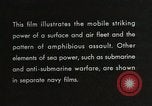
2nd Sino-Japanese war, precursor to World War II in the Pacific. Pearl Harbor attack. Early phase of Pacific conflict between Japan and the U.S.
The film 'Sea power in the Pacific' showing Japanese dominance in China and at start of World War 2. Then it chronicles U.S. efforts to build Navy and fight back on sea and in the air. Opening scene shows Japanese Mitsubishi G3M (Type 96) bombers high overhead, and then closeup in formation. View from bomber of bomb bays open with bombs falling and view from ground of explosions and destruction. Overlay on film says: "China---1931." (This is not correct. The G3M bomber was not yet in service.) This film depicts Japanese attacks during second Sino-Japanese War, commencing 1937, Chinese civilians running to escape Japanese bombing of Singapore. Buildings destroyed and on fire. Next, Japanese troops, carrying the Rising Sun flag, are seen establishing a beachhead in an Amphibious assault. More scenes of Japanese infantry advancing through Singapore, ad it is being destroyed and burned. Soldiers charging along an alleyway, with pagoda in background. Next, Japanese soldiers are seen attacking Nanking, and committing atrocities and killing Chinese during the so-called "Rape of Nanking," in December, 1937. Chinese civilians being summarily shot and dumped into a large open grave after execution. Two Chinese prisoners with hands bound, being executed by rifle fire. Jubilant Japanese troops celebrating their victory. Map shows areas of China occupied during second Sino-Japanese war and the East Indies to the South. View of oil tanks; an open pit tin mine; a native cutting rubber tree bark to collect latex. Flags on map show regions of English, French, and Dutch colonial interest. It also shows Islands to the East, fortified by the Japanese. Cartoon shows Japanese soldier opposed by and American sailor (representing U.S. Sea Power). Next, famous images of the Japanese attack on Pearl Harbor, Hawaii, December 7, 1941, are shown, including the USS Arizona burning and sinking. Hawaii, Midway, Wake, and the Philippines Islands, are highlighted on a map and Japanese control of the Pacific is illustrated. Japanese soldiers are seen displaying a captured American flag. U.S. Lieutenant General Jonathan M. Wainwright is seen surrendering the garrison at Corregidor, on May 6, 1942. View of Japanese General Masahara Homma discussing surrender terms with Wainright. Map shows interlocking web of Japanese fortified bases in Pacific and need for seapower to oppose it. View of American shipyard with hundreds of workers, employed to build ships for the war effort, in World War 2. Views welding, metal fabrication, and other shipbuilding activity. A new ship going down the ways and a woman christening a new ship with splash from bottle of champagne. A new "Liberty Ship," the Richard Bassett, going down the ways at Bethlehem-Fairfield Shipyard Inc. Baltimore, Maryland. Closeup view as the stern of another ship enters the water upon launching. View of it from a distance. Shipyard workers knock supports from under what may be a landing craft, as it is launched. Japanese warships underway in the Pacific and firing their naval guns. Explosions on a shoreline from naval bombardment. Japanese infantry wading ashore during an amphibious assault. Map shows where Japanese forces attempt an amphibious assault on Southern New Guinea, thwarted by the U.S. Navy in the battle of the Coral Sea of May, 1942. In June, 1942, a Japanese attempt against Midway Island, was again checked by the U.S. Navy in the Battle of Midway. View of USS Wasp (CV-7) carrier deck filled with airplanes, including Grumman F4F Wildcats. A Douglas SBD Dauntless dive bomber being cleared for takeoff from the Wasp. Gun camera film showing Japanese airplanes being shot down by pursuing U.S. aircraft.
Second Sino-Japanese War
Opening scene shows formation of Japanese Mitsubishi G3M bombers in flight. View of bombardier at bomb sight inside a bomber. Bombs falling from the aircraft, upon the Chinese city of Shanghai, on a day in September, 1937. Ground level view of bomb exploding and Chinese civilians running for cover. A huge explosion throwing earth up. Aerial view of smoke rising from bomb strikes below. More ground views of bombs destroying structures. Chinese people fleeing across a bridge. Cluster of bombs falling from a Japanese airplane. More explosions and destruction. view from a G3M bomber, of others with bombs falling from them. View from above of civilians filling a street as they run for shelter. People on the ground rushing in all directions. Some are in horse-drawn carriages with luggage on top and other in rickshaws, apparently fleeing the city altogether. Bombing victims lying on the ground near destroyed structures. Heavy dark smoke rising from the attacks. Scene shifts to Japanese army officers entering the Yasukuni shrine in Tokyo. Behind them is A Shinto Tori (Gate) and behind that, the monument (statue) of Omura Masujiro. Scene shifts again, to view of the Temple of Heaven, an ancient Imperial Sacrificial Altar in Peking (Beijing) China. Chinese agriculture. Crowds of Chinese people. Stone statue of traditional Chinese lion. Picture of 1851 oil-on-canvas painting by the German American artist Emanuel Gottlieb Leutze, of Washington crossing the Delaware. Drawing of 15th century ship similar to one in Columbus'1492 voyage to America. Drawing of Roman Empire era building. Michelangelo’s statue of Moses. Drawing of ancient Egyptian pyramid and statue. Drawing of Chinese city and environs representing 4 thousand years ago. Extant ancient Chinese shrines and statues. Animated Relief map of China and surrounding countries of U.S.S.R., India,Burma,Thailand, Indo-China, Philippines, and Japan. Animation outlines China Proper. It also shows Manchuria and scenes from there of desolate mountainous land, with miners at work extracting raw materials. Mongolia and Sinkiang are outlined. The Gobi desert is seen with a long camel caravan crossing it. Closeup of nomads transporting animal skins by camel. The last region outlined is Tibet. The ice covered Himalayan mountains are shown. Buddhist monks praying in the courtyard of a shrine in Tibet. The Yellow, Si Kiang, and Yangtze Rivers are shown on the map. Views of Chinese sailing vessels.
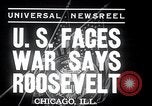
U.S. President Franklin Roosevelt addresses citizens of Chicago; scenes from 2nd Italo-Ethiopian War and Spanish Civil War
U.S. President Franklin D Roosevelt warns of an increasing danger of armed conflict (increasing danger of war leading up to World War 2). Roosevelt's motorcade on the streets of Chicago. A large crowd gathered to get a glimpse of the President. Confetti rained on the motorcade. Soldiers salute as the motorcade passes by. Policemen on motorbikes lead the motorcade. People gathered at the venue to hear the President's speech. A board advertises candy bars 'Baby Ruth, Butterfinger" in the background. President Roosevelt with officials on stage. He addresses the crowd. Excerpts from his speech are interspersed with scenes of war and conflict elsewhere in the world during the late 1930's. Roosevelt speaks of recent events of "international lawlessness" including in the last few years "unjustified interference in the internal affairs of other nations." Scenes that follow include aerial bombings, naval attacks, and war: Scenes of war carnage during the Second Italo-Ethiopian War of 1935-1936: Ethiopian soldiers on horseback cross a bridge, Italian forces fire artillery from a hill, aerial view as aircraft drop bombs. Italian soldiers pass a burning, smoldering building and overtake an Ethiopian position, with many Ethiopian soldiers lying dead. Ethiopian citizens in area of a war torn village. Bomb damage and war casualties on the street. Italian soldiers collect dead bodies and load them onto a truck. A ship quickly sinking after attack by a submarine. Scenes from battle during the Spanish Civil War in 1936 or 1937. Spanish nationalist and rebel soldiers engage in a battle in a village. Spanish prisoners are marched. Nationalist soldier fires machine gun from a balcony emplacement. Dead body on a road. Soldiers behind a barricade fire at opposition and carry wounded on stretchers. President Roosevelt concludes his speech with, "America hates war. America hopes for peace. Therefore, America actively engages in the search for peace." People applaud.
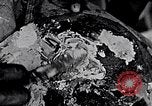
Paintings and sculptures in various stages of completion in U.S.
Different art techniques can be seen. African American artists making paintings and developing sculptures during Harlem Renaissance. Paintings and sculptures in various stages of completion. 1937.
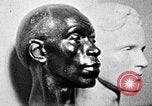
Busts and Full Body Sculptures by Richmond Barthe seen in artist workshop studio in New York City
Various sculptures like busts and full body sculpture can be seen. Full body sculpture of an adult male is shown. Works are by African American sculptor Richmond Barthe, circa 1937.
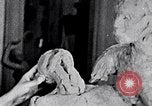
Creation of Sculpture by African American artist Richmond Barthe in U.S.
Artist Richmond Barthe working on a sculpture in New York City, circa 1937, during the Harlem Renaissance. The sculpture is still in its designing phase. Barthe is seen adding material to the sculpture.
CRITICALPAST.COM: About Us | Contact Us | FAQs - How to Order | License Agreement | My Account | My Lightboxes | Shopping Cart | Advanced Search | Featured Collections | Website Terms & Conditions | Privacy Policy ©2026 CriticalPast LLC.
License Agreement |
Terms & Conditions |
Privacy Policy
©2026 CriticalPast LLC.