


 Francais
 Deutsch
 Italiano
Refine Your Search
Berlin Germany 1937 stock footage and images
- Showing 1501 to 1506 of 6871 results more
more Hide
Hide
General Eisenhower makes inspection tour of Italian and American Air Force units at Wiesbaden Airfield, Germany
Operation Jupiter, Wiesbaden Germany. A motorcade of U.S. Army staff cars drives along the edge of the Airbase at wiesbaden, Germany. A USAF C-47 aircraft is parked nearby. Next, military officers are seen, from behind, walking toward large white tents pitched on the airfield grounds. General Dwight D. Eisenhower is recognizable, walking rapidly, with American and Italian officers. The most senior American officer in the accompanying group is USAF Major General Truman H. Landon, Deputy commander-in-chief and chief of staff for U.S. Air Forces Europe (USAFE). He seems content to stay pretty much in the background during the tour. Three Italian fliers are seen in closeup, standing in front of an Italian de Havilland DH-100 Vampire aircraft. They come to attention as General Eisenhower approaches. He shakes their hands and speaks with them. Italian and American officers huddle around him as he continues speaking with the Italian fliers. Eisenhower and his entourage walk through a line of parked Italian DH-100s and he speaks with several more Italian aircrews. Still moving at a brisk pace, Eisenhower crosses to a bivouac area of large brown tents, that he inspects. His principal tour guide from this point on is USAF Colonel George Laven, Commander, of the 86th Fighter-Bomber Wing. The group then crosses to an area paved with Marsden matting (Pierced steel planking) where several F-84E aircraft of the USAF 527th Fighter-Bomber Squadron (86th Fighter-Bomber Wing) are parked. Eisenhower stops to speak with a pilot and two airmen standing in front of one of the planes and continues on to meet several more.
General Eisenhower departs Wiesbaden Airfield, Germany, after an inspection of U.S. and Italian Air Force units there.
Operation Jupiter, Wiesbaden Germany. General Eisenhower prepares to depart following an inspection of Italian and American Air Force units and equipment at Wiesbaden Airfield, Germany. several staff cars drive up to a parked USAF C-121 Constellation aircraft. A color guard stands nearby. As Eisenhower walks through ranks of honor guard, a military brass band plays. He is accompanied by Major General Truman H. Landon, Deputy commander-in-chief and chief of staff for U.S. Air Forces Europe (USAFE). They complete a quick review of the honor guard, salute the colors, and Eisenhower shakes hands as he walks to the stairs of his waiting aircraft. "7167 Special Air Missions Squadron" is written on the aircraft stairs. The aircraft begins to taxi out immediately. Its tail number is 48-614. A formation of Italian DH-100s flies overhead in salute. The C-121 is not seen again. The Italian DH-100s return and land.
Dead bodies piled up at Buchenwald concentration camp in Weimar, Germany.
Concentration camps in Germany. Male survivors at Buchenwald concentration camp in Weimar, Germany. Red Cross trucks from Switzerland arrive at the camp. Male survivors leave the camp. Bodies of dead inmates lay on ground with nationality and prison number tattooed on their stomachs. Male survivors from various European countries. Starved and feeble bodies of the victims. Dead bodies piled up outside the crematory. Pile of dead onto a truck. One of the weapons used by the SS guards upon the prisoners. A number of ovens at the crematory. The name of the firm on the oven door. A heap of bone ash. (World War II period).
Czechoslovakian internee of Buchenwald concentration camp interviewed in Germany.
Internees at a concentration camp in Buchenwald, Germany. Victor Herskovics, a Jewish teacher of German language and history from Prague, Czechoslovakia interviewed at Buchenwald concentration camp in Germany. He tells how he was badly treated in prisons and concentration camps after the Nazi occupation of Czechoslovakia. (World War II period).
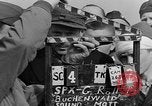
Czechoslovakian Jewish internee of Buchenwald concentration camp interviewed in Germany.
Internees at a concentration camp in Buchenwald, Germany. Victor Herskovics, a Jewish teacher of German language and history from Czechoslovakia interviewed at Buchenwald concentration camp, Germany. He talks about how he was badly treated in prisons and concentration camps after the Nazi occupation of Czechoslovakia. He states that he is the only person alive from his family. He thanks the American Army for liberating him from the concentration camp in Buchenwald. (World War II period).
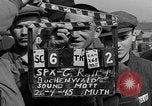
German Jewish internee Otto Feuer of Buchenwald Concentration Camp is interviewed in Germany following camp liberation.
Internees at a concentration camp in Buchenwald, Germany. Otto Feuer, a Jewish internee from Hamburg states how he has been in concentration camps for past six years. He thanks the American Army for liberating them from the concentration camp in Buchenwald, Germany. He considers himself lucky for having been liberated after so many years of captivity. Other internees in the background.
CRITICALPAST.COM: About Us | Contact Us | FAQs - How to Order | License Agreement | My Account | My Lightboxes | Shopping Cart | Advanced Search | Featured Collections | Website Terms & Conditions | Privacy Policy ©2026 CriticalPast LLC.
License Agreement |
Terms & Conditions |
Privacy Policy
©2026 CriticalPast LLC.