


 Francais
 Deutsch
 Italiano
Refine Your Search
Berlin Germany 1937 stock footage and images
- Showing 13 to 18 of 6871 results more
more Hide
Hide
Some rocket motor designs of 1930s and speculation about future of rocketry
Liquid Rocket motor design drawings of various pioneers in the field, from the American Rocket Society, including: Constantin Paul van Lent (aka Constantin Tselentis,aka Constantin Lent, aka Dr. Constantin Paul van Lent) 1936; Alfred Africano, 1937; Reed,1937; Wild,1938; H.F. Pierce and Nathan Carver, 1938. Slates refer to the post World War I period through about 1938, as the beginnings of rocket flight, and the immediate subsequent period as the second phase of achievement that could lead to high altitude and long range rocket missiles and even manned spaceships. Slate suggests that future of rocketry is limited only by our imagination. Next are imaginary, science fiction scenes like a science fiction movie, showing a major city, in Germany, as a rocket ship travels away from it, and eventually showing Europe, and the earth from outer space, as the rocket travels into the blackness, beyond. Slate comments about eternal longings related to human flight.
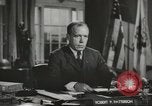
American Undersecretary of War speaks to difficulties facing Allies in confronting Germany and Japan in World War II
Undersecretary of War, Robert Porter Patterson, Sr. speaks about a report from the General staff outlining the needs for combating Germany and Japan in World War 2. He cites Operation Husky, the invasion of Sicily, as an example of what will be needed. He continues to narrate in the background as an animated map appears showing the buildup of supplies and Allied forces in North Africa; Allied air forces flying 60 thousand sorties over Sicily and, the direct amphibious assault using 3,200 vessels. Map also depicts opposing forces of 12 (“unwilling”) Italian Divisions and 3-1/2 German Divisions. View of Allied troops carrying some of their 31 thousand casualties on stretchers from field ambulances. Allied medics attending to the wounded. Some are seen lying on stretchers in a row on the ground near a wall. Interior of a field hospital where surgeons and other medical personnel treat the wounded. Animated map shifts to Europe with Germany at its center, showing , in contrast to Sicily that was only an “outpost,”, the heavily fortified perimeter of Axis controlled areas; the axis industrial might; and the disposition of 300 German Divisions (mostly on the Eastern front) defending the region. Next, the map illustrates Japan’s defended regions in the Pacific Image returns to Undersecretary Patterson i n his office, speaking of the Allied offensives planned for next year (1944), and emphasizing their challenge and difficulty. Scene shifts to General Jonathan Wainwright and his garrison at Corregidor, in the Philippines, surrendering to Japanese forces in 1941. Japanese military camera pans over the Americans being taken prisoner. Other Americans and Filipinos are seen being marched together under guard. Scene shifts to classic views of the Japanese attack on Pearl Harbor, Hawaii, on December 7, 1941. View of Japanese soldiers executing two Chinese civilians in 1937. Dangling bodies of persons hung by Nazis during Operation Barbarossa in Russia, in 1941 A Russian soldier comforts a little girl as he escorts her across a snowy landscape. Time bomb left by German forces retreating from Naples, Italy, in 1943, blows up a Post office building . Views of damage to building and bodies of victims. American Military Police assisting a victim. American soldiers carrying an injured civilian on a litter. Scene shifts to British Foreign Minister, Anthony Eden, Soviet Foreign Minister, Vyacheslav Molotov, and U.S. Secretary of State, Cordell Hull, entering a hall in the Spiridonovka Palace, during the 1943 Moscow Conference in Russia. Close-up of the American, Soviet, and British flags on a table. View of many delegates seated around the table. Close-up of Molotov, Eden, and Hull signing conference document.

Social and Economic differences between West Berlin and East Berlin, Germany during communist rule of East Germany.
Communist threat to Berlin, Germany as the Soviet Union presses for a unified Communist Berlin. Traffic signal man demonstrates hand signals on street in West Berlin. View of citizens in West Berlin shopping, engaging in commerce, and going to and from work among newly constructed buildings, improved roads, and wearing new fashions. Sign near the Brandenburg Gate. Contrast is made with East Berlin, East Germany where buildings still in ruin from World War II are shown, including on the famous Unter den Linden Boulevard. Communist East German troops march on road. Woman enters a building and writes on a note pad. East German workers dig with spades at a construction site. The Western Powers get out of free Berlin uniting with the East Berlin under communist rule. Social and economic differences seen contrasting communist versus capitalist systems in Berlin. A woman working alongside men at a construction site.
Hitler lays a wreath on the caskets of German sailors killed in the Spanish Civil War.
Date: 18th June, 1937. German sailors killed in the Spanish Civil War are brought home to Germany on the Battleship, Deutschland. The warship glides slowly to a pier, where a band and military honor guard stand at attention. Crew of the Deutschland stands on deck in formation. Flower-covered caskets of the fallen sailors, are seen on the deck of the Deutschland. A flag of Nazi Party, at half mast, on a building. Views of the funeral on land, for the fallen sailors. A German Admiral speaks at a podium, surrounded by the caskets of the fallen. Honor Guards surround the lawn. Civilian mourners stand holding umbrellas, against a rain shower. Adolf Hitler ceremoniously lays a wreath on the caskets and walks slowly and quietly past the mourners.
Ninth Nazi Party Congress Rally in Zeppelin Field, focused on the RAD (Reichsarbeitdienst) National Labor Service
A major rally in Zeppelin Field, part of the Ninth Nazi Party Congress activities in Nuremberg, Germany between 6th -13th September, 1937. German Chancellor Adolf Hitler watches Sturmabteilung (Storm Troopers) parade. He stands on a car and reviews the parade. Civilians watch the parade. The soldiers hold flags of the Nazi Party. Members of the RAD (Reichsarbeitdienst or National Labor Service) are assembled in center of the field. They are stripped to the waist and carry shovels. They perform a drill with the shovels. The crowd cheers. Leader of the RAD, Konstantin Hierl, presents the 38,000 members assembled, to Adolf Hitler, who then greets them from the podium. The RAD members sing an anthem.
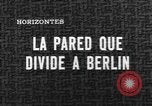
Scenes of Berlin divided by newly built Berlin Wall; Unrest in the years after division into East and West Berlin, Germany
The divided city of Berlin, Germany caused by the erection of the Berlin Wall. Shows early scenes of the Berlin Wall being built. Opening scene shows camera pan from Brandenburg Gate down to street level where East German construction workers are using a jack hammer and hand digging a trench across the middle of the street to serve as foundation for the Berlin Wall. A Soviet guard watches over the construction workers. East Germans and Soviet Russians walking with a spool of razor wire, putting up barbed wire barricades along other sections of the dividing border. German citizens gathered along the wall as it is built in a field area. Several young men in suits being pushed and harassed by a guard on the East German side of the Berlin Wall. View of a railroad train track that has been cut, and workers digging a deep trench at the site to build the wall right through the run of railroad track. East German refugees walking through a checkpoint area, desperate to leave east Germany before total closure of the border occurred. Refugees gathered in crowded shelters with mattresses on the ground. Young German children and babies sleeping on mats. Views of barbed wire crossing railroad track runs. Animated map showing routing of aircraft for the Berlin Airlift in response to the Berlin Blockade by the Soviet Union in 1948. Views of various aircraft flying overhead, bringing supplies to citizens during the blockade. Relief supplies and food being unloaded at airport for citizens. People waving white handkerchiefs in the air to express thanks as a Berlin Airlift airplane passes overhead. Scene changes to 1953 riots on the streets of East Berlin, Germany, with crowds of protestors throwing rocks at a Soviet tank and views of a building on fire with smoke pouring from its windows. Next scenes show West Berlin scenes as a juxtoposition of the East Germany scenes. Views of successful German industry and commerce in West Berlin. People working in West Berlin. Newly built tall buildings in West Berlin. German people shop in stores. A boy adds a bar of chocolate to a shopping basket. Men working in large industrial plants and factories. Large Siemens equipment in use in an electrical transmission component factory. A scientist or engineer looking through a microscope like device.
CRITICALPAST.COM: About Us | Contact Us | FAQs - How to Order | License Agreement | My Account | My Lightboxes | Shopping Cart | Advanced Search | Featured Collections | Website Terms & Conditions | Privacy Policy ©2026 CriticalPast LLC.
License Agreement |
Terms & Conditions |
Privacy Policy
©2026 CriticalPast LLC.