


 Francais
 Deutsch
 Italiano
Refine Your Search
Berlin Germany 1937 stock footage and images
- Showing 2533 to 2538 of 6871 results more
more Hide
Hide
United States Infantry troops patrol with Sherman Tanks on streets of Leipzig, Germany (WW2)
United States Infantry troops patrol on streets of Leipzig, Germany during World War II. Sherman tanks advance on streets. Huge German civilian crowd comes out of homes with white flags in hand.

United States Infantry troops patrol on streets of Leipzig, Germany and civilians with white flags (WW2)
United States Infantry troops patrol in streets of Leipzig, Germany during World War II. Sherman tanks advance on streets. Troops with rifles in hand march on road. German civilians stand with white flags in hand. Empty street in Leipzig.
German civilians dig graves and bury Nazi atrocity victims in Gardelegen, Germany.
German civilians forced by U.S. Army soldiers in World War 2 to dig mass graves for Nazi atrocity victims of the Gardelegen Massacre, in Gardelegen, Germany. Bodies of slave laborer political prisoners on the ground, including Russians, Poles, and French, many of whom had come from the Mittelbau-Dora Concentration Camp and the Hannover-Stöcken Concentration Camp . A large barn in the background on the Isenschnibbe estate, showing evidence of fire damage, where many victims were found by the U.S. Army 102nd Infantry Division on April 14, 1945, after having been locked in the barn which was then set on fire on April 13, 1945. German civilians uncover nearby existing hastily dug mass graves containing piled victims. Dead bodies placed in new graves and covered with dirt. Civilians under U.S. Army direction dig long, mass grave trenches to bury the dead.
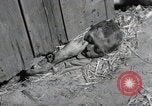
Mutilated and burned bodies of Nazi prisoners, including Russians, Poles and French at a barn in Gardelegen, Germany.
Aftermath of the Gardelegen Massacre: German civilians dig grave for Nazi atrocity victims in Gardelegen, Germany. Mutilated and burned bodies of one thousand political deportee prisoners, including Russians, Poles and French, in and around a large barn. United States Army Infantry troops view and inspect the bodies, and supervise German civilians being forced to dig mass graves for the victims, who had been transported to the barn from the Mittelbau-Dora Concentration Camp and the Hannover-Stöcken Concentration Camp during World War 2.
YMCA volunteer women provide refreshment to U.S. troops arriving in Coblenz, Germany. Troops visit YMCA library.
World War 1 U.S. troops greeted by YMCA volunteer women with refreshments upon arrival at train station in Koblenz,Germany. Troops seen checking out books and magazines and reading in a YMCA library.1917-1918.
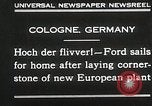
A large crowd watches Henry Ford lay 2-Okt-1930 imprinted corner stone for new European Ford plant in Cologne, Germany.
Henry Ford arrives at the site of a future Ford factory in Cologne Germany. He is shown a place where the corner stone is to be laid. As German officials in tophats standby, he lays a stone with 2-Okt-1930 imprinted on it. He fixes the stone with cement. A large crowd gathered to watch him.
CRITICALPAST.COM: About Us | Contact Us | FAQs - How to Order | License Agreement | My Account | My Lightboxes | Shopping Cart | Advanced Search | Featured Collections | Website Terms & Conditions | Privacy Policy ©2026 CriticalPast LLC.
License Agreement |
Terms & Conditions |
Privacy Policy
©2026 CriticalPast LLC.