


 Francais
 Deutsch
 Italiano
Refine Your Search
Berlin Germany 1937 stock footage and images
- Showing 4603 to 4608 of 6879 results more
more Hide
Hide
The challenges of reconstruction and rise of communism in Europe after World War II
Reconstruction problems in Europe in the aftermath of World War II. Examples of prewar Germany's industrial and commercial prowess, showing its consumer products and famous cameras. A German coal-burning power plant and miners extracting coal from Germany's vast natural supplies. Coal being transported by conveyer belt. Open rail cars loaded to capacity with German coal. A German iron and steel plant dependent on coal. Shift to postwar destruction including destroyed: German factory; locomotive; rail yards; trucks; farm machinery; fertilizer plant; farm fields lacking crops. Shift to prewar era with view of British coal cars getting ready to be emptied for export to Europe. Current postwar view of British coal cars and coal, that narrator says are barely enough for her own needs. View of prewar German coke being loaded onto conveyers. Coal miners receiving food ration cards. Animated map showing "Iron Curtain," of Soviet occupation, separating traditional German regions of agriculture from those of industry. British Foreign Secretary, Ernest Bevin; French Foreign Minister, Georges Bidault; Soviet Foreign Minister Vyacheslav Molotov; and U.S. Secretary of State, George Marshall; are seen at the Paris Conference in 1946 where they negotiated the postwar future of Germany. Reminder footage of Hitler with brownshirts in 1930s. Italian police coping with communist inspired unrest in Italy. Bombed out buildings in snow. Europeans literally scratching for bits of food from pavement and trash heaps. Two women fighting with each other during time of shortages and ration. Dejected woman. French Communist party leader, Maurice Thorez, speaking to a large crowd. Party flag with hammer and sickle behind him.
Montage of scenes illustrating the final stages of World War II in Europe
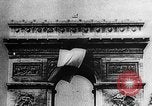
Liberation of Paris August 22, 1944. Tricolor flying from Arc de Triomphe. Crowds celebrate. Young people dance in street. Tanks firing guns. Bombs dropping on Germany. American tanks firing in Cologne, Germany. Spires of Cologne Cathedral loom above destruction and rubble in streets of Cologne. German civilian refugees on the streets. Germans in front of air raid shelters. Animated map showing Soviet advance from East.Formation of Ilyushin Il-2 aircraft. Soviet tanks in farm field. Silhouetted German soldiers surrendering. Wounded and dead German soldiers. Destroyed German military equipment. A long line of surrendered German soldiers. Allied forces driving into Germany beyond the Rhine River. Suffering German civilians and refugees including men, women, and children in desperate circumstances after the devastation of war. German refugees walking on roads, including babies in carriages or prams.
The Gripsholm arrives in New York harbor with soldiers and others recently freed from German prisoner camps (WW2)
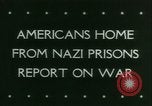
The Swedish American ship Gripsholm arrives at New York harbor carrying American soldiers and others exchanged for German prisoners in World War II. 160 were internees at Vittel. Others included American diplomats from Vichy who were being held at Baden-Baden. Soldiers stand on deck and wave as ship is docked at Pier F in Jersey City. The soldiers disembark the ship. The Wounded soldiers. Diplomats and war correspondents talk about the conditions of Germany as it is losing the war. Douglas MacArthur (nephew of General Douglas MacArthur) is seen with a dog as he arrives. Ralph E. Heinzen of the United Press describes conditions in Germany and stresses that Germany is losing the war.
German invasion of France,sinking of RMS Lusitania and resignation of William Jennings Bryan
Events during World War I. Sketches : workers in a German arms factory. German soldiers advance towards France. Animation of a map shows the German invasion of France through Belgium. Kaiser Wilhelm II, the German Emperor. Buildings damaged by invading Germans. U.S. president Thomas Woodrow Wilson advises Americans to stay calm. American people read papers. Cartoon depicts the President about his domestic reforms. The German atrocities in Belgium. Man holds a dead person. Sketch depicts Germany crushing everything on its way. The apprehensive people of America. Sketches of American man against a German leader. Trucks and taxi cabs on the Orne river. A gun barrel. Bombs being dropped on the German ships. Worker at a factory in America. Sketch of a man standing beside a flag having the dollar sign shows the prosperous America. Sketch shows the various resources required by the American industries. An American ship carrying war materiel. Sailors in German submarines. German submarines target allied ships. Sketches of U.S. president Wilson warning Germany. On 1st May 1915 RMS Lusitania a British luxury ship at sea as it starts from New York. Paper shows a warning by the German government. A German sailor on board a submarine as it targets a ship. The RMS Lusitania ship sinks killing many, including Americans. The U.S. secretary of State William Jennings Bryan and Thomas Woodrow Wilson with other officials. The former U.S. president Theodore Roosevelt addresses people opposing President Wilson's policy. The President prepares a note for Germany. Sketch of U.S. Democratic Presidential candidate William Jennings Bryan during his resignation. Sketch of Kaiser Wilhelm II.

Farming, marketing and recreation activities of citizens in the town of Madison, Indiana, alongside the Ohio River in the U.S.
Life in the town of Madison, Indiana, on the banks of the Ohio River. Scenes in and around the town: View of the Milton-Madison bridge across the Ohio River (US-421, Milton, KY 40045, United States) ; the town of Madison on hillside across the river; Church steeples protruding above tree tops in view from above; tree lined and shaded sidewalk; a tower with ramparts; Italian Campanille- style tower; gothic doorway on a church; slate rooftops with chimneys protruding and towers and cupola building top visible; Greek-inspired column; a renaissance-style fountain with statuary. A fraternal building with ramparts; the Madison Fair Play Fire Company fire department building with Italian-style tower (403-405 E. Main St. Madison, IN 47250, USA); Roman columns on the Jackson safe deposit and trust Company “National Branch Bank” building. Children play in the fountain on a hot afternoon. A Stern-wheeler Riverboat plying the river with dense black smoke streaming from its twin stacks. Men from Greece, Ireland, Germany and other parts of the world have settled in Madison. They include a confectioner, a county agent and others. A Greek confectioner inside his shop. A journalist works on a typewriter in an office. He speaks on the phone during a telephone call. A county agent of Dutch descent speaks to clients. An elderly couple from Germany chat and have drinks at a restaurant. A toddler eats pasta while sitting on a highchair. An Italian family eats pasta together at a dining table. Effigy of James Madison, a founding father and the namesake of Madison, Indiana. Farming activities: Farms and houses. Farmer and other men harvest grapes from grapevines. Other farmers harvest tobacco. A woman brings eggs from a hen house. A farmer loads baskets and milk containers on a truck for market day. Market day activities: An open market is set up around the Madison courthouse. A produce merchant sells his products to customers. View of the main street. Buildings seen on either side of the street. Mountains in the background. Recreation activities: Citizens bowling in a club. Ball seen hitting pins up close. They drink at a bar and play billiards and checkers. They dance and watch a movie. Citizens outside the box office, beneath the movie theatre marquee. People inside a movie theater watching a movie. Faces of audience members as they watch the movie screen. Customers get refreshed at a corner drug store where a crowded soda fountain bar area and tables are shown. Students play band instruments during a school concert. View of churches. Parishioners enter a church gate. They worship and pray. A man holds a fishing rod. He walks towards a lake. (World War II period).Life in the town of Madison, Indiana, on the banks of the Ohio River, in the United States. Scenes in and around the town: Steel highway bridge across river; the town on hillside across the river; Church steeples protruding above tree tops in view from above; tree lined and shaded sidewalk; a tower with ramparts; italian-medieval style tower; gothic doorway on a church; slate rooftops with chimneys protruding and towers and cupola building top visible; Greek-inspired column ; a renaissance-style fountain with statuary. A fraternal building with ramparts; the fire department building with Italian-style tower; Roman columns on the Jackson safe deposit and trust Company building. Children play in the fountain. A Stern-wheeler Riverboat plying the river with dense black smoke streaming from its twin stacks. Men from Greece, Ireland, Germany and other parts of the world have settled in Madison. They include a confectioner, a county agent and others. A man works on a typewriter in an office. He speaks on the phone during a telephone call. A man and a woman chat and have drinks at a restaurant. A family eats dinner or another meal together at a dining table. Farming activities: Farms and houses. Farmer and other men harvest grapes from grapevines. Other farmers harvest tobacco. A woman brings eggs from a hen house. A farmer loads baskets and milk containers on a truck for market day. Market day activities: An open market is set up around the Madison court house. A produce merchant sells his products to customers. View of the main street. Buildings seen on either side of the street. Mountains in the background. Recreation activities: Citizens bowling in a club. Ball seen hitting pins up close. They drink at a bar and play pool and checkers. They dance and watch a movie. Citizens outside the box office, beneath the movie theatre marquee. People inside a movie theater watching a movie. Faces of people as they watch the movie screen. Customers get refreshed at a corner drug store where a crowded soda fountain bar area and tables are shown. Students play band instruments during a school concert. View of churches. Parishioners enter a church gate. They worship and pray. A man holds a fishing rod. He walks towards a lake. (World War II period)
Allied Army paratroopers land at Arnhem Netherlands and advance inwards fighting with enemy during World War II.
United States Army and British Army airlifts paratroopers from England to the border of Holland during World War II. British and American transport airplanes and gliders land near Arnhem Holland (Netherlands). Soldiers, tanks and guns supplies offloaded and soldiers begin fighting with the enemy. Soldiers of Dutch Army aid the Allied forces. Allied soldiers rescue injured soldiers and advance towards enemy lines. Allied soldiers meet with Dutch Resistance or Dutch Underground Army members wearing identifying armbands. Group of German Army prisoners is seen including many young boy soldiers. Allied landing draws attention of German units allowing U.S. Army units to cross border into Germany. American soldiers near a bridge and crossing into Germany. They pass near railroad station at Roetgen Germany. Nazi German prisoners use horse carts and bicycle transport while being led away under Allied guard.