


 Francais
 Deutsch
 Italiano
Refine Your Search
Berlin Germany 1937 stock footage and images
- Showing 4645 to 4650 of 6879 results more
more Hide
Hide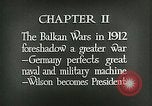
The Balkan Wars continue as the European nations prepare for World War I.
The Balkan War . Troops marching. Tsar Ferdinand I of Bulgaria called the 'Fox of the Balkans'. Generals look at a map. Prisoners standing in a group. Men walk in lines on a path in the Balkans. Soldiers in coats with rifles. Montenegro: King Nicholas I surrounded by military and other officials. A man helps the King put on his coat. Italy: The King and Queen with dignitaries at a ceremony to launch battleships. Spain: The young King Alfonso XIII surrounded by military officials. Germany: German troops march on the streets. Soldiers on horses during a parade. Kaiser Wilhelm II inspects troops. The crown Prince is greeted by the people of Germany.
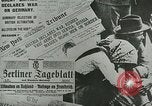
British, Turkish, Belgian, Serb, French, and Australian soldiers mobilize for World War I.
Headlines in various New York and Belgian newspapers report the entry of Austria, Germany, Russia and Great Britain into the World War 1. A poster part of the recruitment campaign by Lord Kitchener, British Secretary of State for War. British troops in the streets of England, mobilize for the war. King George V, his son and uncle, inspect British troops. Turkey: The Sultan of Turkey and other military officials emerge from a building. The Sultan takes his seat in horse carriage and is driven away. Turkish troops at a port and soldiers seated in a ship. Belgium: Bombarded buildings and ruins in Louvain. People and soldiers on the street. People in carts on a road in search of new homes. Military officers study a map. Belgrade: Serbians bomb Belgrade. Soldiers fire artillery guns. Bomb explosions on a hill. British soldiers camp with French soldiers across the channel. Australian soldiers march ahead to join the war. Germany: Retired General Paul Von Hindenburg, commander of the Germans, and other military officers pose outside a building. The German emperor, Kaiser Wilhelm II ascends from the sand dunes of Belgium to inspect his troops in a field. France: French soldiers on alert in trenches and bunkers, defend the borders of Paris. General Gallieni and his troops leave Paris for the front in taxicabs.
President Lubke, Chancellor Erhard and Foreign Minister Schroder arrive for the funeral of assassinated President John Kennedy.
Foreign dignitaries arrive for the state funeral of assassinated U.S. President John F Kennedy. West Germany President Heinrich Lubke arrives at the Dulles Airport. He shakes hands with a member of the German delegation in Washington. West Germany Chancellor Ludwig Erhard, West German Foreign Minister Gerhard Schroder and U.S. Secretary of State Dean Rusk walk into the airport terminal. The dignitaries pose for the journalists and photographers. Secretary Rusk talks to Chancellor Ludwig. He leads the party towards the airport entrance and into the waiting cars. A television presenter gives details of the stay arrangements of the visiting foreign dignitaries.
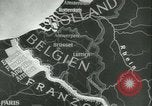
German paratroopers land in Rotterdam and advance during the Battle of Rotterdam in World War II.
The German assault on the Netherlands during the first phase of German assault on France and the Low Countries in World War II. Germany commences Operation Fall Gelb on May 10, 1940. An animated map depicts the movement of the English and French Armies across France towards the Ruhr Area in Germany in response to the German aggression. German Fuhrer Adolf Hitler plans with his Generals and senior officers. An animated map depicts the position and advance of German Army Groups A, B and C towards the French border. German officers discuss over a map. A series of shots of German communication equipment as orders are received, typed, and transmitted by radio operators via morse code, typewriter, switchboard. A soldier leaves with a message on a motorbike. Military vehicles advance towards their positions. German Luftwaffe General Kurt Student accompanied by a Nazi officer greets troops and leaves in a car. German aircraft in flight during the Battle of Rotterdam. The pilot and gunner aboard. German officers and paratroopers seated in the transport aircraft. The paratroopers jump from the aircraft and descend towards the target area of Rotterdam. A map depicts the target area of Rotterdam in Holland. German troops advance on ground. Soldiers on motorbikes and tanks. They uproot barricades, fences and obstructions as they advance. German trucks haul artillery. German troops cross the Rhine in rubber boats and over pontoon bridges. German soldiers stuff grenades into their belts, lay wire, and horses are pushed into water. Street fighting on deserted streets. Medics attend to the wounded. German tank guns fired resulting in explosions. German Junkers Ju 87 or Stuka dive bombers in flight drop bombs over Rotterdam. Tanks are hit. Wounded soldiers helped onto motorbikes. A sign for a field hospital. German Corpsmen care for the wounded. German officers and soldiers during a discussion in the field. Dead French soldiers and wrecked French tanks. French prisoners of war (POW) transferred. Military trucks, antiaircraft guns and jeeps advance.
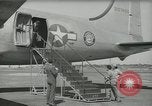
Film rehearsals. Actor playing role of reporter, interviews actor playing role of Soviet diplomat (WW2)
Actors portraying a scene where Soviet diplomat disembarks from a United States Army Air Force aircraft during World War II. Reporter interviews "His Excellency" on Soviet Union's attitude towards division of Germany. Diplomat answers saying the Allies should control Germany's key industries and take away its economic power to wage war.
Allies demand the unconditional surrender of Japan in World War II. Entry of Soviets and use of atomic bomb ends the war.
Representatives of three nations, seated around table at Potsdam Conference held at Cecilienhof in Potsdam, Germany. British prime minister, Clement Attlee; President of United States, Harry Truman; and representative of Soviet Union, Joseph Stalin at the Potsdam Conference, July 1945. They deliver an ultimatum of unconditional surrender to Japan. Swarms of B-29 bombers and Aircraft Carrier Task Forces destroy Japanese homeland. Planes on carrier decks.Navy Grumman carrier-based TBF aircraft dropping bombs.. Destruction of ships at sea. Mushroom cloud due to atomic bombing. Chart depicts the power of one atomic bomb. Britain's 'grand slam' bomb, most destructive conventional bomb ever produced. Doctor Ernest Orlando Lawrence, inventor of the cyclotron (atom smashing machine). A man works at the Cyclotron at the University of California, Berkeley. General Leslie Groves, head of the project speaks. He is seated with Dr Vannevar Bush, government director of science and research, and Dr Richard Tolman, technical expert. Quantities of uranium shipped from Alberta, Canada are used in bombs. The atomic bomb process (Manhattan Project) is developed in widely separated areas; scenes from Hanford Project plant in Richmond, Washington. Project personnel exit cars and enter into the search area before starting their work day. Lieutenant colonel Franklin T Matthias with the army corps of engineers, appointed to the Hanford Project. Sign of 'Oak Ridge' in Tennessee. Largest of the three atomic bomb plants located near the Tennessee Valley Authority (TVA) dam. Employed personnel in atomic bomb plants are seen going to work. Man and woman employees at the plan read and smile at a Knoxville Journal newspaper in August 1945 with news headline "Power of Oak Ridge Atomic Bomb hits Japs" after the atomic bomb was dropped in Hiroshima. View of dense prefabricated home communities to house large number of Oak Ridge plant workers. View of families setting up their houses in trailer towns after the prefabricated homes were full. People come out from the Henebry's Jewelers and supermarket, among stores setup to meet the needs of the quickly built city. Scenes changes to show view of Soviet leader Joseph Stalin at conference. Russian artillery and troops in a parade at Red Square in Moscow, Russia (these parade scenes are from the May 1, 1945 May Day parade, just days before Germany's surrender). President Harry Truman reports on the latest developments regarding the war with Japan. He states that the United States is prepared to destroy every productive enterprise in Japan and the U.S. shall completely destroy its power to make war. He warns of an attack by the U.S. due to the rejection of the July 26th ultimatum at Potsdam. He warns that Japan "should expect a rain of ruin from the air; the like of which has never been seen on this earth." Truman notes that it will be followed by an unprecedented sea and land invasion of Japan.
CRITICALPAST.COM: About Us | Contact Us | FAQs - How to Order | License Agreement | My Account | My Lightboxes | Shopping Cart | Advanced Search | Featured Collections | Website Terms & Conditions | Privacy Policy ©2026 CriticalPast LLC.
License Agreement |
Terms & Conditions |
Privacy Policy
©2026 CriticalPast LLC.