


 Francais
 Deutsch
 Italiano
Refine Your Search
Berlin Germany 1937 stock footage and images
- Showing 5575 to 5580 of 6871 results more
more Hide
Hide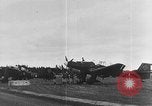
German aircraft in flight as it drop bombs in Poland during Battle of Westerplatte of World War II.
Air raid by Germany in Poland during Battle of Westerplatte of World War II. German aircraft parked at an airfield. Soldiers work on bombs. Aircraft takes off from an airfield. Aircraft in flight. Squadron of aircraft in flight. Machine gunner in an aircraft. Terrain as seen from the aircraft. Aircraft drop bombs.
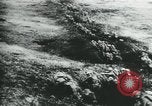
Numerous scenes showing evolution of mechanized warfare emphasizing World War I. but including footage as late as 1934
Montage of scenes illustrating development of mechanized warfare beginning with American Expeditionary Forces (AEF) engaged in World War I. U.S. Army infantry soldiers moving out of trenches going "over the top" into "no man's land" and advancing on battlefield. U.S. troops firing Browning M1917 machine gun,1903 Springfield rifles, and Stokes mortar from trench positions. Soldiers firing mortar are wearing gas masks. AEF trucks and other vehicles ostensibly an improvement over horses, but seen having difficulty in mud. A truck pulling a large artillery gun. A German 80cm K (E) rail gun (developed in 1934) shown at the Rugenwalde Test Range in Germany. It moves along curving rails and is elevated to its maximum elevation (65 degrees). Two World War 1 rail guns firing. An American World War I Naval 14-inch rail gun firing. Allied heavy howitzers firing in World War 1 (one with gun crew in gas masks). American gunners with a French 75 field piece and caisson. French soldier advancing in no-mans-land. The Wright brothers brought warfare into the air with their Wright Flyer airplane, seen being maneuvered on the ground by U.S. Army personnel at Fort Myer, Virginia in July 1909. A De Havilland DH-4 airplane taking off in World War I. A German Fokker D.VIII aircraft in flight. Three U.S. Army Air Service Curtiss P-1B Hawk pursuit aircraft in flight, circa 1926. Aerial dogfight scene including view from behind a pilot in open cockpit biplane (from feature film, circa 1927). Brief view of Renault FT tank maneuvering in World War I. Narrative and clips shift to historical perspective of warfare, showing use of horse and chariot, starting in ancient Assyria and use of elephants in later years by Hannibal. Pictures of mounted soldiers, in the middle ages, waging war in armor, and being transported in a wagon. Shift to World War I showing British Mark IV tanks maneuvering in a field.
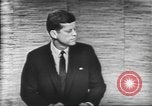
During a presidential election debate in Washington DC, Kennedy comments that its proper to express regrets to nations.
The second Kennedy-Nixon Presidential Debate in Washington DC, United States . Edward P. Morgan of ABC News asks Democratic candidate Senator John F Kennedy about sending apologies or regrets to General Secretary of the Communist Party of the Soviet Union Nikita S Khrushchev over the U-2 reconnaissance aircraft incident. Kennedy answers that if it could save the summit conference it would have been proper to express regrets. He speaks that the U-2 flights were proper from the point of view of protecting their security. But they were not in accordance with the international law. He speaks about the regrets expressed to Castro, to Southern Russia and to Eastern Germany under the Eisenhower Administration during the past years. He mentions the regrets expressed by the Soviet Union and the Chinese Communists to the U.S. over incidents. He states about they should have a stronger military force and should increase their strength all over the world. Republican candidate U.S. Vice President Richard M. Nixon presents his views and states that Senator Kennedy is wrong in thinking that Khrushchev might have continued with the summit conference if the U.S. had expressed regrets. He disagrees with Kennedy's analogies that the U.S. is a strong country and can express regrets for any wrong doings. He also disagrees in expressing regrets to anybody for doing things which has the support of the Congress and which is right from point of view to protect the security of the U.S. (This 4 part debate is sometimes called the Great Debate)
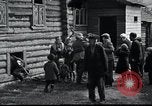
German soldiers search houses in Polish village during World War II.
German soldiers search Polish homes, during World War II following the 1939 invasion of Poland by Germany. Town residents stand outside as Germans look through a house. One soldier looks through basement opening. German soldiers walk along a road, as they move through a Polish village.
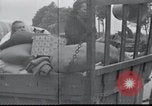
German tanks advance along a road in Marquion, France, and refugees flee, during World War II.
Germany invades France, during World War II. German troops invade French town of Marquion, in the Pas-de-Calais department in the Hauts-de-France region. Horse-drawn carriages loaded with French refugee families and belongings move along a road. Street signs on road number 15 point toward Sauchy-Lestrée 2 km away, and Avrincourt, 12 km away. A chalk drawn arrow points toward Arras. French families evacuate using bicycles, baby carriages, and wagons. German troops arrive on motorcycles. Numerous German Pz.I, Pz.II, Pz.III and Pz.IV tanks pass through the village. Smoke rises from a burning building.
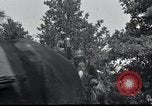
German troops on horseback, bicycles and motorcycles advance in France during World War II. Citizens evacuate. French prisoners
Invasion of France by Germany during World War II. German soldiers on horseback move out of path in woods to join a convoy of mechanized troops proceeding along a road. German soldiers ride motorcycles with sidecars. Others ride bicycles. French prisoners of war, with hands raised, are hurriedly marched on opposite side of road, towards the rear. French citizen evacuees travel in horse-drawn carriages and by bicycle, away from the battle front.
CRITICALPAST.COM: About Us | Contact Us | FAQs - How to Order | License Agreement | My Account | My Lightboxes | Shopping Cart | Advanced Search | Featured Collections | Website Terms & Conditions | Privacy Policy ©2026 CriticalPast LLC.
License Agreement |
Terms & Conditions |
Privacy Policy
©2026 CriticalPast LLC.