


 Francais
 Deutsch
 Italiano

Refine Your Search
Berlin Germany 1952 stock footage and images
- Showing 4003 to 4008 of 6470 results more
 Hide
German war criminals are executed by Allied occupying forces in 1945, in World War 2
View from above, of the surrounding walls and courtyard of a prison in Rheinbach, Germany. Ground view inside the prison yard, where German civilian Matthias Gierens is being escorted to the gallows by U.S. military police, and accompanied by a German Catholic priest, on June 29, 1945. They ascend the gallows and final charges and sentence are read to Gierens. Next scene shows bodies stacked up at the Bergen-Belsen concentration camp operated by Nazi Germany. Scene returns to the gallows, and a hood is placed over Gierens' head. View of Allied army officer witnesses, in formation, at parade rest. Noose is placed over Gierens' hood. View of a a bird flying overhead, trapdoor opens, Gierens drops, and noose tightens. Next is an unrelated scene of several German soldiers being executed. They are seen hanging from four gallows in a line in a public square while a large crowd, possibly Soviet citizens, looks on. (Notes: Regarding the execution of Gierens in the opening scene: German civilian Matthias Gierens was a 37 year old railroad worker. He was executed for the August 15, 1944, murder near Priest, Germany, of a downed American airman, who was later identified as U.S. Army Air Forces 2nd Lieutenant Lester E. Reuss. Gierens and three other German civilians, Peter Kohn, Peter Back, and Matthias Krein, were convicted on June 2, 1945 in Ahrweiler, Germany, of the murder. Their trial was the first Allied trial in Germany of civilians charged with a war crime.)
Soviet advance and liberation of Warsaw and Poznan during drive toward Berlin in World War 2
Russian attacks on Warsaw and Poznan in World War II in late 1944 and early 1945. Soviet army using tanks, heavy artillery, machine guns and grenades advance forward. Marshal Zhukov and Marshal Rosokofskey inspecting Russian cossacks advancing on horses. A Soviet soldier is shot by a sniper while running through street intersection. A Russian machine gunner firing a Soviet DP-28 light machine gun shoots at building to take out a sniper's nest. Dead bodies of German snipers in rooms next to windows. Views of ruined city of Poznan. Liberated concentration camp victims, including a woman who has been blinded in one eye. Interior of a room in Poznan Prison loaded with torture equipment, including a guillotine. Piles of bodies of persons mass executed during German retreat. Women crying over bodies in coffins of three Polish men that were found hanging in the liberated prison. German Generalmajor Ernst Mattern and his fellow officers seen after surrendering Fort Winiary Citadel (Poznan Citadel). Soviet soldiers. Liberated civilians in Poznan hit and beat German soldier prisoners of war as they are marched under Soviet guard. Scenes of ruined Warsaw include a sign that reads, 'Adolf Hitler Platz.' A wrecked trolley or street car with signs on it that read, ''Wierzeno' and 'Ein u. Ausstieg nur fur Deutsche' which translates to English as, 'On and off exit points only for Germans' The ruined home of Frederic Chopin in Warsaw. The Polish flag flying again after battle.
President Harry S. Truman of United States on deck of USS Augusta, on his visit to Berlin, after World War II.
President Harry S. Truman, in shirt and tie, without his jacket, and wearing a sailors hat, strolls along the deck of the heavy cruiser, USS Augusta(CA-31) as she makes way in the Atlantic headed toward Europe, following the end of World War 2. A member of his party points out something of interest on the deck. The Augusta test firing her 5 inch guns. Turret 3 main battery 8 inch 55 caliber guns fire one salvo. Views of bow waves and ship's wake astern, as the Augusta and accompanying ships proceed at 27 knots.

Berlin Olympic participants including Jesse Owens honored at a ceremony in New York City, United States.
Women members of the 1936 American Olympic Team receive special medals created by the City of New York, to honor each member of the team. Other American athletes are also called, in groups, according to events in which they participated. Jesse Owens comes to the podium.and is praised by New York Mayor Laguardia. Jesse Owens then speaks at the microsphone, and presents a medal to Bill Robinson, the "Mayor" of Harlem. The ceremony continues as other athletes receive their medals. Mayor Fiorello Laguardia and former World Champion Heavyweight Boxer, Jack Dempsey, are present on the stage through the proceedings.
Railway bridges repaired in Germany, and trucks manufactured at the Citroen plant in Paris, France during World War II.
Germany and German occupied France during World War II. Germany: German engineers repair a railway bridge. The men weld and assemble parts. German officers inspect the bridge. A train crosses the bridge. The German officers watch. In Paris: Trucks are assembled at the Citroen automobile plant. Men assemble truck engines. A woman works on a truck. Trucks on the assembly line.
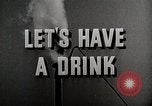
Representing the life of a typical Japanese soldier and celebrating the defeat of Germany in United States.
Germany and Japan defeated in World War II. The defeat of Germany is celebrated in United States. Scenes represent the life of a typical Japanese soldier: a flag is raised to celebrate his birth; boys in uniform play war; troops sack Nanking; and in1944 he is killed to attack over harbor in America. In a dramatization, a soldier with an American machine gun is killed. Dead Americans. American soldiers honor their dead comrades covered with United States flag.
CRITICALPAST.COM: About Us | Contact Us | FAQs - How to Order | License Agreement | My Account | My Lightboxes | Shopping Cart | Advanced Search | Featured Collections | Website Terms & Conditions | Privacy Policy ©2026 CriticalPast LLC.
License Agreement |
Terms & Conditions |
Privacy Policy
©2026 CriticalPast LLC.