


 Francais
 Deutsch
 Italiano

Refine Your Search
Berlin Germany 1952 stock footage and images
- Showing 4357 to 4362 of 6470 results more
 Hide
United States President Dwight D Eisenhower visits Ohrdruf Concentration Camp in Germany at end of World War II, in Europe.
Nazi concentration camps seen after being liberated at end of World War II in Europe. Supreme Allied Commander, General Dwight D. Eisenhower, visits the Ohrdruf concentration camp. Surrounded by crowds of U.S. soldiers, he views the remains of dead victims. A man demonstrates how a device is used to punish inmates. Scene shifts to the Buchenwald camp, where political prisoners were kept,. and then to the Bergen-Belsen concentration camp. Survivors are seen in pitiful condition from starvation, torture, deprivation and sickness. Burned skeletons of human bodies in the ovens. German female concentration camp guards (SS guards known as Aufseherinnen) walking in a line and then seen in formation. SS (Schutzstaffel) concentration camp guards, both men and women, and their leader, Josef Kramer, Commandant of the Belsen camp, seen forming up, and then marching off and being taken into custody.
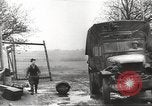
U.S. 4th Armored Division Commander Col. Hayden Sears forces German civilians to visit the Ohrdruf Concentration Camp in Germany (WW2)
The liberation of the first Nazi concentration camp Ohrdruf near the end of World War II. On April 6, 1945, troops from U.S. Combat Command A, 4th Armored Division, commanded by Colonel Hayden Sears forced local town's people to tour the camp. Captured Nazi German officials get out of an army truck. A German Major (Doctor) also accompanies the group. Dead bodies on ground. Nazi officials are forced to watch heaps of bodies found inside a room. Burned bodies of Polish, Czechoslovakian, Russian, German Jews and political prisoners. The policy of requiring local German officials to view every captured concentration camp began with this episode. The rationale was the "They will never be able to say they didn't know what happened here." (Col Sears as reported by his son.)

Unfinished construction of an underground factory in Germany shortly after World War II.
Views of an unfinished underground German factory found after World War 2, near Muehldorf (Muhldorf) am Inn, east of Munich. It was intended to manufacture Me 262 jet aircraft engines and parts. A person walks out of the underground factory site. A truck moves on a road. Large equipment working. Construction materials and equipment at work. Small houses built.

Dead bodies of people piled up and wounded being evacuated from a Nazi concentration camp in Germany.
Concentration camp scenes used in evidence during post-war World War 2 prosecution of Nazi war criminals. A Nazi concentration camp. U.S. troops standing outside a building. Medics treat and carry emaciated prisoners from a camp. A U.S. Naval officer, prisoner at a camp, is interviewed. He speaks about execution of U.S. prisoners of war and describes various atrocities and means used to kill prisoners. Man shows a club with barbed wire on it used to beat prisoners. View of dead bodies of prisoners in rail car under layer of snow. Dead bodies of people piled up on the ground.

The Rise of the 3rd Reich in Germany and subsequent battles against the Allies in Stalingrad and Normandy during World War II.
A film dramatizes the rise of Nazi party and corresponding life of civilians under German Chancellor Adolf Hitler's totalitarian government. A Nazi flag being hoisted. A German couple seated. Two men talk in a street. A Nazi brownshirt harangues civilians on a street. People listen to him and do not unite to object. Karl, a farmer, listens. He tills a piece of land. Nazi officers close down a shop. A man works in an ammunition factory as a war production worker. He returns home from work. His children are eating food. German equipment and troops on advance. The ammunition factory worker joins the German Army and leaves for the war front. He kisses his wife as he bids goodbye. German troops loaded onto a truck advance. Artillery is fired and infantry advances ahead. German troops fight against the Allies in Stalingrad, Soviet Union and Normandy, France.
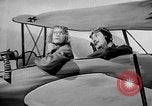
Examples of popular show business entertainment in Germany during World War I.
A woman and a man singing a duet on stage, as they pretend to be in a german warplane,flying over parts of Europe during World War 1. Below their staged airplane the set includes paintings of the Eiffel Tower, a Dutch windmill and other features of European countries. The programs for various musical theater presentations are shown, including one entitled "Die Gulasch Kanone" (The Field Kitchen), a play with music in three acts. A scene from another production is seen, with A newly wedded couple walking to a horse drawn carriage. Women standing near the carriage serenade the couple and spread flower petals at their feet. They enter the carriage.
CRITICALPAST.COM: About Us | Contact Us | FAQs - How to Order | License Agreement | My Account | My Lightboxes | Shopping Cart | Advanced Search | Featured Collections | Website Terms & Conditions | Privacy Policy ©2026 CriticalPast LLC.
License Agreement |
Terms & Conditions |
Privacy Policy
©2026 CriticalPast LLC.