


 Francais
 Deutsch
 Italiano
Refine Your Search
Berlin Germany 1952 stock footage and images
- Showing 4429 to 4434 of 6470 results more
more Hide
Hide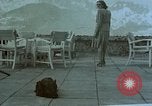
Adolf Hitler with dogs on terrace of his residence Berghof in Berchtesgaden, Germany.
German Chancellor Adolf Hitler's mountain home, the Berghof, in Berchtesgaden. Gretl Braun, Eva's sister, walks across the terrace at Adolf Hitler's mountain home, the Berghof, and looks out at the misty mountainous scene. Adolf Hitler is seen on the terrace with a German officer and then also with Luftwaffe Colonel Nicolaus von Below. He speaks to them. Then he turns and pays attention to Eva Braun's two black Scottish Terrier dogs, Negus and Stasi and appears to make some comments about them. )
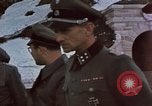
Nazi officials and female guests at Adolf Hitler's mountain retreat in Berchtesgaden, Germany, during World War II
Nazi officials and female guests of Eva Braun, assembling on pathway by the tea house near Adolf Hitler's Kehlstein Mountain retreat in Berchtesgaden (called "Eagle's Nest" by Americans) during World War 2. They converse and enjoy the view of sunlit valley below. Snow visible behind them on the mountain.
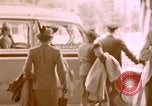
Group of people including Adolf Hitler's companion Eva Braun board a liner in Hamburg, Germany.
Group of people including Adolf Hitler's companion Eva Braun in Hamburg. Group of people including Adolf Hitler's companion Eva Braun board a minibus. Eva Braun and others walk up gangplank on dockside of ocean liner. Crew hoisting nets up to deck of ship. Luggage being loaded aboard a ship.
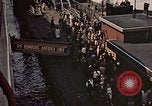
Adolf Hitler's companion Eva Braun and others aboard a ship as it leaves Hamburg harbor, Germany.
German Chancellor Adolf Hitler's companion Eva Braun and others aboard a ship in Hamburg. View of dock as seen from deck of ship. Sign reads 'Hamburg-Amerika Linie'. View of a city from the ship. Band plays music aboard the ship. People give Nazi salute to the ship. Gang plank being removed. People on dock wave at the ship as it leaves the dock. People aboard the ship wave back. Nazi flag flies from bow of a ship.

Eva Braun home movie. Outing via motorcar on the Kehlstein road, Bavaria,Germany
Eva Braun home movie. Outing with friends in several motorcars driven by military drivers along the Kehlstein mountain road in Bavaria. A car displays Nazi flags near its headlights. A man takes a picture, a group of people outside a building as they talk and smile. A man escorted to a car by another man. The first man and two women leave in the car. Another group of men admire the scenery.Members of the outing party seen with their cars and drivers.
Eva Braun home movie with friends in Bavaria, Germany
Eva Braun home movie. Friends sit at side of road. puppy plays near car.Scene shifts to hillside. Eva Braun pulls a branch of a flowering fruit tree to shake loose blooms. Her friends pick up and collect the flowers fallen on the grassy field. Eva plays by swinging around the trunk of a small tree. Members of the outing party talk and relax.
CRITICALPAST.COM: About Us | Contact Us | FAQs - How to Order | License Agreement | My Account | My Lightboxes | Shopping Cart | Advanced Search | Featured Collections | Website Terms & Conditions | Privacy Policy ©2026 CriticalPast LLC.
License Agreement |
Terms & Conditions |
Privacy Policy
©2026 CriticalPast LLC.