


 Francais
 Deutsch
 Italiano
Refine Your Search
Berlin Germany 1952 stock footage and images
- Showing 5509 to 5514 of 6470 results more
more Hide
Hide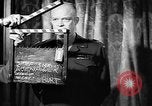
U.S. Army General Dwight Eisenhower delivers a speech on the V-E Day in Paris, France.
U.S. Army General Dwight Eisenhower speaks on the V-E day in Paris, France during World War II. General Eisenhower delivers a speech in Paris on the Victory in Europe Day. The General states that he has the proud privilege of speaking for the fighting men in his theater who conquered Western Europe and destroyed more men than they themselves possessed. The Allies selected Germany as their first object because it was the one place that all the Allies could bring their weight to bear. General Eisenhower pays his tribute to the Soviet Russian Army, the Allied Forces in Italy, the French, the British and the Americans on the Western Front and to GI Joe and his counterparts whom he says were the real heroes of the war.
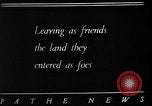
Troops depart German- occupied North Eastern France at end of World War I
Opening slate reads: "Leaving as friends the land they entered as foes." A large contingent of German soldiers is seen assembled for departure by a building, in a French city, along the Belgian and Luxembourg border, that Germany had occupied during World War 1 Next, a German army brass band parades along a street of the city, through a crowd of French inhabitants, many of whom walk along the sides of the street keeping up with the band. The last moment of the clip displays a slate reading: "Auf Wiedersehen."
German Field Marshal, Paul von Hindenburg poses with his family on his estate after wartime retirement in East Prussia
Life of German Field Marshal, Paul von Hindenburg in Germany. Paul Von Hindenburg poses with his family on his estate after retirement following World War 1. Paul von Hindenburg and family in Neudeck (present day Ogrodzieniec, Warmian-Masurian Voivodeship, Poland). He and his family sit around a table. Trees in the background.
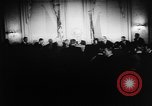
Officers give speeches at the National Press Club and Kennedy greets Konrad Adenauer at the White House in Washington DC.
Activities at the National Press Club and the White House in Washington DC. At the National Press Club Konrad Adenauer, speaking in German, makes informal statements to journalists. Brief views of Adenauer playing a type of bowling game, outdoors. At the White House U.S. President John F. Kennedy greets the Chancellor of Germany, Konrad Hermann Josef Adenauer. Konrad Adenauer addresses the crowd.
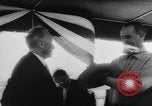
Vice President Lyndon Baines Johnson welcomes the German Chancellor Konrad Hermann Josef Adenauer to Austin, Texas
The Chancellor of Germany Konrad Adenauer visits Austin, Texas. U.S. Vice President Lyndon Baines Johnson presents a Texas Ten Gallon hat and welcomes Adenauer. View of the Texas Capitol building. Johnson and Adenauer ride in an open car and greet spectators, who crowd the sidewalks. Policeman, on motorcycle, moves enthusiastic spectators who spill into the street . Spectators hold banners to welcome Adenauer, some written in German. Johnson and Adenauer watch a welcoming parade, including bands,drum majorettes,and military units.
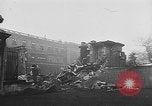
Glimpses at moments in life of King George VI of Great Britain, matching Trafalgar Day speech by his daughter, Queen Elizabeth II
Queen Elizabeth II in her Trafalgar Day speech recounts events in life of King George VI during dedication of his statue in Carleton Gardens, London, England. Audio of the Queen speaking as footage from the life of King George VI is shown. View of the Statue of Brtish King George VI. King George VI and Queen Elizabeth standing in bombing rubble, and visiting suffering London residents during the Blitz by Nazi Germany in 1940 during World War II. As Prince Albert, he stands with companions watching boys engaged in sports activities at a camp for boys that he established after World War I. Prince Albert in bathing suit at the beach, and participating in a group sing with campers. As the first British sovereign to enter the United States of America, King George VI is seen as he rides in an open car with President Franklin D.Roosevelt. The King is seen with British Field Marshal Bernard Montgomery, visiting the war zones and decorating British Colonial troops, during World War II. The Queen says "Today is Trafalgar Day."
CRITICALPAST.COM: About Us | Contact Us | FAQs - How to Order | License Agreement | My Account | My Lightboxes | Shopping Cart | Advanced Search | Featured Collections | Website Terms & Conditions | Privacy Policy ©2026 CriticalPast LLC.
License Agreement |
Terms & Conditions |
Privacy Policy
©2026 CriticalPast LLC.