


 Francais
 Deutsch
 Italiano
Refine Your Search
Berlin Germany 1952 stock footage and images
- Showing 5887 to 5892 of 6470 results more
more Hide
Hide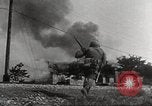
United Nations forces advance in North Korea after the capture of Seoul by U.S. 1st Marine Division during the Korean War.
Invasion of Seoul, Korea by U.S. 1st Marine Division during the Korean War. U.S. Marines advance toward Seoul city after they cross the Han River. The marines fire guns at enemy positions. U.S. Air Force fighter airplanes drop bombs over ground targets. Smoke rises from the bombardment. U.S. Marines receive heavy artillery fire by the North Korean People's Army. Wounded marines are evacuated. The marines involved in street fight. They advance after the capture of Seoul. A marine reads an American newspaper about U.S. Marines advance in Seoul. UN (United Nations) troops advance in North Korea after securing Seoul. Tanks, jeeps and trucks loaded with marines move ahead. Soldiers march along a road.
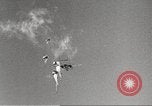
United Nations troops evacuate Hungnam and U.S. Marines advance in North Korea during the Korean War.
United Nations troops evacuate Haungam, North Korea during the Korean War. Parachute supplies dropped from a U.S. C-119, descend over a field in Hungnam for UN troops. UN troops embark on LSTs (Landing Ship Tank). Equipment loaded aboard LSTs. Beach installations are blasted by UN troops as they leave Hungnam. U.S. Marines climb up a hill during the advance in North Korea. The marines take positions on the hill top and fire guns and artillery. Amphibious vehicles approach a beach. Shell explosions on hills. U.S. airplanes overhead drop bombs on the hills and provides air support. A marine talks into a radio and airplanes overhead drop bombs over targets in fighting area. U.S. airplanes provide close air support to U.S. Marines fighting troops of People's Republic of China. Explosions on the hills. U.S. Marines advance on a hill and fire at enemy positions.
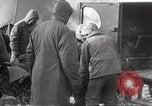
Evacuation and medication of wounded U.S. Marines in North Korea during the Korean War.
Wounded U.S. Marines are treated at a marine battalion aid station in North Korea during the Korean War. Wounded men are carried on stretchers. Wounded Marines being treated by doctors. A doctor bandages the leg of a wounded marine. Wounded men are taken to the aid station in jeeps. Wounded Marine carried out of an ambulance. Air evacuation of the wounded marines. They are transported by aircraft and helicopters. A litter case loaded aboard a helicopter. Wounded marines are hoisted aboard a ship from an LCM (Landing Craft Mechanized) alongside the ship. Captured PRC (People's Republic of China) soldiers affected with diseases due to lack of proper medication.
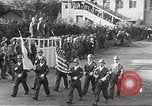
South Korean troops march along a road and U.S. Marines disembark from a ship in Korea during the Korean War.
South Korean troops in Korea during the Korean War. A group of soldiers marches along a road holding the U.S. flags. A band plays. South Korean troops march. U.S. Marines disembark from a ship and advance inland in Korea. The soldiers march along a rocky field. Men carry a boat across the rocky field.
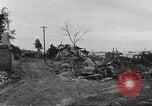
United States Marines distribute clothes to Korean civilians during the Korean War.
U.S. Marines in Korea during the Korean War. Debris and rubble in a coastal town of North Korea. Korean refugees evacuate. A U.S. soldier directs the refugees. U.S. Marines talk to Korean children and distribute clothes. A captured North Korean soldier smokes a cigarette with a U.S. soldier. U.S. Marines make Korean children wear new clothes.
Proclamation of accession of Princess Elizabeth Alexandra Mary as Queen Elizabeth II, in London England
Following the death of King George VI the night before, ceremonies are held in London proclaiming the accession of Princess Elizabeth to the throne as Queen Elizabeth II. People gather in a large number on a street in London. A royal carriage passes on the street. Cavalry moves along with the carriage. Buildings along the sides of the street. People standing behind roped off area. Officials come outside the at the Royal Exchange in London and stand on the steps of the building. One of the officials speaks on behalf of the Lords Spiritual, the Lords Temporal, the Lord Mayor of the City of London, the Aldermen of the City of London and representatives of Commonwealth nations. He reads the formal Proclamation of Accession announcing Princess Elizabeth Alexandra Mary as Queen Elizabeth II. He then declares "God Save The Queen." People applaud after the announcement and the band plays God Save the Queen.
CRITICALPAST.COM: About Us | Contact Us | FAQs - How to Order | License Agreement | My Account | My Lightboxes | Shopping Cart | Advanced Search | Featured Collections | Website Terms & Conditions | Privacy Policy ©2026 CriticalPast LLC.
License Agreement |
Terms & Conditions |
Privacy Policy
©2026 CriticalPast LLC.