


 Francais
 Deutsch
 Italiano
Refine Your Search
Bien Hoa Vietnam 1970 stock footage and images
- Showing 3397 to 3402 of 4260 results more
more Hide
Hide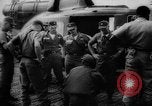
U.S. Army extends help to South Vietnam soldiers against Vietcong, and a group of military leaders outpost civilian government.
United States increases aid to South Vietnam in its war against Vietcong rebels, early in Vietnam War period. A group of military commanders take over the civilian government. U.S. soldiers stand near helicopter and listen to instructions from their commander. Soldiers board helicopters and patrol dense jungles and search out for Vietcong using helicopters. South Vietnamese soldiers with their rifles aboard a helicopter. Gunner in a helicopter points his machine gun towards ground. Vietnamese soldiers jump from helicopter as it lowers and run in the jungles.
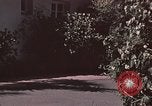
U.S. President Nixon with President of South Vietnam Nguyen Van Thieu during his visit to San Clemente in California.
President of South Vietnam Nguyen Van Thieu during his visit to San Clemente in California, United States. U.S. President Nixon, the First Lady Patricia, President Thieu and his wife walk inside the residence. President Nixon and President Thieu walk on the roads of the state building at San Clemente. They walk towards the U.S. presidential helicopter at a helipad. Marine honor guards salute as the dignitaries board the helicopter. U.S. Secretary of State Dr. Henry Kissinger and Ambassador Bunker watch as the presidential helicopter takes off. The helicopter flies in the sky and vanishes. (Vietnam War period).
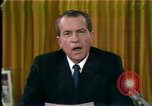
U.S. President Richard Nixon addresses nation about steps to end the war in Vietnam. He asks support of the "silent majority"
Stand of U.S. President Richard Nixon on Vietnam War. President Nixon addresses the nation about the Vietnam War from White House. He details how United States got involved in the war. He talks of protests and demonstrations of anti war activists and wants an everlasting solution to the problem. He reminds of Woodrow Wilson's efforts to end wars and peace. Nixon tells the youth of America about their demonstrations: "I respect your idealism. I share your concern for peace. I want peace as much as you do." He speaks to the "great silent majority" of Americans (contrasted with the youth demonstrators) and asks for their support in fighting "the forces of totalitarianism" and in supporting his plans for fighting and ending the war. He asks that Americans be united for peace and united against defeat. In the final part of this speech segment, President Nixon invokes the term "silent majority."
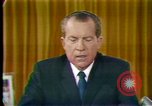
U.S. President Nixon speaks about programs of U.S. withdrawal from Vietnam, during his silent majority speech from the White House.
News special report about U.S. President Richard Nixon's 'Silent Majority' speech from the White House about Vietnam War. President Nixon addresses the nation from an office in the White House. He speaks of U.S. programs in future and replacement of all U.S. ground forces by South Vietnamese forces. He denies a fixed timetable of U.S. withdrawal and about Paris Peace Talks. He says that if violence from North Vietnam continues, the U.S. can take strong steps. He appreciates the concern of young Americans to restore peace. He calls to get united for the existence of peace. He recalls the efforts of former President Woodrow Wilson to reassure world peace during World War I
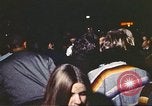
Military Police jeeps drive past on a street in Washington DC as anti-war protestors demonstrate against the Vietnam War.
A moratorium in Washington DC to end the Vietnam War. Peace activists and pacifist demonstrators milling about on a street. People wave the Viet Cong flag and the North Vietnamese flag. A man wearing a helmet with a sign on it that reads 'Press'. People on a street as they demonstrate and protest against the Vietnam War. A car moves past a building. Military Police jeeps with MPs drive along a street. An electronic sign reads 'Time to save 12.40 Nov 14' . The Military Police jeeps drive past.
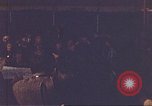
The "March against Death," conducted in Washington, DC, by protesters against the Vietnam War
The so-called, "March against Death," extending from Thursday evening (November 13, 1969) throughout that night and all the next day (just before the Moratorium March on Washington). Peace activists protesting the Vietnam War, are seen at night carrying candles as they walk from Arlington Cemetery, past the White House. Dr. Benjamin Spock is one of the protestors. A young girl lights her candle. A woman with a candle as she holds a figure of a white pigeon symbolizing peace. Men move in a line as they protest against the Vietnam War and demand the end of the war. Anti-war activists, walking with placards around their necks that contain names of fallen American soldiers.