


 Francais
 Deutsch
 Italiano
Refine Your Search
Bizerte Tunisia 1943 stock footage and images
- Showing 217 to 222 of 3126 results more
more Hide
Hide
Joachim Von Ribbentrop signs the German-Japanese Economic Pact in Germany during World War II.
Signing of German-Japanese Economic Pact on 20 January 1943. Foreign Minister of Germany Joachim Von Ribbentrop arrives and shakes hand with Japanese General Hiroshi Oshima. Signatories signing the agreement. They shake hands.

Unescorted B-17 Flying Fortress planes under heavy attack by German FW-190s during Schweinfurt raid in World War II.
Scenes of the first daylight strategic bombing by the United States Air Forces against targets in German-controlled Europe. A dozen B-17s execute the first mission against railroad marshaling yards in German-held Rouen, France, on August 17, 1942. A year later, large numbers of U.S. bombers attack Schweinfurt, Germany during World War II. U.S. B-17 Flying Fortress planes take off from U.S. Air Base in England. A formation of B-17s in flight. They head towards Germany. U.S. General Dwight D. Eisenhower and his aides confer. Unescorted B-17s over Schweinfurt under heavy attack by German FW-190 fighter planes. The B-17s drop bombs over the target area. Ruins of Schweinfurt after bombings. A FW-190 goes down after facing attack. Dead and wounded men unloaded from B-17s which return from the Schweinfurt raid. Panoramic views of ruined Schweinfurt on August 20, 1943.
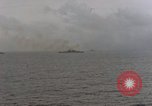
United States destroyers, heavy cruiser, and light cruiser bombard Tarawa Island in Pacific Theater
U.S. Navy World War II battleship, destroyers, heavy cruiser and light cruiser bombard the Island of Tarawa in Pacific Theater, in November 1943. Smoke rises from the beach. A 16" gun on board USS Maryland (BB-46) bombards Tarawa. Shells burst in air and island obscured by smoke. Depth charges explode in water as light cruiser continues to bombard the island. Ship at timecode 2:34 and 3:10 is a heavy cruiser of the Portland or Northhampton class, based on catapults with sea planes located at mid ship. Based on ship assignments and locations at that time, this would make it either the USS Chester (CA-27), the USS Portland (CA-33), or the USS Indianapolis (CA-35).
Japanese troops advance inside China during World War II.
Italian film depicting Japanese forces advancing through jungles and mountains in China, during World War II (1943) in the Second Sino-Japanese war. Japanese troops march along the sides of a dirt road. They pass a large group of indigenous Chinese, who wave their arms in Obeisance. As they enter mountainous territory, the Japanese troops employ pack animals to assist them. Views of Japanese soldiers scrambling cautiously up a hillside and then of firing machine guns, mortars, and small artillery field pieces against Chinese positions (unseen). Japanese troops moving single file in rugged mountain terrain. Japanese soldiers cautiously moving against Chinese positions in a mountain. Exploding shells raise smoke on the mountainside.
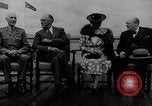
President Franklin D Roosevelt, Miss Churchill and Prime Minister Winston Churchill in Quebec.
Scenes at the Quebec Conference in 1943. President Franklin D Roosevelt, Mrs Churchill, British Prime Minister Winston Churchill seated. Allied military generals stand behind the leaders, and Prime Minister Mackenzie King is seated also. Chateau Frontenac in background. President Roosevelt and General Omar N Bradley watch plane land on water. Boat brings party from plane. Anthony Eden and President Franklin Roosevelt shaking hands and talking. (World War II period).
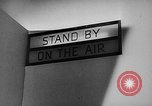
Winston Churchill waves his hat as his car passes by the crowd in Quebec, Canada.
Prime Minister of UK, Winston Churchill in Quebec, Canada for Quebec Conference of 1943. Sign reads: 'Stand By On The Air.' Winston Churchill and Canadian Prime Minister Mackenzie King in an open top car (a Canadian McLaughlin-Buick convertible, specifically a Buick Series 90 Limited Convertible Phaeton). Churchill in white coat, waves his hat as the car passes by the crowd assembled.
CRITICALPAST.COM: About Us | Contact Us | FAQs - How to Order | License Agreement | My Account | My Lightboxes | Shopping Cart | Advanced Search | Featured Collections | Website Terms & Conditions | Privacy Policy ©2026 CriticalPast LLC.
License Agreement |
Terms & Conditions |
Privacy Policy
©2026 CriticalPast LLC.