


 Francais
 Deutsch
 Italiano
Refine Your Search
Bizerte Tunisia 1943 stock footage and images
- Showing 295 to 300 of 3126 results more
more Hide
Hide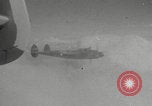
United States Army Air Force Lockheed P-38 Lightning aircraft of the 339th Fighter Squadron in flight formation during WW2
A fleet of Fighter-Bomber aircraft (Lockheed P-38 Lightning) of the United States Army Air Force in flight over the South Pacific Ocean during World War II. The 339th Fighter Squadron of the United States Army Air Force intercepted and shot down Imperial Japanese Admiral Isoroku Yamamoto in 1943. Three Lockheed P-38 Lightning fly together. One by one, the three aircraft tilt to the right downward. A fleet of Lockheed P-38 Lightning flying in formation near the clouds as seen from an aircraft’s side window. Three Lockheed P-38 Lightning aircraft went up to a higher altitude vertically in unison.
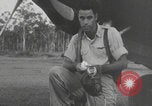
United States Army Air Force 339th Fighter Squadron Pilots in the South Pacific preparing for take-off during WW2.
The United States Army Air Force pilots of the 339th Fighter Squadron, who intercepted and shot down Imperial Japanese Admiral Isoroku Yamamoto in 1943 during World War II. Captain Tom Lanphier, is seated under an aircraft, cleaning his goggles. View of Captain Lanphier, smiling. Another United States Army Air Force Pilot, Lieutenant Rex T. Barber, wearing helmet and goggles, adjusts his straps. Another pilot, Lieutenant Besby Holmes, leaning his back on an aircraft, adjusts his helmet and laughs. Lieutenant Douglas S. Canning puts on a life vest and smiles. Lieutenant Delton Goerke chews and smiles as he looks at the camera. Lieutenant Julius Jacobson adjusts his helmet and smiles. Pilot in cockpit gives an “OK” hand gesture facing the camera before closing the cockpit canopy. Another pilot salutes facing the camera before closing his cockpit canopy.
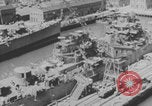
Naval guns and torpedoes manufactured, USS Wisconsin launched (WW2)
Steel used for ship building and war materiel manufacture in the United States during World War 2. Shipbuilding at a dock. Sign says “U.S. Naval Advance Base Depot”. A steam locomotive pulls a 16 inch naval gun from a war production factory. Men move newly made Navy torpedo via overhead conveyor. Men building torpedoes in a factory. A huge engine is being lifted by an overhead crane. War production workers on factory floor building items for U.S. Navy. A United States Naval officer speaks with a factory executive. Narrator mentions importance of scrap metal for use in ship building. The launching of the Iowa-class battleship, USS Wisconsin (BB-64), in the Philadelphia Navy Yard on December 7, 1943. Assisted by Rear Admiral Melo F. Draemel, Mrs. Margaret Roche-Goodland, wife of Wisconsin Governor Walter S. Goodland, successfully breaks a bottle of champagne over the ship's bow. The USS Wisconsin starts down the dry dock during launch.
Bodies of Polish victims and their personal effects during the exhumation of mass grave in Katyn Forest (WW2)
Bodies of Polish victims of the 1940 Katyn massacre during World War II. A corpse found from the 1943 exhumation of the mass grave. More remains of Katyn massacre victims. Exhumed corpses lie on the ground. A man shows the corpse of a Polish military officer. Men digging and carrying a corpse on stretcher. A man uncovers a corpse. The man inspects the corpse’s wallet for identification. Polish banknotes and identification papers on wooden table. Pictures of family members and identification cards belonging to Katyn massacre victims. Thousands of corpses exhumed in Katyn Forest. The Red Cross flag is also seen.
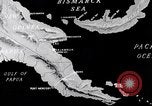
Soldiers pack supplies and parachutes at an Australian Parachute Packing Depot in Papua New Guinea.
March 1943: A map shows Salamaua in Papua New Guinea. An aircraft drops supplies with parachutes over hills. An Australian parachute packing depot. Soldiers pack parachutes on tables in rows. Stacked Australian parachutes to deliver rations, American parachutes used for Ammunition, and 24 foot parachutes for regulation. White parachutes used for medical supplies, blue ones used for rations and red used for ammunition supplies. Aerial view of Goodview, an area of conflict. A soldier radios the requirements to base. Another soldier delivers the plan to the depot. Soldiers pack mortar ammunition. The fuses and sheets are packed together in boxes. Soldiers put boxes into sacks, tie the sacks and attach parachutes. Soldiers pack canned meat: lay straw in big cans, put small cans into those, seal the big cans, secure them with a wiring machine, and attach parachutes. Sacks of rice are put into copper sacks, their mouths tied. Soldiers pack rations including onions, bacon and potatoes for delivery. Supplies are loaded onto trucks and transferred to the aerodrome. (World War II period).
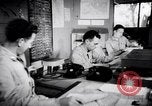
C-47 Skytrains and P-38 Lightning fighters drop supplies with parachutes over Greenview in Papua New Guinea.
March 1943: Australian and American soldiers in Salamaua in Papua New Guinea. Trucks loaded with supplies move to the aerodrome. The Depot officers radio A3 of the 5th Air Force Headquarters, who in turn contact the 54th Troop Carrier Wing for airplanes. Brigadier General Prentiss monitors the mission with Colonel Hampton. Board shows duties of the Troop Carrier Wing. The pilots and crew are briefed for the mission. Soldiers leave in jeeps at dawn for the aerodrome. The pilots are given the time for take off. Supplies are loaded. Planes are ordered off ground. Douglas C-47 Skytrains and P-38 Lightning fighters taxi and take off. Pilot scouts the skies for change in weather and danger. Planes over drop area in Greenview, marked by parachutes from earlier drops on the ground. Soldiers put supplies onto ramps and prepare for the drop. Pilot gives the signal and supplies are dropped. (World War II period).