


 Francais
 Deutsch
 Italiano
Refine Your Search
Bolinas Beach California USA 1934 stock footage and images
- Showing 8341 to 8346 of 26867 results more
more Hide
Hide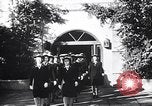
U.S. Coast Guard sailors and SPARS report to various Battle Station across the United States.
U.S. Coast Guard SPARS (US CG Women's Reserve) march at the Training Station. CG men and women recruits take their places at various Battle Stations across the U.S. U.S. CG men and women personnel report for duty on shore and at sea. SPARS arrive in Washington and New York. A sailor watches through binoculars, a SPARS with documents, sailor on cutter, SPARS drives a car, sailor by a plane. A radioman and woman operate the radio. Men and women gunner mates on cutters. A U.S. CG pilot in the cockpit, SPARS parachute riggers at work. A deck gun on a cutter. A crew of 8 sailors observe the gun. SPARS take their places at a shore station. The captain and his crew come aboard a cutter. U.S. CG cutters at sea. Includes narration by Ginger Rogers and James Cagney.
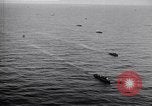
U.S. Coast Guard sailors sight and attack a submarine at sea.
U.S. Coast Guard cutters at sea. U.S. Coast Guard sailors on cutters in heavy seas. A sailor looks through binoculars from the observation deck. Another sailor looks through binoculars, keeps a watch, and informs the crew of a submarine sighting. The cutters attack and drop shells into the water. Massive underwater explosions. The crew mans and fires the deck gun. A pilot readies his plane. Oil from a leaking submarine floats on the water surface. Cutters at sea. A Coast Guard sailor and a SPARS (Coast Guard Women's Reserve) walk along the New York harbor. The Statue of Liberty in the background. The New York skyline as SPARS march. Voice narration in part by James Cagney and Ginger Rogers.
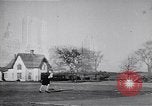
A woman watches as a U.S. Coast Guard OS2U Kingfisher floatplane is pushed off a ramp into the water and it takes off.
A woman runs towards a U.S. Coast Guard Vought OS2U Kingfisher floatplane on the shore. She hands over a paper to the pilot in the cockpit. Crew prepare and push the plane towards the ramp, and then slide the plane off the ramp into the water. The woman stands back and watches as the plane taxis in the water and takes off. A light house off shore. Narration by James Cagney.

Dr. Hazel K Stiebeling talks about research in the field of food and nutrition.
'Research for Better Living': A Bureau of Human Nutrition and Home Economics Service (United States Department of Agriculture) film on research work performed by the Bureau. Chief of the Bureau Dr. Hazel K Stiebeling talks about research in the fields of food and nutrition, textiles and clothing, housing and household equipment, and family economics. The Beltsville Research Center in Maryland. Large colonial styled brick building. Technicians work on food preparation and preservation inside a laboratory. They process and can vegetables and run various domestic science experiments. A food specialist compares the braising of meat with and without water. She puts the meat into containers on the stove. A researcher prepares a braised turkey leg to be served for judging. Technicians peel potatoes and insert a device to measure temperature. Trained judges from the laboratory staff taste frozen strawberries and write their verdict. A technician measures the tenderness of a berry with an apparatus. In the kitchen, technicians work to improve large quantity recipes. Technicians chop and weigh carrots, puts them into an institutional cooker and stirs. The prepared food is tried by school children. Children serve themselves and eat the food seated at a table in the school cafeteria.
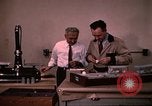
Technicians use live, chemical and physical tools to measure nutrition value at the Beltsville Research Center in Maryland.
Research work by the Bureau of Human Nutrition and Home Economics Service (United States Department of Agriculture). Chief of the Bureau Dr. Hazel K Stiebeling talks about research in the field of food and nutrition at the Beltsville Research Center in Maryland. Laboratory technicians compare the nutritive value of foods. They measure the growth of a chicken using a machine, and that of a rat using an apparatus. A technician measures certain vitamins and amino acids using micro organisms in test tubes. Technicians use chemical methods to measure Vitamin C and small food proportions. A photoelectric calorimeter is used to measure carbohydrates in a food.
Technicians use various machines to measure properties of knitted fabric.
Domestic science research work by the Bureau of Human Nutrition and Home Economics Service (United States Department of Agriculture). Chief of the Bureau Dr. Hazel K Stiebeling talks about research in the field of textile and clothing. A man brings samples of knitted fabric to women working at a table. A woman lays the samples out. A technician uses a machine to test the fabric for elastic recovery, breaking strength, air permeability, moisture absorption. She tests stretch and comeback by applying tension with weights. A machine used to show how much rubbing a fabric can stand.
CRITICALPAST.COM: About Us | Contact Us | FAQs - How to Order | License Agreement | My Account | My Lightboxes | Shopping Cart | Advanced Search | Featured Collections | Website Terms & Conditions | Privacy Policy ©2026 CriticalPast LLC.
License Agreement |
Terms & Conditions |
Privacy Policy
©2026 CriticalPast LLC.