


 Francais
 Deutsch
 Italiano
Refine Your Search
Bolinas Beach California USA 1934 stock footage and images
- Showing 12241 to 12246 of 26867 results more
more Hide
Hide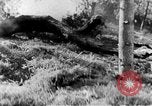
A U.S. Army training film about soldiers using different types of hand weapons in a close fight in a field.
A United States Army training film about use of different weapons by soldiers of the United States. Soldiers fire guns, artillery, mortar, rifles and machine guns. Players at a boxing ring and soldiers in a close fight in a field. Soldiers use weapon 'morning star'. Brass knuckles displayed. Short gun and use of French knife demonstrated. A soldier fires a gun. (World War II period).
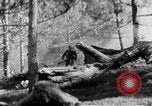
A U.S. Army training film about soldiers using gun and hand grenade during a war (WW2)
A United States Army training film about use of different weapons by soldiers of the United States in World War II. A soldier fires a gun and kills other soldier. Three soldiers see a dugout. They lay on ground and throw a hand grenade on it.
A U.S. Army training film about soldiers using different weapons to save their lives during a war (WW2)
A United States Army training film about use of different weapons by soldiers of the United States in World War II. A soldier hides behind a damaged building. He attacks a soldier from the back and kills him with a knife. Two soldiers in a close fight. One soldier hurts another's eye and kills him. A soldier sees another in a field and fires from a prone position. Players in a boxing ring. Soldiers fight in a field.
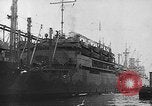
Infantry troops using field telephones; soldiers and civilian telephone operators connecting calls (WW2)
Communication equipment available to the United States Signal Corps in World War II. A ship at a port waits for freight to be brought aboard. Crates containing signal equipment from the United States Signal Corps at a dock. The freight is lowered. Bomber aircraft in flight. Infantry troops communicate from trenches and gun emplacements through telephone. An infantry soldier calls with field telephone. A soldier on the phone at an observation post. Soldiers and civilian telephone operators connecting calls on their switchboards. Men typing on typewriters. View of the U.S. Capitol in Washington DC. Animation shows communication to all parts of the world from the headquarters. Weathervanes and balloons of the Signal Corps. A man marks a weather report on a map at a station. Soldiers work with a landmine detector. A fighter plane takes off from an aircraft carrier. Soldiers moving artillery in a field.
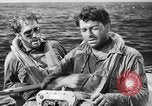
Different communication equipment used by units of the United States Army Signal Corps.
Communication means and equipment maintained and used by the U.S. Army Signal Corps during World War 2. Soldiers in a life boat use a hand cranked radio and an aircraft comes to rescue them. They wave at the aircraft. View of machines used for processing and printing V-Mail letters that are typed by machines and then delivered to soldiers. View of a soldier opening a small V-mail envelope and reading the note inside. Men and women work at various jobs in America in support of war production and war materiel. Men and women war production workers assembling various pieces of electronic equipment and radio devices. Men and women in large, busy clerical and administrative offices supporting typing and communications for the U.S. Army and military. Engineers work in a laboratory. A man loads a tube into a pneumatic message delivery system. Close up views of woman's hands on typewriter typing telegrams, letters, and messages. Women file clerks sort files. Technicians work on a telegraph machine. U.S. Army soldiers on a pole stringing communication wires. A soldier ties a wire on a tree. (World War II period).
The procedure of decontamination after a gas attack - a U.S. Army training film (WW2)
A U.S. Army Training film about Decontamination Procedures during World War II. The film is tilted 'Decontamination Procedures', 'equipment'. An aircraft attack with poison gas on trucks. The trucks go from the gas contaminated area to a safer place. The driver and the assistant driver of the truck, wearing gas masks, open the door and clean the steps and the door of the truck. Members of decontamination team arrive wearing protective clothes. They wash the truck with a solution of kerosene or gasoline. They remove the canvas cover from the truck and spread it on the ground. They put a warning sign board there. They spray the decontamination liquid all over the truck. Cans are refilled with non corrosive powder and chloride mixture, it is mixed well till it is transparent. It is then poured into cans and sprayed on the truck. Then truck is tested with a detector crayon. A 400 gallon apparatus is used to clean the truck. Then truck is washed with a mix of lime and water. It is mixed well and lumps are dissolved. It is then filled in cans. Then pressure pump is used to build pressure in the cans.
CRITICALPAST.COM: About Us | Contact Us | FAQs - How to Order | License Agreement | My Account | My Lightboxes | Shopping Cart | Advanced Search | Featured Collections | Website Terms & Conditions | Privacy Policy ©2026 CriticalPast LLC.
License Agreement |
Terms & Conditions |
Privacy Policy
©2026 CriticalPast LLC.