


 Francais
 Deutsch
 Italiano
Refine Your Search
Bolinas Beach California USA 1934 stock footage and images
- Showing 13453 to 13458 of 26867 results more
more Hide
Hide
U.S. Air Service promotional activities during the 1920s.
1924: A crowd gathered at Boston Harbor to welcome the first 'Round the world flyers. Dignitaries seated. Air Service Douglas World Cruiser biwing float planes land in the harbor. United States Army Air Service flyers, led by Lieutenant Lowell Smith, arrive in boat at harbor. The six intrepid Lieutenants: Harding, Nelson, L.P. Arnold, Wade, Ogden and Smith, pose with General Patrick, Chief of the Air Service , along with several young women. View of the Barling Bomber at Wright Field in Ohio. Crew members: Lieutenants Harris and Muir Fairchild together with designer Walter Barling and engineer Culver, pose together and then climb aboard the airplane. The aircraft commander stands in open cockpit and orders flight engineer to start the 6 Liberty engines. The Barling Bomber taxis out and takes off. Commander waves from open front cockpit as aircraft climbs after takeoff. Views of the Barling Bomber in flight. President Calvin Coolidge stands, awaiting the arrival of the Pan American Goodwill flyers, at Bolling Field, Washington, DC. Crew of the Loening OA-1A amphibian, "New York": Major Herbert Dargue, and Lieutenant Ennis Whitehead, are greeted as they climb down from their aircraft. President Coolidge, presents all of the flyers with Distinguished Service Cross Certificates.
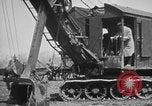
Dedication of Wright Field near Dayton, Ohio, in 1928.
In 1926, Frederick Patterson, in cab of a Steam shovel, breaks ground for the construction of Wright Field in Dayton, Ohio. Horses pull wagons past the steam shovel. Dedication of Wright Field at Dayton in 1928. Flag raising ceremony shows Mr Orville Wright pulling the rope which raises the flag upon the pole. In addition to Orville Wright, the event was attended by Secretary of War, Davis; Judge (and Baseball Commissioner) Kenesaw Landis; Assistant Secretary, F. Trubee Davison; Air Corps Chief General Patrick, and others. Artillery salute is fired at the ceremony. Squdrons of airplanes fly overhead.
Views of aviation celebrities in 1927. Plane takes off and crashes after short flight.
Circa 1927 views of aviation celebrities. Charles A. Lindbergh, standing by his airplane, the Spirit of St. Louis. One-eyed aviator Wiley Post standing with humorist Will Rogers. Amelia Earhart. .An overloaded airplane takes off and failing to climb scrapes a wing on runway and crashes.
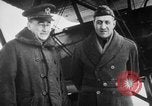
1930 Winter testing operations by P-1 Hawk airplanes of the 1st Pursuit Group, led by Lt. Col. Ralph Royce
Lieutenant Colonel Ralph Royce,standing with another officer, by one of the aircraft in the 1930 winter test operations of the 1st Pursuit Group, flying Curtiss P-1C Hawk pursuit planes. View of snow covered flight line with the airplanes lined up.Crews work on the airplanes, pulling propellers through and hand cranking starting mechanisms. An airplane starts engines and moves out of parking space revealing skis on its landing gear. Ground crew shakes another airplane back and forth sideways, and eventually free the skis that were frozen fast. Several of the aircraft successfully take off.
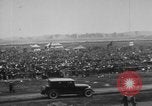
Lieutenant Cyrus Bettis and Lieutenant Jimmy Doolittle win air races in 1925.
In October 1925, crowd gathered to watch the Pulitzer Trophy air races at Mitchel Field, Long Island, New York. VIPs arrive in various automobiles. Army Air Service Curtiss R3C-1 airplane is pushed onto the field. Air Service Chief, General Patrick , speaks with Lieutenant Cyrus Bettis as Lieutenant James Doolittle listens. A Navy crew works on their entry in the race, similar to the Army Air Service airplane. Navy Lieutenant Al Williams seen with a pipe upside down in his mouth. Lieutenant Bettis taxis out for takeoff in his airplane number 43. Then Navy Lt. Williams proceeds to take off in his aircraft, number 40. Lt. Bettis breaks ground and begins to fly the closed course, coming very close to the ground at times. He lands and climbs out of the cockpit, surrounded by spectators and officials who are convinced he has won, registering a speed of 249 miles per hour. Navy Lt. Williams lands shortly thereafter having averaged 242 miles per hour. He is greeted by several spectators, including a young woman. Two weeks later, the U.S. Army was represented by Lieutenant Jimmy Doolittle, who flew the Curtis R3C-1, again, but this time fitted with floats, at the Schneider Cup Seaplane Race in Baltimore, Maryland. He shakes hands with a young woman, just before the race. The Navy also entered with a similar seaplane, shown being pushed into the water. The British entry, a Glouster-Mapier IIIA is seen (replacing the Supermarine-Napier S.4, that was damaged). The Italian Macci M.33 is seen on a dock with engine running. The float planes taxi out over the Chesapeake bay waters to takeoff position. Doolittle is the first to take off and to return, logging an average speed of 232 miles per hour. He is seen smiling after the race.
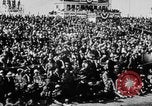
Crowd watches aerial maneuvers by U.S. Army Air Service airplanes at the Cleveland air races in 1929.
Crowd in stands, for the 1929 Cleveland Air Races, watch as formations of U.S. Army airplanes put on a show for them. Charles A. Lindbergh, seated in the stands, looks through binoculars. Army planes spell out their initials in formation. Various flying formations of Army airplanes. A flight of three Army biplanes performs a loop in formation.
CRITICALPAST.COM: About Us | Contact Us | FAQs - How to Order | License Agreement | My Account | My Lightboxes | Shopping Cart | Advanced Search | Featured Collections | Website Terms & Conditions | Privacy Policy ©2026 CriticalPast LLC.
License Agreement |
Terms & Conditions |
Privacy Policy
©2026 CriticalPast LLC.