


 Francais
 Deutsch
 Italiano
Refine Your Search
Bolinas Beach California USA 1934 stock footage and images
- Showing 15649 to 15654 of 26867 results more
more Hide
Hide
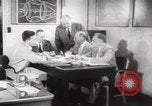
U.S. Army Air Forces officers confer with General Electric executives about producing America's first turbojet airplane engine
Documentary film 'The Jet Engines' about the develpment of an American jet airplane, with help of the British who provide General Electric Company with a prototype engine developed by British RAF Group Captain Frank Whittle. A B-17 aircraft taxis and takes off from the runway. Vehicles carry U.S. Air Forces officers and civilian engineers to an airfield where a man stands with a gun next to a U.S. Army Air Forces B-17 Flying Fortress aircraft. The visitors look at cargo containers being offloaded from the aircraft. They contain a prototype British Whittle turbojet engine. Scene shifts to meeting of executives of the General Electric Company with U.S. Army Air Forces officers. They look at schematic of the Whittle engine. GE officials commit to building an American turbojet engine to power U.S. Air Forces airplanes.
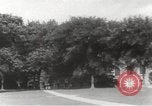
Reenactment shows early 20th century U.S. research in gas turbines that contributed to development of turbojet airplane engine
Views of Cornell University where mechanical engineer, Stanford Moss, conducted research into gas turbines as part of his doctoral thesis work in 1903. Dr. Moss later joined the staff of General Electric Company. During World War I Dr. Moss is called to Washington DC to discuss, with the National Advisory Committee on Aeronautics (NACA), development of a turbo supercharger for airplane engines. View of a biplane with turbo supercharger mounted on top of radial engine. Animated diagram illustrating workings of a turbo supercharger. Using a supercharged engine, the U.S. Army Air Services established an altitude record of 36 thousand feet. (The pilot, flying without supplemental oxygen, passes out and doesn't regain consciousness until the airplane has fallen about 30 thousand feet.)
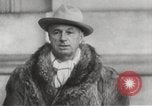
How turbo superchargers facilitate high altitude airplane flight. World War II warplanes equipped with superchargers
General Billy Mitchell wearing fur coat and western style hat. Animated illustration of U.S. Army Martin bomber operating at 15 thousand feet during the famous demonstrations of air power against battleships, in 1921. This was possible because the aircraft engines were supercharged, an outgrowth of Dr. Sanford Moss's developments at General Electric Company.World War 2 scenes of U.S. Army Air Forces aircraft that use supercharged engines: P-51s; P-47s; P-38s; B-24s; B-17s and B-29s. View of atomic bomb explosion.
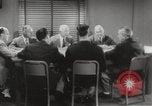
U.S. Army Air Forces officers consulting with General Electric executives about manufacture of turbojet airplane engine.
U.S. Air Force officers consulting with General Electric executives about production of an American turbojet airplane engine, a month before receiving a prototype Whittle engine from Great Britain. Workers are selected for the project. Views of the GE plant at Lynn, Massachusetts. Project manager, Donald F. Warner, is seen at the Lynn MA factory discussing modifications from the Whittle design to correct problems with impellers and other parts.Views of affected parts. Person being fingerprinted as part of security actions.
General Electric producing the first American jet airplane engine. Bell Aircraft building first U.S. jet powered airplane.
General Electric Company engineers work on designs for America's first jet aircraft engine during World War 2. In the company's plant, at Lynn, Massachusetts, machinists make parts for the engine and others assemble it. Company executives conversing about the enterprise. On April 18, 1942, the first engine produced is rolled into a test cell for operational testing. Engineers pull down the door to the test cell displaying the words: "Fort Knox." Engineers at control panel of the test cell. View into the test cell. GE Project manager, Donald F. Warner, actuates toggle switch to "on" position, and the engine ignites. Flame seen in rear of the engine. Complete change of location. View of Bell Aircraft company buildings. Bell engineers working on design of an airplane designated, XP-59A (Airacomet) to be powered by the new General Electric jet engine (later designated J-31 by the military). Views of the Bell engineering and production activities at secret facilities in Buffalo, New York. Two Bell workers expressing reservations about airplanes without propellers. A main intersection street scene in Schenectady, New York. Pedestrians walking and shopping. An F.W. Woolworth store on the corner. Copy of the Schenectady Gazette Newspaper, with headline about 500 planes raiding Berlin. A man buying a copy of the paper.
First flight of Bell YP-59A aircraft. GE develops J-33 jet engine. First flight of Lockheed P-80 jet fighter.
Official films of the flight of Bell YP-59A Airacomet jet-powered airplane, October 1, 1942. Workers at the General Electric plant in Lynn, Massachusetts, producing versions of increasingly more powerful jet engines: the I-16 with 1600 pounds of thrust and the J-33, with 4000 pounds of thrust. First flight, January 8, 1944, of a Lockheed P-80 shooting star fighter jet powered by the J-33 engine. Formation of P-80 fighter planes in flight. (World War 2 period.)
CRITICALPAST.COM: About Us | Contact Us | FAQs - How to Order | License Agreement | My Account | My Lightboxes | Shopping Cart | Advanced Search | Featured Collections | Website Terms & Conditions | Privacy Policy ©2026 CriticalPast LLC.
License Agreement |
Terms & Conditions |
Privacy Policy
©2026 CriticalPast LLC.