


 Francais
 Deutsch
 Italiano
Refine Your Search
Bolinas Beach California USA 1934 stock footage and images
- Showing 16765 to 16770 of 26867 results more
more Hide
Hide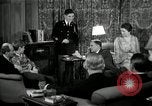
People seated in a room listen to a radio and a woman smokes in the United States.
People seated in a room talk and listen to a console radio in the United States. People seated in the room. A man seated on a chair and a woman seated nearby. A young boy puts his hand on the radio and stands. Books kept on the radio. Another boy seated on the lap of the man. A close up of the boy and the man. A radio in the background. A woman seated on a sofa smokes a cigarette. Two men seated on the sofa talk and smile.
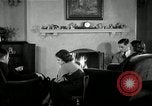
A man and two women seated around a fire place listen to the radio in the United States.
People in a room listen to a radio in the United States. Men and women seated around a fire place. A radio kept on the right side of the fire place. A painting hangs on a wall. A man seated on a sofa as he listens to the radio. Two women listening to the radio. They all look at the radio as they listen.

A young boy seated on a sofa listens to a radio in the United States.
A family in a room listens to a radio in the United States. A young boy seated on a sofa. He listens to a radio. The radio kept in the center of the room. A man seated on a sofa with a woman and a young girl. He smokes and all of them listen to the radio.
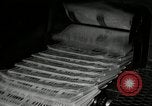
The newspapers come out from a machine at a printing press in the United States.
A rotary printing press for newspapers in the United States. The completed, folded newspapers come out from a printing machine. The press in operation.

View of railway tracks from rear car of a moving railroad train in the United States.
Point of view (POV) shot of a railway track in the United States, as seen from the last car on the moving railroad train. Shrubs and grasses on either side of the track embankment.

Retired General Pershing supports destroyers for bases deal; Charles Lindbergh supports U.S.neutrality in World War 2.
Prominent Americans with opposing pro-war versus anti-war messages early in World War 2. Retired U.S. General of the Army, John J. Pershing and Colonel Charles A. Lindbergh, express opposing sentiments in public statements. The 79 years old U.S. Army officer General John J. Pershing seated at a desk and speaks into a microphone. He speaks in support of the so-called "Destroyers for Bases" initiative of the Roosevelt administration (without using that term). Among his opening remarks, he states,"With democracy and liberty overthrown on the Continent of Europe, only the British are left to defend democracy and liberty ...." In contrast, speaking at a rally at Soldier Field in Chicago, sponsored by the "Committee to Keep America Out of War," Colonel Charles A. Lindbergh argues against American involvement in World War II.
CRITICALPAST.COM: About Us | Contact Us | FAQs - How to Order | License Agreement | My Account | My Lightboxes | Shopping Cart | Advanced Search | Featured Collections | Website Terms & Conditions | Privacy Policy ©2026 CriticalPast LLC.
License Agreement |
Terms & Conditions |
Privacy Policy
©2026 CriticalPast LLC.