


 Francais
 Deutsch
 Italiano
Refine Your Search
Bolinas Beach California USA 1934 stock footage and images
- Showing 20365 to 20370 of 26867 results more
more Hide
Hide
Japanese sailors and pilots prepare for, and execute the attack on Pearl Harbor in World War 2.
After a speech by an admiral, Japanese newspapermen are given the news of the declaration of war against the United States on 8 December 1941. A Japanese fleet underway in the Pacific. Sailors on the deck of a carrier. A captain looks through binoculars. Sailors prepare the dive bombers on the ship deck. Japanese pilots during a final briefing. A Japanese sailor erases a board, while another stands before a writing on the ship. Bombers on the carrier deck. Japanese Sailors watch as pilots board their planes and take off. The bombers in flight with bombs attached onto the belly. Japanese bombers drop bombs on U.S. ships in Pearl Harbor. U.S. Pearl Harbor Base under attack.
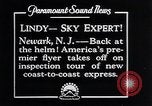
Charles Lindbergh flies an air mail plane for an inspection tour of the new coast-to-coast express from Newark, New Jersey.
Aviator Charles Lindbergh on an inspection tour of the new coast-to-coast express from Newark, New Jersey. He takes off in an air mail plane. Lindbergh with officers and officials stand before the parked plane. A crowd surrounds Lindbergh. Photographers take pictures. The plane taxis.
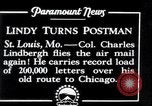
Charles Lindbergh prepares to fly the air mail from St Louis to Chicago.
Colonel Charles A Lindbergh flies the air mail from St Louis to Chicago. 200,000 letters loaded from a mail truck into the plane. Lindbergh takes his place in the cockpit. A crowd around parked planes.
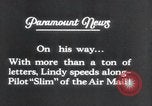
Charles Lindbergh takes off with air mail from St Louis and flies towards Chicago.
Colonel Charles A Lindbergh flies the air mail from St Louis to Chicago. The plane taxis on the runway. Lindbergh in the cockpit. U.S. Mail written on the plane. The plane takes off. Aerial view as the plane flies over fields.
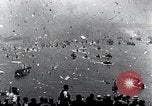
Charles Lindbergh welcomed as he arrives at the New York Harbor for celebration of his nonstop transatlantic flight.
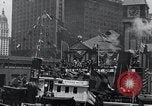
Aviator Charles Lindbergh returns after his nonstop trans-Atlantic flight from New York to Paris that completed on May 21, 1927. A fleet of ships and boats escort Lindbergh up the Hudson to the New York Harbor. Among the informal fleet is a tug boat named the "Federal No. 2", which displays a maritime flag on its bow, containing 48 stars and no stripes. A crowd gathered at the harbor to watch the festivities and honor Lindbergh. Tug boats line the harbor. Lindbergh watches a marine parade in his honor. New York Mayor James J. Walker beside Lindbergh.
Mayor James Walker congratulates Charles Lindbergh on behalf of the City of New York
Aviator Charles Lindbergh returns after his trans-Atlantic flight from New York to Paris. Tug boats are jammed together next to the Department of Docks Building on Pier A, Hudson River, New York City. The clocktower, added to the Building in 1919, as America's first WWI memorial, is clearly visible.American flags and bunting everywhere. A small launch, carrying Lindbergh, makes its way, between tug boats and large ferry boats and throws a line to a larger passenger-filled boat nearby. In a precarious maneuver, persons in both boats help Lindbergh into the larger boat. He almost falls into the water, in the process. Lindbergh is wearing a leather flying jacket. At the Battery,policemen on foot, and on horseback and motorcycles restrain crowds. Lindbergh climbs into an open car, and the parade, in his honor commences. New Yorkers watch and cheer. Lindbergh's motorcade proceeds to lower Broadway. A ticker-tape parade in his honor. People on either side of the streets cheer and welcome Lindbergh. Motorcycle and mounted police escort him further to City Hall. Policemen control the crowd. City Hall: Officials welcome the aviator. A banner reads 'Welcome Lindbergh'. Lindbergh with various officials and officers on stage. He addresses the crowd. NY Mayor James Walker greets and congratulates Lindbergh.
CRITICALPAST.COM: About Us | Contact Us | FAQs - How to Order | License Agreement | My Account | My Lightboxes | Shopping Cart | Advanced Search | Featured Collections | Website Terms & Conditions | Privacy Policy ©2026 CriticalPast LLC.
License Agreement |
Terms & Conditions |
Privacy Policy
©2026 CriticalPast LLC.