


 Francais
 Deutsch
 Italiano

Refine Your Search
Bolinas Beach California USA 1934 stock footage and images
- Showing 2323 to 2328 of 26900 results more
 Hide
Color Sound

Generals and color guard ceremoniously greet first contingent of U.S. First Infantry Division arriving in Vietnam
United States Army 1st Infantry Division nicknamed 'Big Red One' arrives at the beach. American color guard on a beach in Vietnam. General William C Westmoreland, Commander General, U.S. Army, Vietnam, on the beach landing area. Major General Jonathan O Seaman, Commander General 1st Infantry Division, on beach. He converses with Brigadier General John "Jack" Norton, Commander of the 1st Air Cavalry Division and Colonel Curt Aronson of his Division. .A Landing Craft Utility (LCU) arrives carrying the first contingent of the 1st Infantry Division. As the troops disembark, General Westmoreland shakes hands with first two soldiers. The soldiers carry barrack bags. Remainder of the film shows troops offloading from the LCU and making their way across the sand past the Generals and the color guard.(Vietnam War period).
German film describing Allied attack on Dieppe, August 19, 1942, during World War II.
Film opens showing a map of French and English coasts bordering the English Channel. Dieppe is the focus of attention. Narrator states that British, American, and Free French forces, totaling a Division strength, attempted a landing at Dieppe. Animated map illustrates hundreds of Allied landing craft off the coast, protected by Cruisers and Destroyers. A reserve of transport vessels is shown in the Channel and a strong supporting force of Allied bombers and fighter aircraft. Active scene shows German coastal guns firing from bunkers on the French coast and German soldiers deploying to defensive positions commanding the beaches They fire MG 42 machine guns and a 77mm field gun. Shells from British naval artillery explode near German soldiers at shoreline. Explosions at Dieppe harbor from British aircraft bombs. German anti-aircraft fire directed against them. View of Dieppe castle. German soldiers taking up defensive positions on a city street. More explosions from Allied bombers. German soldiers firing a 12.8 Cm Flak 40 anti aircraft gun and black Flak clouds seen in midst of attacking Allied aircraft. German soldiers firing a vehicle mounted 2 Cm Flak 38 gun and quad versions of the same. Allied aircraft struck and trailing white smoke as it falls toward the water offshore. Glimpse of German soldiers in center of town. Low flying Allied aircraft and explosions from their bombs. German Fw 190 fighter planes heading to engage the Allied aircraft. Contrails at altitude from dogfights between Allied and German fighter aircraft. An aircraft struck and falling. Closeup of a burning British aircraft on the ground. Camera pans across German soldiers and buildings damaged and destroyed by Allied bombing. British soldiers (mostly Canadian soldiers) being taken prisoner at the beachhead and later marched under guard in the town. A German General visits his troops at the beach front. Scenes of destruction after the battle. Dead bodies of Canadian and British Allied soldiers floating near the shore. Fire burning on a dock. Burning British Mark 8 Landing Craft Tank (LCT Mark VIII) with shell holes in it. More bodies of dead Canadian soldiers strewn on beach. Knocked out British Churchill tank displaying number 9. Several destroyed and damaged British LCT Mark 8s. Names: "Calgary" and "Beefy"on destroyed Canadian Churchill tanks of the 14th Canadian Tank Regiment. Destroyed British speed boat with sailor's body on it. Other destroyed invasion craft. Several crashed British aircraft at water edge. Closeup of bullet holes near British roundel on one. More destroyed British Churchill and other tanks. Beaches covered with fallen Allied soldiers. British soldier helmets caught in barbed wire.
Allied Forces invade Sicily during World War II
Allied Operation Husky in World War 2. Opening scene shows Allied ships in task force bound for the invasion of Sicily, Italy. Barrage balloons are seen in sky overhead. At first most of the ships seen are troop transports. Then a British Escort Cruiser is seen, followed by other British warships. The British Naval Ensign flying from the masthead of a warship. More views of battleships and destroyers. Aircraft carriers in line. View from ship in the task force as it passes island off Tunisia, and then passing Cape Bon, Sicily. A British destroyer pulls to the port side of the camera ship and transfers a person by bosun's chair. (Narrator calls him a "military expert.") Glimpses of life aboard the ships of the task force. Sailors swimming in a pool aboard deck. Others repairing shoes; washing items in small buckets; and reading "soldiers Guide to Sicily." Sailors use signal lamp to communicate with other ships. Sailors man and maneuver a multi barrel bofors anti-aircraft gun, on deck. Suddenly winds pick up and the seas become very rough. Next, the seas are seen very calm. Scene shifts to North African mainland, where several trucks full of British and American paratroopers move across the sand toward C-47 aircraft that will take them behind enemy lines in Sicily. C-47s are seen parked all over the area. Paratroopers don their chutes and battle gear as they prepare to board their aircraft. Closeup of a crew chief pulling propeller through on number one engine of a parked C-47 aircraft. British paratroopers assist one another with their gear. Officer makes final check of paratroopers under his command. Closeup of British paratroopers boarding their C-47 transport aircraft, and the plane taxiing in sand and taking off. Numerous C-47s taking off as daylight wanes. Allied warships bombarding the Sicilian shore in the nighttime. Troops engaged in amphibious assault on beaches of Sicily. Battle scenes showing black flak clouds in the sky and explosions near the assault and landing craft during the amphibious operations. Black smoke rising from Allied ships struck by bombs or shelling. A landing craft, filled with Canadian soldiers, leaves a transport ship headed for the beach. Other assault boats headed for the beach. Views from the Allied beachhead on Sicilian shore. British, Canadian and American troops making their way from landing craft to the shore, guided by ropes. The march along the shore. A British scout car arrives on the beach, followed by a truck. Then tanks come ashore from large landing craft. Some troops come ashore on a DUKW amphibian vehicle. Allied troops wade ashore and smile for the camera.
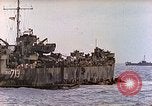
U.S. ships and landing craft underway at sea near Iwo Jima, Japan.
Activities of United States Marine Corps near Iwo Jima, Japan during the Battle of Iwo Jima, World War II. Landing Ship Tank (LST) 713 underway at sea. Landing Vehicle Tracked (LVTs) also underway. LSTs in the foreground. The silhouette of the LST. Mount Suribachi in view. A beach area. Two LSTs in the foreground. An explosion on Mount Suribachi. A beachhead. LSTs and Landing Craft Infantry (LCIs) on the beach. Two LSTs on the beach. USS Monrovia underway at sea. A Landing Craft alongside. The U.S. flag flutters from a flag pole on the top of Mount Suribachi. Two LSTs on the beach.
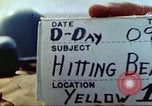
U.S. 4th Marine Division engaged in the Battle of Iwo Jima during World War II
U.S. 4th Marine Division during the Battle of Iwo Jima in World War 2. Views from Landing craft arriving at Yellow 1 Beach during U.S. amphibious assault on Iwo Jima. A sherman tank at the water's edge. The next day, two marines tend to a wounded out of sight below a bluff. One is seen holding a container of blood plasma above his head as they administer emergency treatment. A sherman flailing (crab) mine-clearing tank equipped for deep wading moves across the beach. Closeups of marines hunkered down on the beach, taking cover near armor, as they attempt to move inland. Marines and equipment covering the beachhead. Close offshore, an explosion sends water into the air. LSM-216 is seen maneuvering close to shore, attempting to bring ashore "C" Company tanks to Yellow Beach II. Marines setting a smoke screen of dense white smoke.
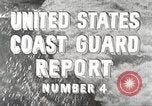
United States Coast Guard preparing for the Allied invasion of Normandy (WW2)
June 9, 1944. Sand flats seen at low tide in Normandy, France. Allied forces fighting their way inland during the Normandy invasion (Three days after D-Day) in World War II. Landing craft and destroyed buildings on the beaches of Normandy. German steel beach obstacles have been stacked out of the way. A United States Sherman DD tank sunk in sand. Badly damaged LCT-25 on the beach at Normandy, with her cargo of half-tracks still aboard and remains of the first one off, sitting at her ramp where it was hit by a German shell. Higgins Boat riddled with bullet holes. Scene shifts to January 1944 when United States Army troops descend from a troop transport ship into LCT-504 for practice maneuvers in the Chesapeake Bay. A soldier operates a Higgins Boat. Another soldier directs a Higgins Boat to the shore. Troops hit the beach in Higgins Boats driven by U.S. Coast Guardsmen from the Attack Transport ship, USS Samuel Chase (APA-26). United States troops carry equipment or belongings as they board ships to England in February 1944. Views of live aboard transport ships in convoys crossing the Atlantic Ocean. Coast Guardsmen near weapons at duty stations. Some troops are seen wearing life vests on board. Troops sleep or lie in hammocks in their quarters. Soldiers pass the time by playing cards, sleeping, reading and writing letters, and mending clothes on deck. Troops line the deck of the transport ship, USS Bayfield (APA-33), as the ship approaches port in England. Landing craft from the Bayfield, carrying troops, are seen in assault training exercises in England. Troops wading ashore during training. Coast Guard officers and sailors are seen aboard larger landing ships in exercises. Coast Guard officer smoking a cigar, as landing craft from the USS Samuel Chase speeds away after landing troops ashore. Trucks drive ashore from landing craft. Scene shifts to May 1944 and a formation of Consolidated B-24 Liberator bomber aircraft dropping bombs on enemy targets in Normandy. Aerial view shows bombs falling.
CRITICALPAST.COM: About Us | Contact Us | FAQs - How to Order | License Agreement | My Account | My Lightboxes | Shopping Cart | Advanced Search | Featured Collections | Website Terms & Conditions | Privacy Policy ©2026 CriticalPast LLC.
License Agreement |
Terms & Conditions |
Privacy Policy
©2026 CriticalPast LLC.