


 Francais
 Deutsch
 Italiano
Refine Your Search
Bolinas Beach California USA 1934 stock footage and images
- Showing 4759 to 4764 of 26867 results more
more Hide
Hide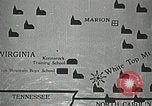
Pastor J.A. Yount and Cora Pearl Jeffcoat in the efforts of the Lutheran Watauga Mission in Appalachia
Animated map shows the location of the Watauga Mission efforts of the Lutheran Church, near Boone, North Carolina. View of the Reverand J.A. Yount ascending stairs of one of the seven churches in the Watauga Mission area, which are served by the Board of American Missions. Pastor J.A. Yount preaching at the pulpit of the church, with the altar in the background. Cora Pearl Jeffcoat organizes Bible Schools, Missionary Societies, Light Brigades within the Watauga Mission. Children seated outside a church receive education from Cora Pearl Jeffcoat. Sign reads 'Clark Creek Camp', one of the camps organized by "Miss Cory." Teenage girls at a camp gather on the porch of a simple wooden home. The girls read together, sitting on a rock, and then set a cooking fire outdoors, cook food, and then wash dishes at a raised basin.
Appalachian handcrafting of chairs and blankets by Appalachian men and women, with help from Watauga Industries
Appalachian men and women make handcrafts for sale, with assistance from Watauga Industries, part of the Watauga Mission of the Lutheran Church, near Boone, North Carolina. Mr. H.C. Ford, of the mission visits appalachian carpenters who are building handmade chairs. View of a carpenter planing wood for a chair and shaving wood from a cylinder part of the chair. A completed chair and bench. An elderly woman separating cotton fibers using two wired brushes, then weaving the cotton into a blanket at a hand and foot operated loom. Two women holding up the finished blanket. Mr. H.C. Ford brings money to one of the carpenters, earned from the sale of chairs.
Health care services coordinated by Nurse Amy Louise Fisher of the Watauga Mission, to help Appalachian mountain residents
Rural health care in Appalachia during the Great Depression. Nurse Amy Louise Fisher arrives at Watauga Mission in the southern Appalachian Mountains near Boone, North Carolina. In her car she passes a man leading an ox that is drawing a loaded wooden sled or skid behind it. Children and parents outside a church, part of the Watauga Mission sponsored by the Lutheran Church. Toddler weighed on scale by Nurse Fisher. Nurse Fisher gives vaccination injection to toddler. She makes a house visit to see a newborn. Miss Fisher assists a mother bathing her little baby. A dentist, coordinated by Nurse Fisher, holds a "party" offering tooth extraction services. Appalachian men and women take turns sitting on a chair on a wooden porch and having teeth extracted. View of the dentist's various instruments laid out on a table. View of a woman having her tooth extracted by the dentist.
American "Indian Love Story" translated into Indian sign language by Richard Sanderville
A story called,"Indian Love Story," is written out in chalk, on a blackboard. Scene shifts to Richard "Dick" Benedict Sanderville, interpreter at the Blackfeet Agency in Browning, Montana,seated on a chair,outdoors. He translates the story into Native American Indian sign language, as follows, while the camera records his movements: Man asks chief 's Daughter Will You Marry Me? She Says No. You're too Poor. Man Is Sad. Goes To War. Kills Two Sioux. Steals Ten Horses And Two Guns. Man Returns After Ten Days. Asks Woman Will You Marry Me? She Says-Yes! Man Says-No!! You Don't Love Me-You Love My Horses'. The signs: 1. MAN ASK CHIEF HIGH (head-chief) CHILD WOMAN , YOU ME MARRY; which translates to: A man asks the head-chief's daughter: "Will you marry me?" 2. WOMAN SAY , NO YOU POOR; which translates to her saying: "No, you are too poor." 3. MAN SAD (heart heavy), GO-TO-WAR; which translates to: The man is sad (his heart is heavy, falls on the ground). He goes to war. 4. KILL TWO SIOUX (3 missing sign), STEAL TEN HORSE, TWO BOW; which translates to: He kills two Sioux, steals ten horses and two bows. 5. GO-TO-WAR COME TEN NIGHT; which means: The man returns (from war) after ten days. 6. SEE WOMAN, SAY YOU ME MARRY; which means: He (visits and) asks the woman: "Will you marry me?" 7. WOMAN YES, MAN SAY NO; which translates to her saying: "Yes!" The man says: "No!" 8. YOU FOND HORSE , YOU HEART FOND (love) FINISHED. Translation: You love (my) horses, ( I ) don't love you anymore. Editor Commentary: The second GO-TO-WAR sign is much shorter because it is part of a compound sign, and the emphasis is now on COME. The actual going to war has already happened. Also, in the last sentence the first YOU is the subject, but the second YOU is the object, and the subject is missing. Finally, in the first sentence the HIGH sign (index finger pointing up above head) is almost unnoticeable, and means "standing high above all others" or "above all, superior, high above the others".
Native American Indian man narrates the text in sign language
A blackboard contains the following text written in chalk: "Formerly Indians Hunted Buffalo On Foot Driving Them Over Cliff. Now They Hunt On Horse-Back Using Bow And Arrows." Next, Richard "Dick" Benedict Sanderville, Native American Indian interpreter at the Blackfeet Agency in Browning, Montana, is seen seated outdoors, while the camera records his translation of the text into sign language.
Buffalo Lodge Transfer is narrated in Indian sign language
A story called,"Indian Love Story," is written out in chalk, on a blackboard. It describes a barter system in which Native American Indian tribal people exchange goods with one and another. According to the story relatives of purchaser help him to pay for the lodge in horses, weapons, robes or war bonnets. The owner and his wife and the purchaser and his wife exchange clothes. A sketch of an Indian and a bull. Scene shifts to Richard "Dick" Benedict Sanderville, interpreter at the Blackfeet Agency in Browning, Montana. He is seated on a chair,outdoors. He translates the story into Indian sign language while the camera captures his motions.
CRITICALPAST.COM: About Us | Contact Us | FAQs - How to Order | License Agreement | My Account | My Lightboxes | Shopping Cart | Advanced Search | Featured Collections | Website Terms & Conditions | Privacy Policy ©2026 CriticalPast LLC.
License Agreement |
Terms & Conditions |
Privacy Policy
©2026 CriticalPast LLC.