


 Francais
 Deutsch
 Italiano
Refine Your Search
Bolinas Beach California USA 1934 stock footage and images
- Showing 5959 to 5964 of 26867 results more
more Hide
Hide
United States Army Light M3 tanks and infantry advance during a training for tank attack.
U.S. Army soldiers undergo training for tank attack. Light M3 tanks advance through sandy, shrubby terrain followed by infantry. Tanks fire, many explosions across the terrain. Soldiers take cover in the thick shrubs. Hills and the ocean visible in the background. Smoke emerges due to several explosions. (World War II period).
United States soldiers crouching in a Landing Craft Personnel during landing maneuvers exercise.
United States soldiers during a landing maneuvers exercise. Soldiers crouched in a Landing Craft Personnel (LCP) under way. Soldiers and sailors aboard a transport ship. (World War II period).
United States soldiers scale down ship nets into Landing Crafts Personnel during a landing maneuvers exercise.
United States soldiers on a ship during a landing maneuvers exercise. Soldiers disembark from transport ship to Landing Crafts Personnel (LCP). Soldiers scale down ship nets. Many LCPs under way. (World War II period).
United States soldiers disembark from transport ship to Landing Crafts Personnel during a landing maneuvers exercise.
United States soldiers during a landing maneuvers exercise. A sailor watches Landing Crafts Personnel (LCP) underway. Soldiers disembark from transport ship to Landing Crafts Personnel (LCP) with the help of ship nets. An officer observes the exercise from aboard the ship. (World War II period).
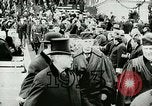
Inaugural address of Thomas Woodrow Wilson after he is named President of the United States in 1913.
Thomas Woodrow Wilson is named President of the United States in 1913. The inaugural address of the President at the U.S. Capitol in Washington DC. Dignitaries and officials arrive in cloaks and hats for the ceremony. Guests include outgoing President William Howard Taft, British ambassador Sir Cecil Spring-Rice, German ambassador to the U.S. Count Von Bernstorff, Speaker of the U.S. House of Representatives Joseph Gurney Cannon, Chief Justice of the U.S. Charles Evans Hughes, U.S. Secretary of State William Jennings Bryan, and Ted Wilson. The President and other attendees take their place on the podium. A large crowd gathered to witness the ceremony. The Chief Justice along with the President. President Wilson addresses the crowd. The band and troops march on the streets.
Plywood used to make crafts, boats and airplanes for the Invasion of Normandy during World War 2
Plywood used to make war material for the Invasion of Normandy. Birch, maple and mahogany logs are boiled for 24 hours. The logs are rounded on rollers and then peeled into long sheets of veneer. Women war production workers take out thin sheets of wood made from the logs. The sheets are then put into drying ovens to reduce the moisture. Women make an alternating wood and glue pile. These are stacked and put into a machine press to make the finished plywood. Workers put together and weld the prepared plywood. The plywood is used to make landing crafts, boats, pontoons, army holding boards, gliders and fighter planes. Men construct boats and crafts. A glider takes off. Worker under the plane. British de Havilland Mosquito bombers parked in a row. The plywood was a major component of the Mosquitoes .
CRITICALPAST.COM: About Us | Contact Us | FAQs - How to Order | License Agreement | My Account | My Lightboxes | Shopping Cart | Advanced Search | Featured Collections | Website Terms & Conditions | Privacy Policy ©2026 CriticalPast LLC.
License Agreement |
Terms & Conditions |
Privacy Policy
©2026 CriticalPast LLC.