


 Francais
 Deutsch
 Italiano

Refine Your Search
Brest France 1920 stock footage and images
- Showing 157 to 162 of 5760 results more
 Hide
Color Sound
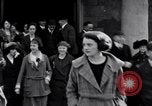
Inaugural ceremony of Albion College in Michigan.
Inaugural ceremony of Albion college in Michigan. Visitors,guests,students and scholars leave college building. Academic officials dressed in robs converse. Two officials pose for the camera and join others. Parade by students,visitors and officials and U.S. flags waved.1920
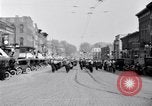
Academic processions at the Albion college inaugural ceremony in Michigan.
Academic Procession leaded by bands parade down main street with U.S. flags in hands. Buildings named Bullens Big Busy Store and Carle's Hardware can be seen.Few Cars and a tram are seen across the street. Parade enters auditorium compound which is surrounded by visitors.1920.
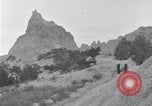
Native American Indians of Badlands in South Dakota.
View of Badlands with two men standing at hill side. Native American Indian families at a camp site can be seen. An Indian family in horse cart stands at crowded market. Crowded town square where Native Indians wearing traditional Indian Headdresses gather along with town folks for some ceremonial ritual including some dancing. Wide view of a camp site with numerous tents and some parked vehicles.1920.
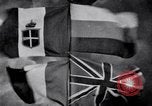
Golfer plays a tee shot.
Four flags of different countries masted on a single pole are hoisted. Golfer plays a tee shot in a golfing tournament in USA. Spectators watch him play.1920.
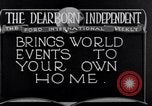
Advertisement for Dearborn Independent in Michigan.
An advertisement for The Dearborn International also Known as The ford International Weekly in Michigan. Newspaper contains editorials of Mr. Henry Ford over burning issues from the world of business,labor and day to day common but vital problems. A year subscription of the newspaper costs only US$ 1.50. 1920.
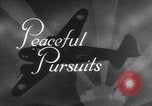
Various "firsts" in U.S. aviation history from 1918 through 1924; early history of flight and vintage flight scenes
Shows several aviation "firsts" accomplished by U.S. Army Air Service aviators in the period from 1918 through 1924. A close formation of biplanes in flight. President and Mrs. Woodrow Wilson chat with Major Fleet, Officer in charge, on the occasion of the first air mail flight, inaugurated on May 15,1918 between Washington DC and New York.The mail is loaded into the Curtis JN-4 aircraft. Pilot in the cockpit. The aircraft takes off and in flight. Air Service. Mention of aviators helping spot forest fires. Smoke rising from forest fires and mountain ranges. In 1920, U.S. Army Captain St. Clair Streett is seen with some of his Squadron who flew four De Havilland DH-4 aircraft 9,000 miles, from New York City to Nome, Alaska. Two of the men play with pet dogs. Their itinerary is painted on the side of one of the aircraft, along with the names of pilot and mechanic (C.E. Crumline and J.E. Long). In 1923 the first non stop coast-to-coast flight was made in the Fokker T-2 aircraft. . A sign on the aircraft reads 'Army Air Service non stop coast to coast'.First Lieutenants Oakley O.Kelly and John A. Macready board the aircraft, at Roosevelt Field, Long Island, New York, on May 2, 1923. Their Fokker T-2 in flight. Their arrival at Rockwell Field, on Coronado Island (San Diego) California. In 1924, Lt. Russell Maughan is seen boarding his P-1 Hawk airplane at Mitchel Field, on Long Island, New York, and taking off , bound for Crissy Field at the Presidio, San Francisco, California. His goal is the first dawn-to-dusk, coast-to-coast flight. Views of his P-1 Hawk airplane flying over Manhattan, New York City.
CRITICALPAST.COM: About Us | Contact Us | FAQs - How to Order | License Agreement | My Account | My Lightboxes | Shopping Cart | Advanced Search | Featured Collections | Website Terms & Conditions | Privacy Policy ©2026 CriticalPast LLC.
License Agreement |
Terms & Conditions |
Privacy Policy
©2026 CriticalPast LLC.