


 Francais
 Deutsch
 Italiano
Refine Your Search
British-Gliders stock footage and images
- Showing 241 to 246 of 3412 results more
more Hide
Hide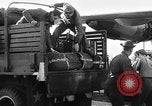
High altitude view of the B-24 aircraft dropping parachutes and para packs, Europe.
B-24 aircraft in formation drop supplies, Europe. Soldiers unload aerial mines and other supplies from trucks. The mines and other supplies loaded into the bomb bay of aircraft. The B-24 takes off. C-47 tows gliders. Aerial formation of B-24's flying low over farmlands release para packs. Cargo parachutes descend on ground. (World War II period).

Adolf Hitler, Hermann Goering and officers watch test flights of German aircraft at Rechlin airfield in Germany.
Adolf Hitler and German officers attend inspect and review test flights of new Luftwaffe aircraft in Rechlin, Germany. Hitler and Commander of the Luftwaffe, Hermann Goering, and other officers exit a railroad train at station. Officers at the platform greet Hitler and give a Nazi salute. They all move towards cars. The cars are driven off. Hitler waves at the crowd and greets a young girl who gives him flowers. At the airfield, Hitler and Goering view various aircraft with their entourage at Rechlin Airport. Goering points out a separate cockpit and engine displayed beside a bomber aircraft. A crew member assembling parts of an aircraft. Hitler watches the test flights of German aircraft. DFS 230 glider being towed on the ground for takeoff and then taking flight. Pilot and crew member crank start a fighter aircraft. Wide view of a Messerschmitt Bf 109 shortly after takeoff and gaining altitude. Next, a Blohm & Voss BV 141 tactical reconnaissance aircraft (BV 141A with complete tail) starts engine, taxis and takes off. Three Heinkel He 111 bomber aircraft are seen taking off. The last He 111 appears to employ rocket-assisted takeoff (RATO). The entourage of officers crosses the airfield by open automobile and then exits the cars to view more aircraft. Views of early model Dornier Do 217 aircraft in flight overhead. A Junkers Ju 88 aircraft flies by low and then climbs steeply. Brief view of a low flying attack aircraft that appears to be a Henschel Hs 129 (or possibly a Focke Wulf Fw 187) flying just above the airfield. Next is seen a twin boom aircraft, presumably a Focke-Wulf Fw 189, but with a shorter central crew gondola than later variants. The next scene shows good views of the Blohm & Voss BV 141 low in flight and then performing a rapid ascent and descent. It is followed by a low flying Blohm & Voss BV 138 Seedrache (Sea Dragon).
Montage of U.S. World War II combat scenes focusing primarily on the foot soldier (Infantry)
U.S. Army infantry patiently making their way on foot at various places in Europe and the Pacific during World War 2. Troops under fire during an amphibious assault. Others employing small arms in fire fights. American soldier firing a Browning 30 caliber light machine gun from a protected position. The American flag planted at a beachhead on a Pacific island. Landing craft in the background. Infantry moving widely spread out across a field. A line of soldiers standing side-by-side firing their rifles toward an enemy position. Closeup glimpse of soldier with fixed bayonet on his rifle. Flamethrower being employed. A soldier throwing a hand grenade. Another firing a bazooka from prone position in woods. Other infantrymen employing weapons, including: machine gun; mortar; a light howitzer artillery piece. A soldier sharpening his knife on a ground stone. Aerial view of amphibious assault underway below. Closeups of infantry in fast moving landing craft Views of many wading ashore from landing craft in a shallow bay. Lines of infantry wading ashore from a Landing Craft Infantry Large (Number 747) in a Pacific campaign. Closeups of soldiers reaching shore. A formation of Waco CG-4A gliders in flight, and then some seen landing in plowed fields of Normandy on D-Day, 1944. One noses over and remains tail upright after a rough landing. Infantry moving under fire. Some cluster for protection next to a Sherman tank. Lieutenant General Mark W. Clark briefing officers with pointer and very large tactical map, in the open, in Italy in 1944. U.S. infantry moving under fire in rugged terrain of Italy. Troops moving casually past a fallen enemy soldier. Closeups of individual soldiers making their way past the camera and taking a break. One of their wounded seen on a litter in the background. Infantry moving along a dusty road and then slogging through a muddy stretch. A soldier with numerous cans of combat film, at a War Department repository. An army Signal Corps clerk reviews caption sheets that accompany the combat films. Infantrymen gathered at side of a hill and later digging foxholes in fields. Lines of infantry moving forward in rugged terrain, with pack horses behind them. Infantry moving in concert with advancing armor. Individual soldiers moving under heavy enemy fire. A grenade explodes and American soldier fires his rifle, striking fleeing enemy soldier who falls. Soldiers firing a 75mm M1 Pack Howitzer; rifles; and a flame thrower. Infantry seated in a line of DUKW amphibious trucks. A soldier in heavy cold weather gear, eating from his mess kit at a fox hole he prepared in snowy area. his trenching tool sits next to him. In contrast, soldiers are seen helping civilian refugees moving through rice paddy area somewhere in the Pacific. One carries a small child. A shift change at a U.S. war plant, shows thousands of workers . Lines of miners heading to work. Men and women punching time clocks as they leave after their work shift. Closeups of American men and women engaged in war production work of various kinds. Split screen shows war plant workers on one side and formations of soldiers on the other. Cemetery with grave stones of fallen American service personnel. One is marked "Unknown." Animated chart showing rising war production against backdrop of factories emitting smoke from chimneys.

Allied paratroopers land on D-Day to invade Normandy during World War II.
Allied D-Day invasion of Normandy, France during World War II. United States C-47 aircraft in flight at early dawn. Interior of aircraft paratroopers prepare to jump and attach lines to overhead cables. Men bail out of aircraft. Paratroopers land jump from nearly 40 C-47 planes. Paratroopers load into aircrafts at dusk. Aircrafts in flight, CG 4A gliders descend.
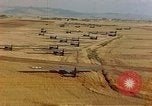
Airfield occupied by Allies and scenes of destruction in Southern France during World War II.
Allied invasion of Southern France during World War II. Aerial views of Allied occupiied aerodrome with numerous gliders and United States C-47 tow plane aircraft parked in the field. they are marked with white D-day invasion stripes Tents set up at the field. Wrecked German airplanes and bomb craters. Wrecked aerodrome. Low level aerial views of bombed roads, railroads and bridges.
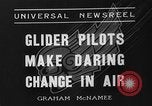
Sailplane pilots change positions as one climbs onto the plane from a speed boat in Newport Beach, California.
Sail plane pilots change places while the glider is in flight in Newport Beach, California. A sailplane in flight with a pilot in his seat. Another pilot in a speed boat comes near the low flying plane. Pilot in the speed boat gets onto the plane. The pilot seated in the plane gets off and hangs from the plane after changing his position with the other pilot. Plane flies low over the beach and the pilot jumps into the water.
CRITICALPAST.COM: About Us | Contact Us | FAQs - How to Order | License Agreement | My Account | My Lightboxes | Shopping Cart | Advanced Search | Featured Collections | Website Terms & Conditions | Privacy Policy ©2026 CriticalPast LLC.
License Agreement |
Terms & Conditions |
Privacy Policy
©2026 CriticalPast LLC.