


 Francais
 Deutsch
 Italiano
Refine Your Search
British-Gliders stock footage and images
- Showing 277 to 282 of 3412 results more
more Hide
Hide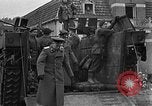
Soviet Officers visit British artillery unit, where they are shown British guns and munitions.British fire BL5.5 inch field gun
Soviet officers climb down from tracked military vehicle in which British soldiers are explaining something to other Soviet officers. Artillery shells piled on a shelf in the vehicle. British soldiers explaining an artillery gun to the Soviets. British gunners fire BL 5.5 inch field gun, while one of the Soviet officers covers his ears. Soviet Officers step out of a mobile command post and walk around to the side where they converse with a British officer.. (World War II period).
Peace River flows around project site as Canadian engineers tackle hydro electric project in British Columbia, Canada.
Canadian engineers tackle hydro electric project in British Columbia, Canada. The Peace River in British Columbia. The river is diverted from its bed. It flows around project site. Portage mountain dam on the Peace River. Giant earth movers work on highly mechanized operation on Rocky mountains. Canadian engineers tackle the operation. Conveyor belt brings materials to the construction site. Workers discover dinosaur tracks at construction site. They measure their tracks. Engineers construct a hydro electric project.

A Canadian railway train passes through newly opened track in the Peace River area of British Columbia, Canada.
A Canadian railway train passes through the newly laid rail routes in the Peace River area in Northwestern Canada. It is a new 300 mile route from northern Vancouver Canada to northern British Columbia. Railroad train crosses a high altitude bridge.Several gorges and canyons in the background.
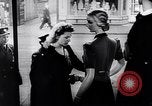
British women work in various war time jobs, British prepare for war, and people greet Winston Churchill
Contribution of British working women to the war effort in England during World War 2. British women prepare for German aerial warfare Battle of Britain. British women stand and talk. A woman reads from a paper. British women put up barrage balloons and man the antiaircraft guns. British women working jobs that are traditionally handled by men. They work on a train. Another woman cleans a wheel. Women fly and taxi planes. Women in war time drive ambulances and buses. They cook food and serve it to men. British men and women work overtime in a various factories, including war production factories on airplane production and operating various industrial equipment. A British woman welding with a mask. Workers yawn. Two British soldiers with guns walk. The Germans begin their bombing campaign in the Battle of Britain. A British soldier leaves a house. Soldiers walk with rifles on their shoulders. People greet British Prime Minister Winston Churchill. He waves to the people. British people listen to excerpt from Churchill speech on radio with his famous lines "We shall fight on beaches..." and "We shall never surrender." British Soldiers move up a hill. View of barbed wire defenses with Big Ben clock tower in distance behind. British civilian man covering a newly built Anderson Shelter (air raid shelter) with dirt. British civilians walking. Soldiers march and work. A man on a horse cart. An air raid by German aircraft begins and an alarm sounds. British boy and girl children look up in the sky and then run for shelter. Blitz Air attack on London by Nazi German Luftwaffe aircraft during Battle of Britain. A warden blows his whistle and runs, guiding citizens into an underground shelter. Parents are seen trying to fit gas masks onto young British children and an infant, as the children squirm and protest.
Wartime nutrition public service film focuses on improving nutrition of American and British people. Also shows British war scenes.
Film on importance of good food and good eating habits during World War 2. Sweeping views of open farm land in the United States. Wheat harvesting by a harvester machine on a farm. Corn picked from stalks. Pigs in a pen. Cattle eat at a trough. Fish leaping on deck of a boat after being emptied from a net. Butcher weighs meat on a scale for a woman customer. Grocer puts meat, sugar, eggs, and other rationed items in a grocery bag. Scene changes to England, probably London, with smoking rubble on the ground from a blitz bombing run by German forces during World War 2. British firemen pour water on a blaze from fire hoses. A queue of British women and children citizens waits to receive food aid. Many of the British civilians look tired. A girl holds a large doll in her arms. A woman with a bandaged head holds a young girl child. Scene shows a British family at a table eating ration reduced portions of eggs, butter, and cheese. A British scientist holds a beaker and adds it to a large food preparation drum, adding vitamin enriched material to a food such as margarine, to aid with improving nutrition despite scarcity in the United Kingdom during World War 2. A box of butter is shown. Hand flips butter packet over to show label "Contains Vitamins A and D". British staples such as a wheat bread loaf and also beans, peas, and cereals are credited by the narrator as being "nerve conditioners, at a time when iron nerves are needed most." Footage of a British paratrooper in training jumping from a British aircraft. Next scene is in a steel mill as British men wearing protective glasses use shovels near a furnace. Scene of a British woman receiving cod liver oil and milk as a ration for a young child. Grocer at produce stand hangs sign saying "no tomatoes". But a victory garden sign behind shows someone pushing a shovel into the earth. People are shown working in victory gardens to grow fresh vegetables. All ages of older men and women and young children in England are shown working to tend victory gardens in plots large and small. Soldiers beneath a barrage balloon tend a garden with hoes. Scene in a community kitchen with a group of British citizens eating a meal. Next scene shows Americans in a restaurant and then in a diner ordering food at the diner counter. A woman orders and coffee is poured for her and two donuts are served. Narrator notes that the food nutrition choices made by many Americans are not good, and notes that malnutrition saps the strength of Americans. A woman secretary is seen typing and being frustrated and tired. A man welding lifts his helmet and rubs his head and face in exhaustion. A doctor and nurse examine and treat an eye of an American war worker. A U.S. Army recruitment or induction center is shown, with new recruits receiving medical examinations. Doctor uses a tongue depressor and examines a person's throat. A blood pressure machine takes a reading. An eye chart is shown. Doctor uses a stethoscope on a recruit's chest. Group of U.S. Army soldiers marching in formation. A group of new citizen recruits without uniforms marches.

British war ships at sea and British aircraft on field as forces mobilize for German blitzkrieg air raids (WW2)
Film outlines mobilization and various departments and divisions of British response to German blitz air raids in battle of Britain. Film shows scenes of: Anti-aircraft batteries, Royal Air Force aircraft response, Air Raid Wardens, Observer Corps, Decontamination Squads, Auxiliary Fire Service, and First Aid Posts. British forces prepare for German Blitz air raids on British cities in World War II. British naval ships at sea. A large howitzer and guns seen on the ship. Maps show positions of warships and aircraft in Britain. British aircraft on airfield. British police marching. British air raid wardens. Air raid observer looking skyward with binoculars. British fire engine, fire boat and fire men seen. Entrance to air raid shelter. Medical ward set up to treat victims.
CRITICALPAST.COM: About Us | Contact Us | FAQs - How to Order | License Agreement | My Account | My Lightboxes | Shopping Cart | Advanced Search | Featured Collections | Website Terms & Conditions | Privacy Policy ©2026 CriticalPast LLC.
License Agreement |
Terms & Conditions |
Privacy Policy
©2026 CriticalPast LLC.