


 Francais
 Deutsch
 Italiano
Refine Your Search
British-Gliders stock footage and images
- Showing 25 to 30 of 3412 results more
more Hide
Hide
C-47 transport aircraft take off one by one for Netherlands; WACO glider taxiing at RAF Ramsbury (WW2)
U.S. Army Douglas C-47 Skytrain transport planes take off one by one from RAF Ramsbury airfield in Wiltshire, England during World War II, heading for the Netherlands in Operation Market Garden. A Waco CG-4 Hadrian military glider taxiing, following one of the transport planes at the British airfield. C-47 Skytrain transport plane takes off from the airfield, followed by the WACO CG-4 glider.
D-Day invasion of Normandy during World War II.
Allied Invasion of Normandy, France during World War 2. British Armstrong Whitworth Whitley bomber in flight. Allied paratroopers of 6th British,and American 101st and 82nd Airborne Divisions jumping from aircraft. Allied troops in gliders being towed across the English Channel. A British pilot in cockpit of aircraft towing a glider. Several gliders descending over French farm fields.Formations of Martin B-26 bombers overhead. Allied Navy warships underway. Scenes on decks of the warships. Navy heavy guns being loaded and fired from Battleships and cruisers. American B-26s and British Armstrong Whitworth Whitley bombers in flight overhead. British spitfire fighter aircraft overhead. U.S. B-26 in D-day stripes. Bombs exploding on German enemy targets. Navy ships bombarding shore. Allied infantry descending rope nets from troop ships. B-17 bombers aloft.Gunner in a B-17. British warship in camouflage bombarding French coast. British spitfire zooming low over landing craft. Allied American and British soldiers in landing craft going ashore at several different Normandy beaches. London, with streets quiet, in early morning, June 6, 1944. Journalists assemble at British Ministry, and a U.S. Army Colonel tells them the invasion at Normandy is underway. The reporters run from the room to file their stories. People reading about it in their newspapers in various cities of the world.
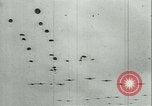
Allied troops advance and secure territory in Arnhem, Netherlands.
Arnhem: Fleet of Allied planes in flight. The 1st Allied Airborne Corps troops descend and land near Arnhem, Netherlands. Ground forces march ahead. Members of the Allied corps from the American 82nd Airborne Division capture and cross the 2km long bridge over the Waal at Nijmegen. Dead German soldiers on the bridge. Landing of allied paratroopers near the town of Grave, targeting the bridges over the Maas. Scenes of the Glider Pilot Regiment landing in Holland near Arnhem in Operation Market Garden, including point of view shots from glider in flight under rope tow, and of many paratoopers filling sky during drop. Soldier in jeep being unloaded. A wrecked glider. Allied soldiers take German prisoners. Wounded soldiers. Dutch Resistance Movement officers reveal German troop movements to Allies. A member with an 'ORANJE' insignia on his uniform sleeve. View of German Garrison commander Major General Fridriech Kussin, dead, his body half fallen from his Citroen automobile as Allied troops march by. A bungalow used by the resistance as their headquarters. British soldiers attempting to defend their position near the Arnhem road bridge over the Lower Rhine (now the John Frost Bridge, named after the British Commander who led the forces that defended their position there for 9 days, and subject of the 1977 movie "A Bridge Too Far"). Wounded soldiers on stretchers, from fighting against the German 9th SS and 10th SS Panzer divisions. Views of supplies being dropped to the British forces and the soldiers retrieving dropped supplies. Allied Target Indicators go off at dusk. British soldier communicating on radio as they await arrival of British XXX Corps (who never arrive). Remaining British troops withdrawing after 9 days of battle. British Soldiers retire and walk on streets. Soldiers in military jeeps. The Nijmegen bridge over the Waal River protected by the Allied soldiers. In total 10,600 Allied airborne soldiers landed at Arnhem; 1500 were killed and all but 2398 were captured (World War II period).
Allied troops aboard ships and gliders head for Normandy, France for the D-day invasion during World War II.
Allied invasion of Normandy, France during World War II. U.S. General Joseph McNarney, Deputy Chief of Staff at a desk as he outlines the importance of June 6, 1944 the day Allied forces attacked the Germans in Normandy. He speaks about the decision to knock down the Nazis first and then the Japanese during the World War. He says that the invasion of Normandy was planned in November 1943. He also states how General Dwight D. Eisenhower, Supreme Commander of the Allied forces in Europe, planned and executed the invasion. He also speaks about how the U.S. Army Air Forces and the Royal Air Forces aircraft bombarded the coasts of Normandy prior to the D Day invasion. Past events show American soldiers getting onto landing crafts in England as they leave for the invasion. The soldiers aboard the ships in the English Channel. The soldiers read the Bible and comics, sleep and cook aboard the ships. On June 5th , 1944 the ships head towards Normandy for the invasion. In England gliders carrying paratroopers take off from an airfield to bombard the German positions in Normandy. British soldiers receive ration and work on motorbikes. TNT (trinitrotoluene) charges being prepared by soldiers tasked with demolition duties. British soldiers check their guns and other weapons prior to the invasion. Jeep and artillery being loaded onto aircraft.
D-Day in World War II. British and American forces landing on Normandy beaches, and fighting their way inland.
D-Day invasion of France by Allied Force during World War 2. American troops wade ashore from landing crafts at Omaha Beach, Normandy. Wounded huddle together on Omaha Beach. Allied troops care for wounded on litters at the beach. Fallen American soldiers covered and lying on beach next to a dozen captured German prisoners of war. Allied ship burning offshore. Reinforcements coming from other beaches and from more landing craft. Troops wading ashore from landing craft. German soldiers firing rifles and mortars. A crashed Allied glider. "Screaming Eagle" insignia of 101st airborne Division on sleeve of paratrooper. German reinforcements of armor and infantry arriving from Berlin. British infantry leaving landing craft on another Normandy beach. They move rapidly off the beach and then fight their way inland, crawling at times. British artillery support firing. Views of British soldiers and American soldiers advancing in coastal towns of Normandy region. The steeple of a church falling to shellfire. British General Bernard Montgomery jumping down from an amphibious vehicle at a beach in Normandy. Allied troops riding armored vehicles into a French town. Formation of U.S. Air Forces P-38 fighters in flight overhead. Wide shot of formation of British aircraft flying low over water. Closeup view of a single British De Havilland Mosquito bomber in flight. British Mosquito aircraft pilot in cockpit. Gun camera footage of Allied aircraft in close support, flying low and strafing German ships, flak towers, and fortifications. British Hawker Typhoon aircraft in action.
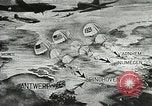
Allied Airborne units dropping in Holland during World War II
Animated map showing American and British paratroops being dropped in Holland toward Eindhoven, Nijmegen, and Arnhem, and British ground forces advancing past Antwerp, during World War 2. British paratroopers seen inside C-47 (Dakota) aircraft as they head for Arnhem, on the Rhine (Rhein) River. Their parachutes fill the sky as they jump from their aircraft. They assemble on the ground, as one of the transport aircraft is seen diving and crashing in the background.The British paratroops move through outskirts of town. Scene shifts to U.S. airborne units landing at Eindhoven, in gliders. One of the gliders flips over on landing. American airborne units joining up with the advancing British ground troops. Views of the undamaged bridge at Nijmegen. The British forces encounter fierce German resistance that prevents their joining with their airborne troops at Arnhem.British troops dug in and firing mortars and small arms at Arnhem. Allied aircraft airdropping supplies to the dug in forces. A supply airplane shot down and crashing. British wounded soldiers being carried on stretchers.
CRITICALPAST.COM: About Us | Contact Us | FAQs - How to Order | License Agreement | My Account | My Lightboxes | Shopping Cart | Advanced Search | Featured Collections | Website Terms & Conditions | Privacy Policy ©2026 CriticalPast LLC.
License Agreement |
Terms & Conditions |
Privacy Policy
©2026 CriticalPast LLC.