


 Francais
 Deutsch
 Italiano
Refine Your Search
British-Gliders stock footage and images
- Showing 553 to 558 of 3412 results more
more Hide
Hide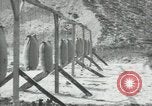
British soldiers demonstrate bayonet and trench tactics during a drill during World War I.
British soldiers demonstrate bayonet and trench tactics to U.S. 307th and 308th Infantry troops in France during World War 1. British troops armed with bayonets use sand bags as dummy targets. British soldiers in a trench aim at dummy targets. A commanding officers supervises the drill operation.
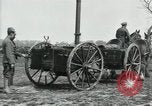
British soldier explains mobile field kitchen and stove to an American soldier in World War I
British soldier explains operation of a mobile field kitchen stove, to an American soldier, during World War 1, in France. The stove wagon is hitched to a draft horse. The British soldier demonstrates how dried grass is placed into a door of the stove, to get a fire started. He then removes a lid from atop the stove and smoke emerges. He replaces the lid. The two climb on top of the field kitchen and the British soldier removes several lids to show the workings of the kitchen. Finally, he opens a clamp on the stovepipe and demonstrates how it can be collapsed for transporting. (World War I; World War 1; WWI; WW1)
Views of the Al Aqsa and Dome of the Rock mosques during British occupation of Jerusalem in World War I
Views of the Al Aqsa Mosque, also known as the Qibli Mosque in Jerusalem, Palestine. A closeup of the Dome of the Rock Mosque after British capture of Jerusalem in World War 1. A contingent of British troops on guard duty marches past the Dome of the Rock Mosque. Men are seen on the mosque steps. Several British soldiers setting out on camels.
British soldiers question a captured Turkish POW in Palestine during World War I
Shows British soldiers questioning a captured Turkish POW in Palestine during World War 1. A translator translates the prisoner's language for the British. A British soldier dictates the translation. Camels and horses in the background.

Four British working men and four American counterparts visit officials concerned with war production, in New York City and Washington DC (WW2)
A British film entitled, "People to People." Four British working men, visiting America, are seen in overcoats on the deck of a ship passing the Statue of Liberty in New York Harbor during World War II. They are accompanied by four American workers who were returning on the same ship, from a similar visit to England. Closeup of the eight men, named by the narrator, who calls them trade unionists on an exchange visit. Brief view of Chiang Kai-Shek, Franklin D. Roosevelt, and Winston Churchill at the Cairo Conference in 1943.Camera pans closeup over Roosevelt and Chiang Kai-Shek. Brief views of Roosevelt, Churchill, and Joseph Stalin at the Tehran Conference in 1943. Closeup of Roosevelt and Churchill, with Anthony Eden standing immediately behind them. Closeup of Stalin and Roosevelt, with U.S. Army Air Force Chief, General Henry H.(Hap) Arnold and British General Alan Brooke, Chief of the Imperial General Staff, conversing behind them. Scene shifts back to the men aboard the ship in New York harbor, with the New York City Manhattan skyline of buildings in the background. Next, the eight men are seen climbing steps to New York City Hall. Inside they are welcomed by New York City Mayor Fiorello LaGuardia. The group is then seen entering a building in Washington, DC, where they sit down at a table with Donald Nelson, Head of the U.S. War Production Board. In the Department of Labor building they meet William Hammatt Davis, Head of the War Labor Board, and also the Secretary of Labor, Frances Perkins. After that they are seen heading into the White House, where they are met by Mrs. Eleanor Roosevelt, who comes out of the White House to greet them on the porch. (Narrator says she later invited them inside for tea.) The men are next seen climbing the Capitol steps. Vice President Henry A. Wallace comes out to greet them and comments about industrial production not only during the war, but in the time of peace to follow.
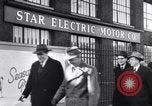
British working men on exchange visit to America question members of a Labor-Management Committee in New Jersey (WW2)
British working men and their American counterparts on exchange visit in the United States. The group enter a building of the Star Electric Motor Company. Inside they are seen sitting in on a labor-management committee meeting. The British workers ask whether the company's worker suggestion program is successful. The company managers say it has and helped increase war production. The British ask about having any deadlocks in labor-management relations, affecting war production, and are told the U.S. War Production Board would be called upon to resolve such a matter. The issue of continuing such labor-management cooperation after the war is discussed. (World War II period)
CRITICALPAST.COM: About Us | Contact Us | FAQs - How to Order | License Agreement | My Account | My Lightboxes | Shopping Cart | Advanced Search | Featured Collections | Website Terms & Conditions | Privacy Policy ©2026 CriticalPast LLC.
License Agreement |
Terms & Conditions |
Privacy Policy
©2026 CriticalPast LLC.