


 Francais
 Deutsch
 Italiano
Refine Your Search
British-Gliders stock footage and images
- Showing 583 to 588 of 3412 results more
more Hide
Hide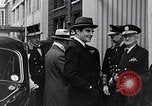
U.S. SECNAV Franklin Knox visits U.S. Admiral Harold Stark and British Vice-Admiral Sir Bertram H Ramsay in London during World War II
Franklin Knox, U.S. Secretary of the Navy (SECNAV) shakes hands with U.S. Navy Admiral Harold Stark, Commander of U.S. Naval Forces in Europe, British Vice-Admiral Sir Bertram H Ramsay, and other British and American naval officers, after visiting them in Stark's headquarters at 20 Grosvenor Square, London, England, during World War 2. Secretary Knox enters a car. Scene shifts to an RAF airfield where Secretary Knox stands with Admiral Stark and two military aides,near the wing of a U.S. Army Air Forces C-47 airplane. Stark and Knox stand together and then Knox bids Stark goodbye, as he prepares to board the C-47 airplane. Admiral Stark salutes as Secretary Knox climbs aboard the plane. Admiral Stark and aides wave goodbye as the aircraft taxis out. Several members of British Women's Auxiliary Air Force (WAAF) walk across the airfield ramp, as the C-47 taxis out for takeoff

Evacuation of the British troops from Dunkirk
Evacuation of the British and Allied troops from Dunkirk beginning May 26, 1940. The troops at the beaches of Dunkirk. Smoke rising from Dunkirk with views of houses in foreground. British troops helped aboard boats in the water, some jumping down from large ships. View of smoke rising from Dunkirk on horizon as troops depart. The soldiers sleeping at sea after being rescued from Dunkirk. Wounded helped from boats as they return to British soil. The soldiers smoking after successful evacuation and giving the 'thumbs up' sign. Troops looking out windows of railroad car and smiling. (World War II period).

British ocean liner Canberra arrives at New York harbor in United States.
British passenger ship Canberra at New York harbor. Under President Kennedy's program to promote foreign tourism British liner Canberra arrives at New York harbor carrying 1700 British tourists. The liner at the harbor.
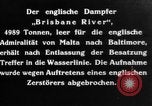
The British Ship "Brisbane River," stopped (and sunk) by German U-Boat, UB-35, in World War I
View from the German U-Boat, UB-35, of the British ship, "Brisbane River," stopped in the Atlantic off the coast of North Africa, in World War 1. U-35 Captain, Lothar von Arnauld de la Periere, with the British ship's officers, aboard the submarine, examines their papers and Registry of Ships. Closeup of a Ship Registry showing the Brisbane River, listed as number 1219. The Captain crosses it off the Registry and pencils in the date: April 17, 1917. (As noted in opening slate, the actual sinking of the Brisbane River was not caught on camera, as filming was suspended due to the approach of British destroyers.) Later, the crew is seen on deck, taking showers, and enjoying themselves, swimming in the ocean.

British occupation of Constantinople (Istanbul) immediately after World War I
Sulimanie or Suleymaniye (Süleymaniye, Prof. Sıddık Sami Onar Cd. No:1, 34116 Fatih/İstanbul, Turkey) Mosque, Constantinople (modern-day Istanbul), Turkey, as seen from a British ship in the Bosphorus strait as British commence occupation of Constantinople at end of World War 1. Crew lining railings of a Turkish warship, flying the Ottoman Empire flag, underway in the Bosporus Strait. Scene shifts to a British two-stack battleship bristling with heavy guns, moving amongst several other warships in Turkish waters.
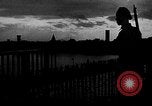
German judges being administered an oath of office in a British occupied zone of Germany after World War II.
Life of people in a British occupied zone of Germany after World War II. A British soldier guards the area as German civilians move about on a bridge in the background. Women move down a staircase. An air raid siren sounds. People sleep on benches. Shadow of girls as they move round in a circle. A damaged building. Judges being administered an oath of office by a British officer. Girls hold hands as they move round in a circle.
CRITICALPAST.COM: About Us | Contact Us | FAQs - How to Order | License Agreement | My Account | My Lightboxes | Shopping Cart | Advanced Search | Featured Collections | Website Terms & Conditions | Privacy Policy ©2026 CriticalPast LLC.
License Agreement |
Terms & Conditions |
Privacy Policy
©2026 CriticalPast LLC.