


 Francais
 Deutsch
 Italiano
Refine Your Search
Bruchsal Germany 1945 stock footage and images
- Showing 6775 to 6780 of 10461 results more
more Hide
Hide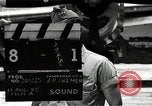
Captain Kermit Beahan, bombardier of B-29 that dropped atomic bomb on Nagasaki, interviewed at Tinian, Marianas Islands
Setting: Airbase at North Field, Tinian Island in Marianas Islands. Public Affairs Officer, Major John F. Moynahan (not seen) identifies Captain Kermit K. Beahan, bombardier of the B-29, "The Great Artiste." (Note: Captain Beahan was the regular pilot of the B-29, "The Great Artiste", which was scheduled to carry the bomb. But it needed to be re-instrumented for the mission. So, instead, its crew simply switched airplanes with the crew of the B-29 "BocksCar" which was already properly configured. Thus, "BocksCar" was the airplane from which bombardier Beahan actually dropped the bomb.) When asked about his experience, Captain Beahan recalls being greatly relieved when clouds parted and the target, Nagasaki, could be clearly seen. He felt that dropping the bomb on Nagasaki, was the biggest thrill of his lifetime. (World War II period).
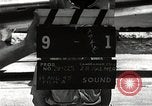
Captain Theodore J Van Kirk, navigator of B-29,'Enola Gay' interviewed at Tinian Island base, Marianas Islands in WW II
Atomic bombing mission in Japan by the United States Army Air Force, during World War II. U.S. military base in North Field, Tinian Island in Mariana Islands, South Pacific. Captain Theodore J. Van Kirk, the navigator of 'Enola Gay' (B-29 which dropped atomic bomb on Hiroshima) is asked about his experience, by Public Affairs Officer, Major John F. Moynahan (seen only from the back at very end of clip). Captain Van Kirk stands in front of Enola Gay and states his belief that the new bomb they carried would be a great help in shortening the war.
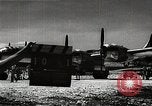
'Enola Gay,' the B-29 that dropped atomic bomb on Hiroshima,parked at North Field base,Tinian, Marianas Islands.
U.S. military base in North Field, Tinian Island in Marianas Islands, South Pacific. 'Enola Gay' the B-29 bomber that dropped the world's first atomic bomb on Hiroshima, Japan, parked on the ramp. The fuselage of Enola Gay. Name Enola Gay painted on its nose. (World War II period).
Victims of atomic bombing in Hiroshima and Nagasaki, suffering from various illnesses 7 weeks after explosion.
Japanese film on Atomic bomb damage in Hiroshima and Nagasaki. Destroyed departmental store, sacks of ration inside affected by radioactive radiations. Victims of various injuries and wounds in hospital, doctors working with patients. Excoriation by radiation in victims, infection in upper body, inside the mouth, deformed teeth. Animated map showing radiation affects at various distances near epicenter. Depilation of soldiers 7 weeks after bombing. Map shows affects in farther region. Depilating children with fever, excoriated mother and daughter. Excoriation and depilating old woman. (World War II period).

Effects of harmful radiations on various internal organs of victims of atomic bomb explosion in Hiroshima and Nagasaki.
Japanese film on Atomic bomb damage in Hiroshima and Nagasaki. Effects of harmful radiations from atomic bombing, on various internal organs of the human body. A cut section of human bone showing effects on bone marrow. Inner organs of human body observed under microscope. Harmful radiations effect blood, spleen, microscopic view of skin shows depilation and ulcer. Other organs as skull suffering depilation, testicles, ovaries, intestine, lung, lever, kidney, adrenal gland, thyroid gland examined. (World War II period).
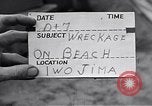
Wreckage of American military vehicles and equipment at the beach of Iwo Jima island of Japan, during World War II.
Seven days after D-day in the Battle of Iwo Jima. Wreckage of American amphibious craft and war materiel in aftermath of amphibious assault by U.S. marines on Iwo Jima during World War 2. A solitary U.S. Marine climbs over section of wrecked Higgins Boat (Landing Craft Vehicle Personnel-LCVP) on the shore of Iwo Jima. An undamaged Landing Craft Infantry Large--LCI(L) seen in in water in background. Closeup of the wrecked Higgins Boat. Camera shifts focus to some wrecked Landing Vehicles Tracked at the water's edge. Wreckage of a landing craft stenciled: "L5V2-13." The surf inundating the wreckage. A jeep mired in sand at the water edge. A jumble of broken boats and parts in the surf.
CRITICALPAST.COM: About Us | Contact Us | FAQs - How to Order | License Agreement | My Account | My Lightboxes | Shopping Cart | Advanced Search | Featured Collections | Website Terms & Conditions | Privacy Policy ©2026 CriticalPast LLC.
License Agreement |
Terms & Conditions |
Privacy Policy
©2026 CriticalPast LLC.