


 Francais
 Deutsch
 Italiano
Refine Your Search
Bruchsal Germany 1945 stock footage and images
- Showing 85 to 90 of 10461 results more
more Hide
Hide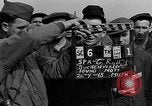
Long term captive of Buchenwald concentration camp, Otto Feuer, is interviewed after U.S. forces liberate camp.
Internees at a concentration camp in Buchenwald, Germany. Otto Feuer, a Jewish internee from Hamburg states how he has been in concentration camps for past so many years. He thanks the American Army for liberating them from the concentration camp in Buchenwald, Germany on April 11, 1945. Other internees in the background.
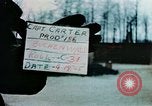
Dead bodies of prisoners from Buchenwald Concentration Camp seen piled up in a truck.
Dead bodies of prisoners from the Buchenwald Concentration Camp, operated by Nazi Germany in Ettersberg near Weimar Germany. World War 2 U.S. Army Cameraman slate indicates footage is from Buchenwald and was filmed on April 14, 1945, soon after the camp's liberation on April 11 by American forces. Dead bodies of prisoners lie on ground. Emaciated and tortured bodies of atrocity victims seen piled up in a truck. Dead man with a beard. Different bodies piled up in a truck. Faces of the dead bodies.
World War 2 battle scenes; wrecked buildings and masses of displaced persons in Europe after World War II.
'Problems of Peace in Europe' produced in 1948, depicts reconstruction problems in aftermath of World War II and includes footage from during the war and soon after the war. Scene of desperate and hungry civilian people (possibly in Germany but could be elsewhere in Europe) scrambling over each other and trying to find food on the ground among garbage or wreckage, circa 1945 or 1946. European peoples massing to reestablish political order and seek relief in post-war Europe. Montage of images of people from all walks of life. Reminders of war showing aircrews in bombers and bombs falling. Batteries of rockets being fired. A formation of U.S. B-17s and a B-26 aircraft with D-day stripes, in flight. Allied bombing of cities with devastating effect (likely 1944-1945). Aerial view of the Statue of Liberty in New York Harbor. Aerial view of a major U.S. industrial complex, with many smoke stacks and industrial pollution. Mass of workers leaving at end of shift at a U.S. manufacturing plant or factory. Views of two different streamlined locomotives pulling passenger trains at high speed, approaching camera position. Freight trains speeding on railroads. Farmers harvesting and baling hay by machine and cultivating fields with tractor. Multiple wide views of the K-25 building of the Oak Ridge Gaseous Diffusion Plant, in Oak Ridge Tennessee, the world's largest building in 1944 when it was built, and an instrumental part of the Manhattan Project effort to develop the atomic bomb in World War 2. Huge sprawling industrial sites in America. Map of Europe. Street scene in Germany with destroyed buildings and rubble cleaned from street, but still piled up in places. Desperate, hungry, and poverty stricken German citizens rummaging through garbage piles for anything to eat or anything of value. Two very young German boys standing together on a street, with one boy smoking a cigarette. Children scrambling over trash and rubbish heaps.
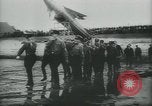
Montage of German rocketry scenes from 1930s through World War II. Nazi surrender. Atomic bomb. Japanese surrender
German rocket pioneer, Gerhard Zucker, attempting to develop postal rockets in the 1930s. Location is Wadden Sea off Cuxhaven, on April 9, 1933, where Zucker follows Nazi Sturmabteilung (also called SA or Stormtroopers) carrying the mail rocket across wet sands. The rocket is set up on a launch stand. Zucker and an assistant ignite the 8 side rockets and the mail rocket takes off. It noses up and loops over backwards, falling to the sand. German Stormtroopers lift up the damaged device. Next, is seen a later, more modern, rocket trial ending in failure. Two German engineers display a model similar to the pulse-jet-powered "buzz bomb" (V-1) employed by the Nazis in World War 2. A brief glimpse of similar American machine on sand flat, as narrator states German acknowledgement of knowledge gleaned from Dr. Robert Goddard's work. A German V-1 flying bomb (aka Doodle Bug) being launched in 1944, during World War 2. View of British houses of Parliament, London, England; an air raid shelter sign in City of Westminster. Londoners waiting out a raid in the shelter. Scenes of fire and destruction during German bombing of London, as narrator speaks about the more advanced German V-2 ballistic missiles employed later in the war. Londoners trudging through debris amongst bombed out buildings. Change of scene to U.S. infantry and armor advancing deep into Germany. Narrator refers to them overrunning rocket bases and other vital war-making facilities, near the end of the war. Glimpse of large number of German prisoners of war. Documents of military surrender being signed by Field Marshal Wilhelm Keitel, in Berlin, May 8, 1945. Closeup of Keitel. Scenes of American forces operating in Pacific theater. Aerial view of atomic bomb explosion. Japanese surrender ceremony on September 2, 1945, aboard the battleship USS Missouri. U.S. soldiers and other service personnel return home and greeting loved ones at end of war. Aerial view of Pentagon building and surrounding area in Arlington Virginia near Washington DC. U.S. troops boarding a ship in San Francisco, bound for war again, this time in Korea (1950).
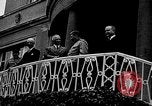
Allied National Leaders hold numerous conferences to plan and coordinate their efforts during World War II
First scene shows President Harry Truman shaking hands with Joseph Stalin on a porch of the Cecilienhof ( home of Crown Prince Wilhelm) in Potsdam, Germany. The two leaders are accompanied by their respective foreign ministers, James F. Byrnes, U.S. Secretary of State, and Soviet Minister of Foreign Affairs, Vyacheslav Molotov. Stalin descends steps from the building followed by Truman. View of the back lawn at Cecilienhof. View of its front entrance. Various views of the house and grounds. American, Soviet, and British flags flying from the building. Cars carrying the leaders on road to the Cecilienhof. President Truman and James Byrnes entering outside gate, followed by other attendees. Then Stalin is seen entering followed by Soviet officers and officials. U.S. General Dwight D. Eisenhower, Supreme Commander Allied Expeditionary Force (SCAEF) in Europea and U.S. Army Chief of Staff. George Marshall are seen walking together in a wooded glade on the meeting grounds. British Field Marshal Bernard Law Montgomery, entering the grounds for the meeting. British Prime Minister Winston Churchill, President Harry Truman, and Joseph Stalin stand on a step before an entrance to Cecilienhof. Truman places their hands together in a mutual handshake, at which Churchill and Stalin laugh. Views of the Kremlin and St. Basil's Cathedral, in Red Square, Moscow, Russia where foreign minsters of the United States, Britain, and the Soviet Union are seen meeting meeting in conference at the Spiridonovka Palace in October, 1943. Closeup of Soviet Prime Minister Vyacheslav Molotov, British Prime Minister, Anthony Eden, and U.S. Secretary of State, Warren Hull, successively signing a document. Scene shifts, to a C-47 transport aircraft flying over great pyramid of Giza in Cairo, Egypt. Next, the front of the Soviet Embassy in Teheran, Iran, is shown. The "Big Three" (Stalin, Roosevelt, and Churchill) sit on the porch of the building. Military officers from their countries stand behind them. Narrator (Franklin D. Roosevelt) says they agreed to launch a gigantic attack on Germany. Scene shifts to Germany, where German military is paraded on public display, showing artillery, Panzer I tanks carried aboard army trucks, Heinkel He 111 bombers in formation overhead, and marching troops giving Nazi salute silhouetted against bright pavement. View shifts to the Livadia Palace, in Yalta, Crimea, Russia. Brief view of the "Big Three" and their staffs sitting around a conference table. Change of location to San Francisco, California, where flags of many nations are displayed along with a United Nations Logo. Representatives of the many nations sign the Charter of the United Nations, founding the U.N. organization on 26 June 1945. Film shifts to Germany where victorious American, British and Soviet troops shake hands and celebrate victory. They share drinks and toast victory.
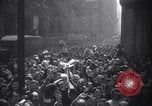
Americans celebrate victory over Germany , ending World War II, in Europe. Crowds cheer in streets of Manhattan, New York
A huge crowd cheering and celebrating the news of victory over Germany, ending World War 2, in Europe, on May 8, 1945 (VE Day). Cheering crowds gathering at Times Square and Wall Street in lower Manhattan, New York City. American flags on display.
CRITICALPAST.COM: About Us | Contact Us | FAQs - How to Order | License Agreement | My Account | My Lightboxes | Shopping Cart | Advanced Search | Featured Collections | Website Terms & Conditions | Privacy Policy ©2026 CriticalPast LLC.
License Agreement |
Terms & Conditions |
Privacy Policy
©2026 CriticalPast LLC.