


 Francais
 Deutsch
 Italiano
Refine Your Search
Bruchsal Germany 1945 stock footage and images
- Showing 10357 to 10362 of 10461 results more
more Hide
Hide
United Kingdom meets regarding withdrawal from India and Egypt.
The United Kingdom shapes a new policy for withdrawing its colonial power from India and Egypt. Skyline of London, United Kingdom. The Palace of Westminster, serving as the meeting place of the British Parliament, seen from the River Thames (Parliament Square, London, SW1A 0AA). British Prime Minister Clement Attlee talking with other members of the British Parliament. British Foreign Secretary Ernest Bevin, looking down, with Prime Minister Attlee behind him. View of Simla, India. Sign in English and Indian says “SIMLA Height above sea 6848”. View of the Simla Viceregal Lodge, now known as the Rashtrapati Niwas (Boileauganj, Shimla, Himachal Pradesh 171005), the venue of the Simla Conference. Viceroy of India Lord Archibald Percival Wavell and British Indian politicians of the Indian National Congress and All-India Muslim League parties meet for the Simla Conference to discuss a plan for Indian self-government. A crowd of Muslim Indians, Sikhs, and Hindu Indians outside the Viceregal Lodge. Kalam Azad, the Indian National Congress Party President, arrives in the Viceregal Lodge by rickshaw. Jawaharlal “Pandit” Nehru, an Indian National Congress Party activist leader and future first Prime Minister of India, rides a piebald pony to the conference. The All-India Muslim League leader and future founder of Pakistan, Mohammad Ali Jinnah, arrives by car. Lord William Wedgwood Benn, the Viscount Stansgate and British Labour Party politician, and the British delegation meet with Egyptian Prime Minister Ismail Sidky Pasha and other politicians. Viscount Stansgate reads the announcement of British preparation to leave Egypt. Indians crowd outside the Viceregal Lodge in Simla, India. Rickshaw drivers sit near parked rickshaws. Indian leaders of the National Congress Party and the All-India Muslim League walk outside the Viceregal Lodge. Jawaharlal Nehru meets supporters. Indians showing support for Jawaharlal Nehru outside the Viceregal Lodge after the Simla Conference.
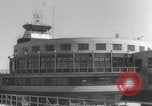
The significance of radar in civilian use in the United States during WW2
Civilian use of radar in the United States post World War 2. View of New York Municipal Airport, later La Guardia, control tower and terminal. A TWA Lockheed C-69 Constellation taxiing as another plane descends. Ships sailing in harbor. Speeding train pulled by Pennsylvania Railroad class GG1 electric locomotive. A circular crt display showing radar activity and approaching storm front. A hurricane in America. Scientists study radar in Evans Signal Laboratory, located in Camp Evans, New Jersey. Entrance of the Evans Signal Laboratory. A large radar antenna. Radar oscilloscope display shows signal received from the moon.
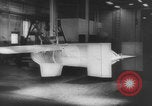
Flying bombs rocket launching with radar system (WW2)
A GB-4 glide bomb in a hanger, suspended from the ceiling. A robot bomb, possibly V-1, launching from a catapult ramp. A United States Air Force bomber drops GB-4 glide bomb during World War II. United States army air men use a television screen with radar system to direct the GB-4 glide bomb to its target. POV view target via GB-4 glide bomb camera. GB-4 glide bomb seen at ground level gliding to target and exploding. United States soldiers preparing a V-2 rocket for launch in the desert in the United States. Men working on radar system. V-2 firing room engineer gives the "go" signal for launch. V-2 rocket lift off in the desert. Scientists in radar control room at Fort Evans. Soldiers at controls of early field radar control system. Large radar console with circular CRT display. A United States soldier repairs radar console. Various types of radar antennas and dishes moving while in operation.
French celebrate the awarding of the Cross of Liberation (Croix de la Libération) with a parade in Paris (WW2)
Parade celebrating the awarding of the Cross of Liberation (Croix de la Libération) to Paris after liberation from Nazi German occupation during World War II. Young Gendarmes act as crowd marshals and smile for the camera during the celebrations in Paris. General Charles de Gaulle salutes to French soldiers in the Place de la Concorde (Place de la Concorde 75008 Paris, France). French soldiers photograph General de Gaulle during the ceremonies. French Republican Guards (known at the time as Guard of Paris) hold the French tricolor flag in the Place de la Concorde. General Charles de Gaulle and other officials walking past the stage. General Charles de Gaulle speaks onstage. French soldiers holding flags. French honor guards raise their saber.
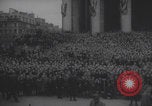
Cross of Liberation parade at Rue Royale, Place de Madeleine and Palais Garnier (WW2)
A parade celebrates the awarding of Cross of Liberation (Croix de la Libération) to the city of Paris (World War II). A huge crowd gathers outside the L'église de la Madeleine (Place de la Madeleine, 75008 Paris, France). French soldiers holding flags march down Rue Royale from Place de la Concorde (Place de la Concorde 75008 Paris, France) as crowds watch the parade on the sidewalks. Throngs of French civilians crowd Rue Royale and Place de la Madeleine to watch a parade. Two crowd marshals salute to marching soldiers. Young French people perch on top of a newspaper stand to watch the parade. More people watch the parade from their windows. French children holding signs that read “Vive la France” and “Vive Paris”. Crowds clapping. Crowds gathered outside the Hotel Scribe in Paris (Now known as Sofitel Le Scribe Paris Opéra- 1 Rue Scribe, 75009 Paris, France). From Place de la Madeleine, soldiers turn to march in Boulevard des Capucines, marching past the Palais Garnier (Place de l'Opéra, 75009 Paris, France) with more crowds watching from the sidewalk and in front of the opera house.
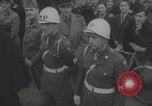
General Charles de Gaulle presents flags to soldiers during an Easter parade ceremony celebrating the liberation in Paris, France (WW2)
General Charles de Gaulle presents regimental colors and standards to soldiers as a symbolic reconstruction of the French Army during liberation ceremony in Paris (World War II). Two stern United States military police stand in the crowd. French troops attend the ceremony in Place de la Concorde (Place de la Concorde 75008 Paris, France). General Charles de Gaulle presents flags with regimental colors that had been hidden from Germans during the war to French soldiers at the Place de la Concorde. Soldiers go down the stage after receiving their standards. Close up of an elderly soldier. Soldiers salute to General de Gaulle after going on stage. Soldiers receive their standards from General de Gaulle. Words seen on flags include "Honneur et Patrie (Honour and Fatherland) and "Republique Francaise" (French Republic.)
CRITICALPAST.COM: About Us | Contact Us | FAQs - How to Order | License Agreement | My Account | My Lightboxes | Shopping Cart | Advanced Search | Featured Collections | Website Terms & Conditions | Privacy Policy ©2026 CriticalPast LLC.
License Agreement |
Terms & Conditions |
Privacy Policy
©2026 CriticalPast LLC.