


 Francais
 Deutsch
 Italiano

Refine Your Search
Bruchsal Germany 1945 stock footage and images
- Showing 31 to 36 of 10470 results more
 Hide
Color Sound
Scenes of World War II as the Allies converge through Germany towards Berlin.
Animated map shows direction of Allied forces converging on Germany, Western Powers from the West, and Soviets from the East during final phase of World War 2, in Europe. Newspaper headline reads: "Russians strike for Berlin."The New York World-Telegram newspaper headline reads: "Yanks Cross the Rhine!."U.S. Army troops seen in house-to-house fighting in Germany.American troops standing at Rhine River viewing Cologne, Germany. The cathedral at Cologne. Film of Hitler's troops crossing the Rhine in 1936 contrasted with views of many German prisoners of war being marched under Allied guard, in 1945. USAAF P-38 lightning aircraft taking off on mission against German targets. View from Allied aircraft strafing German target which explodes. A P-38 landing on a snowy airfield. USAAF P-47 of the 388th Fighter Squadron (C4), 365th Fighter Group, landing and skidding sideways off the runway. It slides in the snow and strikes another P-47 aircraft with engine running, on the ramp. B-24 Liberator bombers taxing for takeoff. Formation of USAAF B-17 bombers dropping bombs all over Germany. Formation of B-17s at very high altitude, leaving contrails behind them. U.S. infantry and armor fighting in snow-covered streets of German city. Allied troops, including Polish soldiers, fighting in the snow. Allied wounded being carried while under fire from German forces. U.S. Sergeant Peter Di Guiseppi and Private Pat Brady being interviewed. De Guiseppi remarks that the war seems like it will never end. Brady recounts being in a tank that hit a mine or something that exploded and abandoning the tank faster than he could ever imagine. He hunkered down in a ditch while bullets flew all around him, including the ammunition from the destroyed tank.

German civilian Matthias Gierens is hung until death for murdering a downed American flier in Germany in World War 2.
German civilian Matthias Gierens, a 37 year old railroad worker, is hanged in Rheinbach Germany for the August 15, 1944 murder of a downed American flyer, who was later identified as U.S. Army Air Forces 2nd Lieutenant Lester E. Reuss, from Forsythe, Montana. Reuss was the navigator on U.S. Army B-17 bomber #42-31183 which was downed by German aircraft after it attacked the Airdrome at Wiesbaden, Germany. Gierens and three other German civilian men, Peter Kohn, Peter Back, and Matthias Krein, were convicted on June 2, 1945 in Ahrweiler, Germany, for the murder of the American airman after his parachute landing near Priest, Germany. The trial was the first Allied trial in Germany of civilians charged with a war crime. Military police are seen escorting Gierens toward the gallows in a prison yard in Rheinbach. A German Catholic priest performs the rites. U.S military officer reads charges as Gierens is readied for execution (the officer is possibly Lt. Col J.V. Roddy, of San Francisco, who was in charge of the hanging). Trap door opens and Gierens is hung. The U.S. Army executioners were Master Sgt. John C. Woods, a former Texas State executioner, and Staff Sgt. Thomas Robinson, of Bronx, New York. Witnesses present included seven U.S. Lieutenant Colonels and one British officer, a number of Military Police, news correspondents, and photographers.

Allied commander in chiefs sign the papers of partition of Germany in Berlin after world War II.
' Allied control council for Germany ' shows the taking over of the control by the Allied powers in Germany. British Field Marshal Bernard Montgomery gets off a plane as he arrives in Germany. Montgomery being greeted by officers and he inspects an honor guard of Soviet troops. Commander in Chiefs of various Allied armies arrive at a building on June 5th, 1945. U.S. General Dwight D. Eisenhower, French Major General Jean de Lattre de Tassigny and the Soviet representative Georgy Zhukov arrive and enter the building. General Eisenhower, Field Marshal Montgomery, Zhukov and Major General Tassigny sign the documents of the partition of Germany. The Commander in Chiefs pose outside the building.

Field Marshal Keitel signs the unconditional surrender act as Allies take over a ruined Germany during World War II.
The Germans sign unconditional surrender in Berlin, Germany on May 8, 1945 during World War II, signing a document similar to the one signed at Reims the day before. People gathered outside a German Army Engineering School. Soviet General Georgi Zhukov and British Air Chief Marshal Arthur Tedder at a desk as they represent the Allies. Field Marshal Wilhelm Keitel and other officers representing Germany arrive. Keitel puts his signature on the document of unconditional surrender. Zhukov and Tedder also put their signatures as they take over Germany. The two officers shake hands. Allied officers tour the city of Berlin. Damaged buildings in the city due to Allied bombings. The Brandenburg Gate in Berlin. The heavilly damaged Hotel Adlon. Aerial views of the damage caused due to Allied bombings in Hamburg. Damaged buildings and shipyards in Hamburg.

Eminent prisoners including Baroness Schuschnigg, Lord Lascelles being released from a Nazi prison in the Alps in Germany.
Eminent prisoners held in Nazi German prison camps in Germany are seen being released after the Allied victory during World War II. Snow covered Alps in Germany. A villa in the mountains. Eminent prisoners released from German camps include wife of Austrian Chancellor Kurt Schuschnigg, the Baroness Schuschnigg, industrialist Fritz Thyssen, Prince Leopold of Prussia, German General Franz Halder, Anti-Nazi Pastor Martin Niemöller, Allied pilots, Lieutenant John Winant (son of American Ambassador to England), Lord George Lascelles, the nephew of King George VI, John Alexander Elphinstone, Michael Alexander, and Max de Hamel, cousin of Winston Churchill. Scene changes to Magdeburg, Germany where German General Kurt Dittmar,a Nazi radio broadcaster (Official Military Commentator of the German Armed Forces), together with his son, young soldier Berend Dittmar, surrenders to American soldiers of the U.S. Army 117th Regiment, 30th Infantry Division, on April 25, 1945.
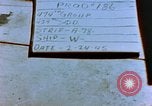
Two soldiers arrest suspected Nazis and a woman takes firewood out of debris in Germany during World War II.
Activities of civilians in Germany during World War II. Two U.S. Army soldiers arrest two suspected Nazis. They stand and interact at the entrance gate of a building that is under guard by American forces. Scene changes to a bomb damaged Atlas relief carving on a destroyed building. Next scene is a wide view of a totally destroyed area from bombing, with the same portion of broken wall with the Atlas carving seen at center. A German woman walks through rubble and debris from bombing, carrying two stacks of broken wooden timber pieces for firewood. (Location is possibly Nuremberg. Despite film slate stating 2-24-1945, these shots appear to be more likely April or May 1945.)
CRITICALPAST.COM: About Us | Contact Us | FAQs - How to Order | License Agreement | My Account | My Lightboxes | Shopping Cart | Advanced Search | Featured Collections | Website Terms & Conditions | Privacy Policy ©2026 CriticalPast LLC.
License Agreement |
Terms & Conditions |
Privacy Policy
©2026 CriticalPast LLC.