


 Francais
 Deutsch
 Italiano
Refine Your Search
Bruchsal Germany 1945 stock footage and images
- Showing 391 to 396 of 10461 results more
more Hide
Hide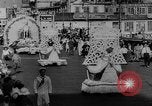
Contestants of Miss America beauty contest wave at people and walk on a ramp in Atlantic City, New Jersey.
Miss America beauty contest in Atlantic City, New Jersey. Contestants of Miss America on floats as they pass along the streets of Atlantic City. The contestants wave at people. Veterans in wheelchairs watch the parade. The contestants standing and posing. They walk on a ramp. The winner of the 1945 Miss America pageant, Bess Myerson, wears the crown and cape. Bess Myerson, the first Jewish Miss America, comes from the Bronx, New York. Bess Myerson smiling.
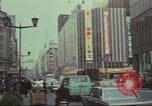
Tokyo street scene; editorial staff members work on Pacific edition of Stars and Stripes newspaper in Tokyo, Japan
Publication of the Pacific edition of Star and Stripes newspaper in Tokyo, Japan. Traffic on streets in Tokyo. Pedestians on busy city streets of Tokyo with large office buildings and retail in background. View of the plant where publication of the Pacific edition of Stars and Stripes newspaper began on 3rd October, 1945. Editorial staff members work in the plant. A man works on a typewriter. Closeup view of hands on typewriter. An officer checks the newspaper. A navy man pastes picture cuttings from a newspaper on a chart. A man places a paper in a photo offset machine. Printing of newspapers. Men check and stack newspapers. Newspaper bundles are covered with plastic sheets and loaded in a truck. Men load the newspaper bundles in a jet liner aircraft.
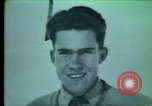
Prior to 1968 U.S. Presidential Election, Richard Nixon recounts his past when he was enlisted in the U.S. Navy.
Self-portrait of Richard Nixon aired during his 1968 presidential run against Hubert Humphrey and George Wallace in the United States. Pictures showing young Richard Nixon and his old home. An interviewer asks him about the period when he enlisted in the U.S. Navy. A 1945 picture of U.S. Navy Lieutenant Commander Richard Nixon. He speaks about his views about the problems the nation confronted in World War II.
Funeral services for U.S. General George Patton at an American military cemetery in Hamm, Luxembourg
Funeral of U.S. General George Patton in December 1945 in Hamm, Luxembourg after World War II. Exterior of military hospital at Heidelberg. Sign reads 'Villa Rehner'. U.S. soldiers carry Patton's casket out of villa and put it into an ambulance as soldiers stand at attention. Ambulance moves along a road followed by soldiers on foot. Exterior of Christ Church. Casket being carried into church. Civilian man and woman enter the church. Minister leading procession from church, followed by casket, casket being put into the ambulance again for transport to Luxembourg. Funeral procession moves along streets of Luxembourg. Parading tanks and half tracks in the funeral procession. Half truck bearing body of Patton passes. Crowd lined up on sidewalks. Body being borne into American military cemetery in Hamm Luxembourg (later established as Luxembourg American Cemetery). Body being carried through lines of soldiers at attention. Spectators at attention on sidelines. Soldiers fire volley over the grave. Soldier blow taps.

African American units U.S. 769th Field Artillery, 761st Tank Battalions, and other units in action in European Theater during World War II
U.S. 769th Field Artillery and the 761st Tank Battalions, as well as other African American units battling enemy together with other Army units in the European Theater during World War 2. Tanks advance along a rough terrain. Soldiers run across a field. Column of African American soldiers of 370th Infantry march along a road toward an attack in the Po Valley, supported by the 695th Field Artillery, who are seen loading and firing an artillery piece. African American soldiers of 761st Tank Battalion running interference for the 409th Infantry as it is seen crossing the dragon's teeth of the Siegfried Line in March of 1945. U.S. Army tanks fire at enemy targets on a field. Soldiers advance. African American soldiers of 761st Tank Battalion loading shells into a tank near battlefield and then participating in battle, firing from tanks during battle. Close view of African American soldiers with their tanks, and firing rifles.
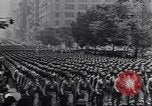
U.S. troops and WACs (Women's Army Corps) including African American soldiers parade along a street in the United States.
From a film about U.S. troops including African American soldiers who battled courageously during World War II. U.S. troops and WACs (Women's Army Corps) including African American soldiers parade along a street. An African American pilot. U.S. Army Major-General Clarence H Kells decorates Sergeant Joe Louis (famous boxer) with the Legion of Merit medal at Fort Hamilton, New York, in 1945. U.S. soldiers perform different tasks. Closing slates include a slate saying the film is not to be shown to the general public, and a second slate stating "Seized Enemy Material...under License Number LM-185"
CRITICALPAST.COM: About Us | Contact Us | FAQs - How to Order | License Agreement | My Account | My Lightboxes | Shopping Cart | Advanced Search | Featured Collections | Website Terms & Conditions | Privacy Policy ©2026 CriticalPast LLC.
License Agreement |
Terms & Conditions |
Privacy Policy
©2026 CriticalPast LLC.