


 Francais
 Deutsch
 Italiano
Refine Your Search
Bruchsal Germany 1945 stock footage and images
- Showing 4603 to 4608 of 10471 results more
more Hide
Hide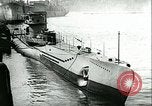
Sailors celebrate as victorious German submarine returns home (WW2)
Victorious German submarine returns home during World War II. German submarine in harbor. German Imperial War Flag on the submarine. Officers and sailors salute. Sailor holds the War flag. Flag of Nazi Germany on a ship. Sailors on submarine roof. Officers and soldiers talk to women soldiers and nurses. Sailors on the submarine and on shore. A sailor distributes letters among the crew. Sailors smoke cigarettes and pipes while they read the letters.
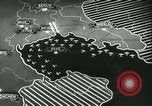
German engineers plan defense strategies against Czechoslovakia and Poland, and Hitler Youth construct the Siegfried Line.
The first phase of German assault on France and the Low Countries during World War II. Animated map illustrates Czechoslovakia and Poland's aggressions against Germany. The map depicts their planned advance towards Berlin. German engineers plan defense strategies. Railroads supply material during the war. Hitler Youth work on the construction of dragons teeth on the Siegfried Line.
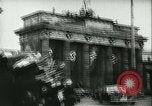
Fuhrer Adolf Hitler addresses the Reichstag in Berlin and German troops advance in the European Theater of World War II.
Adolf Hitler as Fuhrer of Nazi Germany. Hitler and other German officers in cars pass by through the Brandenburg Gate in Berlin as crowds line the streets with Nazi salutes. German Nazi flags on the Brandenburg Gate. Civilians greet the Fuhrer as his car passes by. Hitler greets Nazi officers in the Reichstag building and shakes hands with several German officials. Officers give the Nazi salute and Hitler salutes the group. Hitler addresses the Nazi gathering. The Parteiadler Nazi party symbol and the Swastika in the Reichstag hall. German troops gathered for the Nuremberg Rally at the Nazi Party grounds in Nuremberg. Montage of scenes featuring German soldiers and armament: Close up view of face of young German soldier; German soldiers march in formation and on roads. German tanks rolling and closeup of tank tread. During battle, German soldiersy take cover in trench and then advance using flame thrower during attack amidst shelling. Very large formation of German soldiers marching around Nazi flags during the Nuremberg Rally. Thousands of German soldiers. The German Nazi eagle symbol. German soldiers with hands raised in "Schwurhand" as they take an oath, possibly the Hitler Oath.
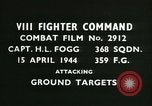
Gun camera views from P-47 flown by Captain HL Fogg of U.S. 8th AF, VIII Fighter Command, 359 FG, 368th Fighter Squadron
U.S. Army Air Forces Eighth Air Force, VIII Fighter Command operations in Germany during World War II. Gun camera views from 15 April 1944: Captain HL Fogg of the 359th Fighter Group 368th Squadron attacking ground targets, in one of their last combat missions in P-47s. (The unit converted to P-51s in April, 1944.) Captain Fogg strafes a train and an oil well. White smoke arises due to the firing and bombardment. An electric tower. The aircraft in flight over a field.
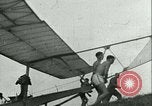
Hitler Youth fly on a glider during World War II.
Hitler Youth in Germany during World War 2. They hook up a glider and tow it up a tall hill, where they help one of their members take his place at the glider controls. Then they release the glider and push it down the steep hill where it takes off. They watch the glider in flight over the hills. The glider flies over tents at the Hitler youth camp. The pilot lands the glider nearby.
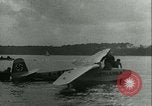
Hitler Youth have fun with a flying boat glider at a camp during World War II.
Hitler Youth in Germany during World War 2. Boys are seen with boats on a lake. They pay out a line fastened to a glider designed to look like a German Lufthansa flying boat. A boy tows the glider out to the center of the lake using a rowboat. Person in the glider cockpit closes its hatch. On shore, the tow line is seen being rolled up rapidly on a wheel driven by a motor, causing the towed flying boat glider to gather speed across the lake, until it breaks from the water and soars into the air. The glider seen in flight, and then making a graceful landing on the lake.
CRITICALPAST.COM: About Us | Contact Us | FAQs - How to Order | License Agreement | My Account | My Lightboxes | Shopping Cart | Advanced Search | Featured Collections | Website Terms & Conditions | Privacy Policy ©2026 CriticalPast LLC.
License Agreement |
Terms & Conditions |
Privacy Policy
©2026 CriticalPast LLC.